Barisal
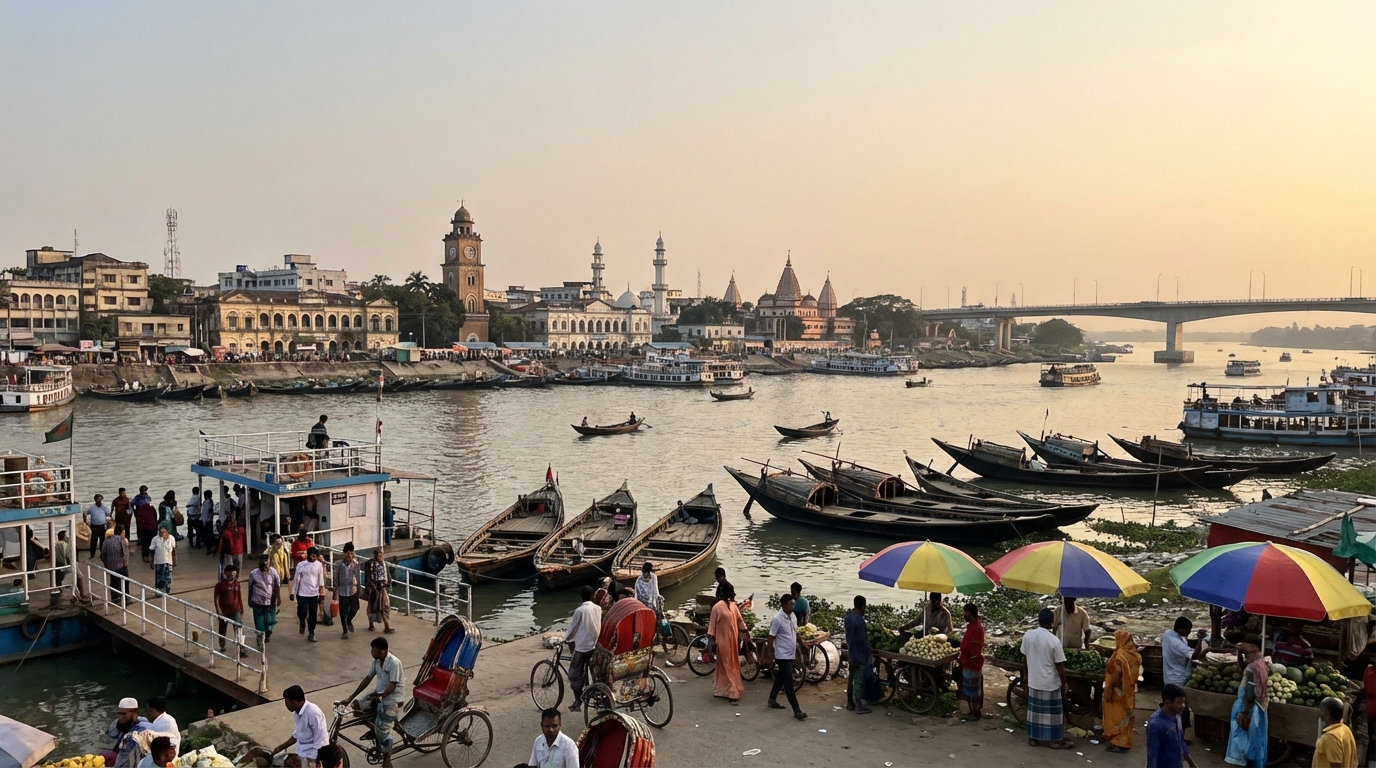
Barisal is a region of Bangladesh. Located in the heart of the Ganges-Brahmaputra Delta, Barisal is a world defined by the ebb and flow of massive river systems. It is the primary producer of the nation's rice and guavas, where thousands of wooden boats navigate a labyrinth of canals that serve as the region's primary roads.
Geography
Barisal sits 1.2 meters above sea level on a deltaic plain composed of deep Ganges silt. The region is defined by the Kirtankhola River and a web of 12 major canals that act as the city’s veins. With 80% humidity and 2,000 millimeters of annual rainfall, the terrain is a soft, green sponge that breathes with the rising and falling tides of the Bay of Bengal.
History
In 1906, A.K. Fazlul Huq founded the Barisal District Association. His pivotal move in 1937 to establish Debt Settlement Boards liberated thousands of local farmers from crippling colonial-era interest rates. This act protected the region's rice-farming heritage and transformed Barisal into a symbol of agrarian independence, ensuring that the delta's soil remained in the hands of those who tilled it.
Landmarks
- Guthia Mosque: Completed in 2006, this mosque features a 193-foot minaret and 20 domes that glow under golden floodlights every evening across its 14-acre artificial pond.
- Oxford Mission Church: Built in 1903 using red bricks and a Greek-cross plan, its high ceilings and five porches keep the interior 5 degrees cooler than outside.
- Bheemruli Floating Market: Floating wooden boats click together as farmers trade guavas; the air here smells perpetually of wet leaves and fruit during the July harvest peak.
- Lakutia Zamindar Bari: This 17th-century estate features intricate brickwork and a collapsing ballroom where moss grows over once-white colonial pillars amidst the quiet 10-acre forest.
- 30 Godown: A modern riverfront park where locals gather at dusk to watch cargo ships navigate the Kirtankhola’s deep 20-meter channels while eating spicy puffed rice.
Cuisine
Barisal’s cuisine is defined by coconut and sun-dried fish called Shutki. Chefs utilize iron pans to slow-cook Hilsa fish in coconut milk gravy, a method dating to the 1800s. The texture is creamy, punctuated by the earthy bite of green chilies grown in local silt. This reliance on the river’s bounty creates a flavor profile that is sweet and intensely spicy.
- Narkel-Ilish: Hilsa fish simmered in thick coconut milk; the fat melts at exactly 80 degrees, creating a sweet, savory river delicacy beloved by delta residents.
- Amra Curry: Local hog plums cooked with mustard and jaggery, offering a tart, cooling flavor that balances the spicy monsoon heat during the humid summer months.
- Chitoi Pitha: Steamed rice cakes with a porous center and charred bottom, traditionally dipped in spicy dried-fish paste or date molasses during the cool winter mornings.
- Date Palm Sap: Collected in clay pots at dawn, this cool, smoky juice is a winter morning staple sold by vendors before the sun rises over the rivers.
- Dab: Green coconut water harvested from riverbanks; its high potassium provides vital hydration during the sweltering 38-degree Celsius summer days in the open-air markets.
Culture
Barisal’s culture revolves around the river; navigation often happens by current rather than street names. Bhatiali folk songs use long, drawn-out notes to carry across 500-meter-wide rivers. Women maintain rooftop gardens of bottle gourds, a practice documented since 19th-century land surveys. This aquatic lifestyle is reflected in their festivals and the quick-drying cotton fabrics worn to combat delta humidity.
- Nabanna Utsab: The November harvest festival where the first grain of Aman rice is offered to the community in a sweet porridge to celebrate agricultural success.
- Boat Racing: Held during August rains, 100-foot-long boats manned by 50 rowers chant rhythmic melodies to keep time while racing through the 20-meter-deep canal channels.
- Poush Mela: A January fair where local potters display terra-cotta wares and children buy sweets made from crystallized sugar and milk in the cool winter air.
- Lungi: This 2.2-meter cotton cylinder is knotted at the waist, allowing air circulation in the 95 percent humid riverfront climate of the rice fields.
- Tant Sari: Hand-loomed with thick starch, these saris remain crisp and breathable during the intense 35-degree Celsius monsoon heat for women working in the city.
- Gamcha: This thin, checkered cotton towel is draped over shoulders to dry sweat quickly while navigating the narrow guava canals in the midday sun.
- Panjabi: A knee-length tunic with side slits, worn for Eid prayers, typically made of light silk to reflect the sun and keep the wearer cool.
- Nokshi Kantha Shawl: Layered recycled saris stitched with stories of river life, providing heavy warmth for elders during the 15-degree Celsius January nights on the water.