Bandarban
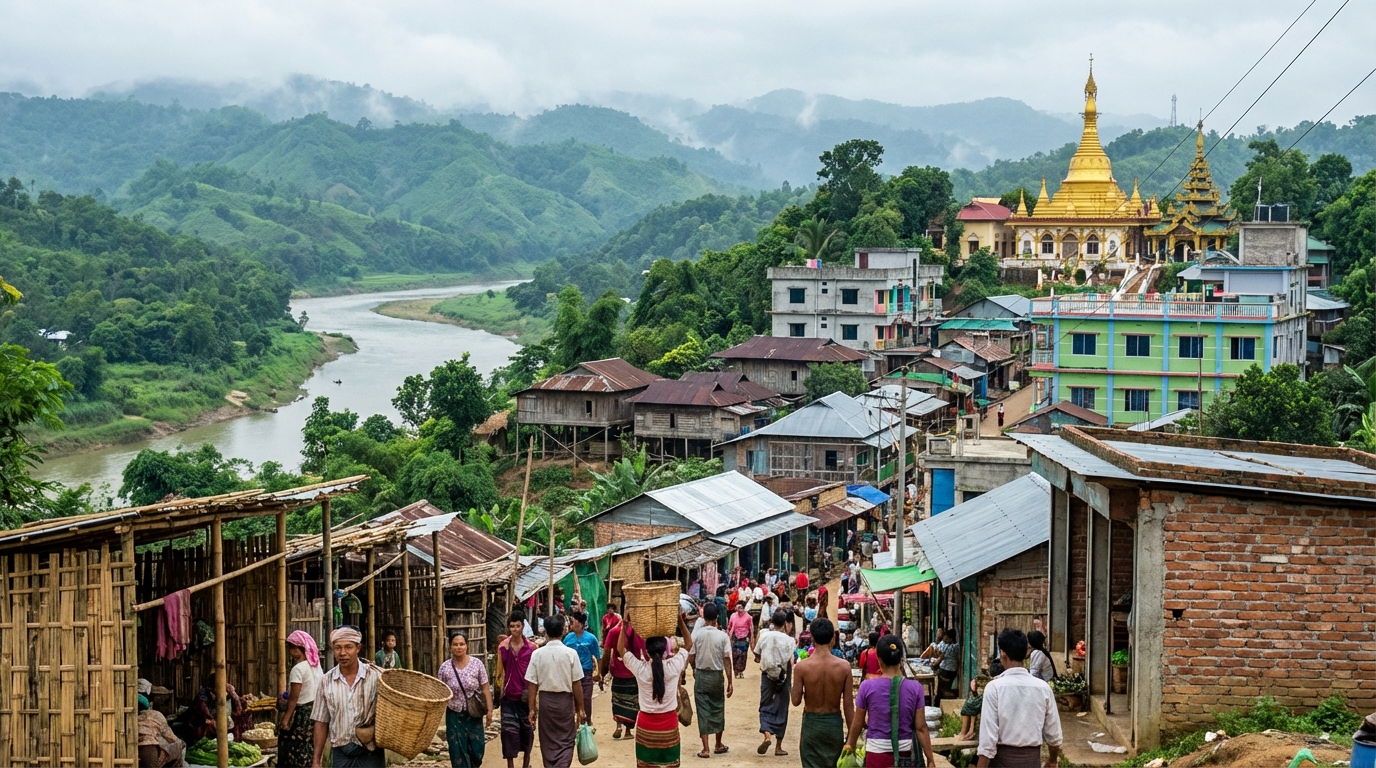
Bandarban is a city in the Chittagong region of Bangladesh. Bandarban is the mountainous heart of southeastern Bangladesh, where the Sangu River carves through 1,280-meter peaks. It serves as the ancestral home to eleven distinct ethnic groups, notably the Marma and Mro people, who maintain ancient agrarian traditions amidst the Chittagong Hill Tracts.
Geography
The Sangu River is the only waterway in Bangladesh flowing north before turning west. The 1,280-meter Tahjindong peak dictates a climate where December mornings drop to 10°C, filling the deep valleys with a dense, woodsmoke-scented mist and providing a habitat for the rare clouded leopard.
History
In 1875, the 16th Bohmong King, Aung Shue Prue Chowdhury, formalized the Raj Punyaha ceremony. This pivotal event established the administrative autonomy of the hill tribes, creating a unique tax-collection and judicial system that persists under the current Bohmong Chief's authority today.
Landmarks
- Buddha Dhatu Jadi: Completed in 2000, this temple features 24-carat gold leaf and a 10-meter bronze bell that resonates across the hills at 6:00 AM daily.
- Nilgiri: At 2,400 feet, this peak offers a view where the temperature stays 5°C cooler than the lowlands, surrounded by floating, mineral-scented cloud layers.
- Boga Lake: A 1,246-foot-high tectonic lake where the water mysteriously changes from turquoise to gray when underwater sulfur vents activate during heavy monsoon rains.
- Nafakhum: This 15-foot tufa waterfall requires a three-hour boat ride; its limestone rocks are so smooth they feel like polished glass underfoot.
- Amiakhum: Located near the Myanmar border, these falls drop into a canyon with 90% humidity, surrounded by giant ferns growing three meters tall.
Cuisine
The Marma kitchen uses 'Chula' mud stoves to cook 'Jhum' harvested crops. Key flavors come from 'Nappi', a pungent fermented shrimp paste, and the anise-scented 'Sabrang' herb, creating earthy, spicy profiles unique to the highlands.
- Mundum: Sticky rice mixed with roasted black sesame and molasses, steamed inside a green 'Dolu' bamboo tube over an open flame for 40 minutes.
- Bamboo Chicken: Fresh poultry marinated in ginger and wild herbs, sealed in bamboo with banana leaves, and roasted until the outer husk turns charred black.
- Pajon: A complex April curry containing 30 specific ingredients, including wild asparagus and neem leaves, believed to cleanse the body for the new year.
- Chu: A potent rice wine fermented with 15 medicinal roots in clay pots; it tastes of earth and spice and is served in bamboo mugs.
- Wild Honey Tea: Strong black tea harvested from hilly slopes, sweetened with smoky honey gathered from wild hives located 40 meters up on sheer rock faces.
Culture
Life follows the Bohmong Chief’s lunar calendar. The culture is a tapestry of eleven languages, marked by intricate backstrap weaving and the rhythmic beating of 'Kharak' drums during seasonal transition rituals.
- Sangrai: The Marma New Year in April features 'Pani Khela', where silver bowls of water are thrown to symbolize washing away the past year's sins.
- Raj Punyaha: An 1870s-origin ceremony where tribal leaders wear silk robes to pay annual tributes to the Bohmong King amidst traditional festive drum beats.
- Kathin Chivar Dan: A 24-hour ritual where monks' robes are woven from scratch, starting with raw cotton and ending with dyed saffron fabric before the next dawn.
- Thami: A wrap-around skirt worn by Marma women, featuring a horizontal 'Phool' border hand-woven on a backstrap loom over three weeks.
- Pinon: A heavy, dark indigo wrap-around cloth worn by Mro women, often paired with 1920s-era silver coins sewn into the fabric.
- Gaba: A thick cotton sleeveless jacket for men, designed with internal pockets to carry betel nuts and small tools during mountain treks.
- Khadu: Heavy silver bangles weighing up to 200 grams worn by elder women; they make a rhythmic clinking sound during daily chores.
- Lungyi: A checkered cotton cloth worn by men, tied with a 'Bohmong' knot that sits specifically on the left hip to signify local identity.