Chattogram
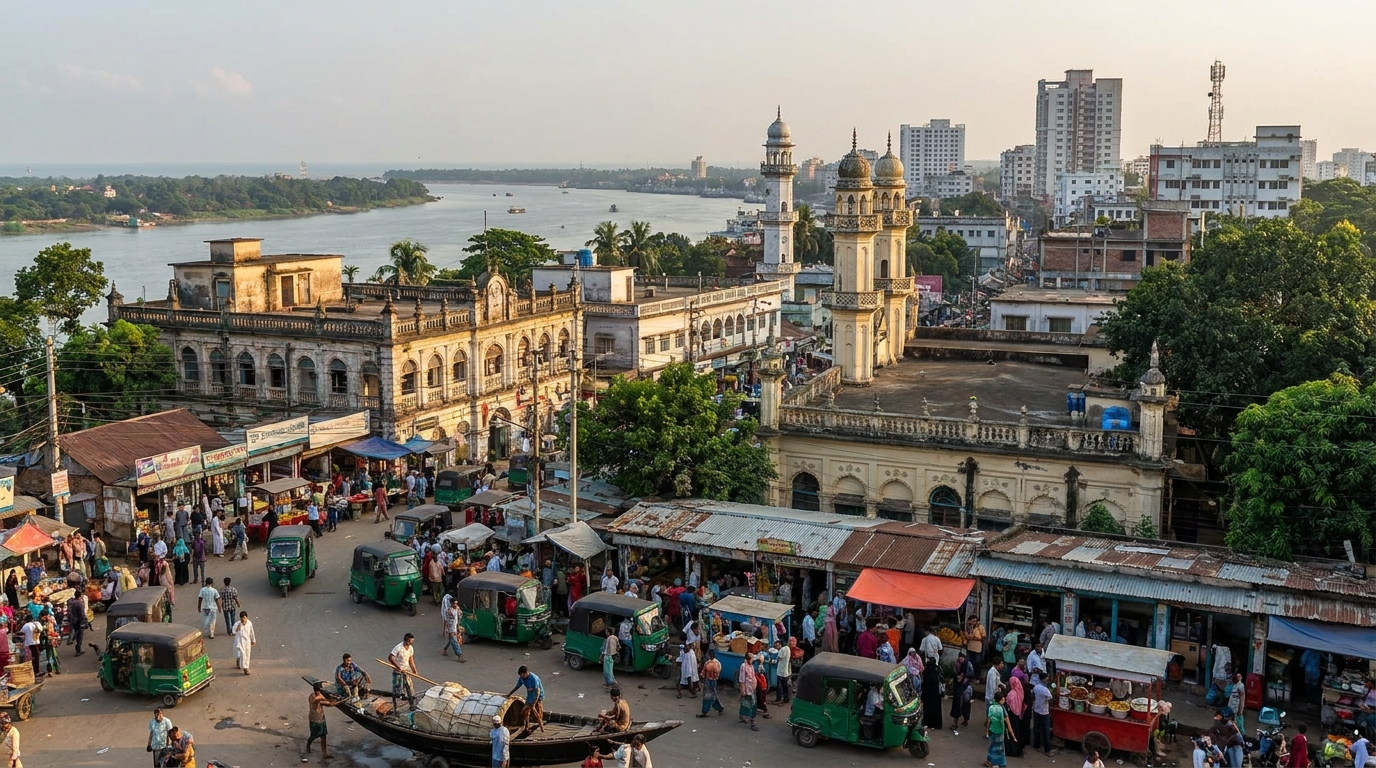
Chattogram is a city in the Chittagong region of Bangladesh. Chattogram sits on the southeastern coast of Bangladesh, squeezed between the Bay of Bengal and the jagged Hill Tracts. It serves as the nation's primary maritime gateway, defined by its massive deep-water port and a unique regional dialect called Chatgaya.
Geography
Chattogram is defined by the Karnaphuli River and the 290-meter high Batali Hill. The landscape features 3,000 millimeters of annual rainfall and shifting 'chars'—silt islands that emerge and vanish in the river. It sits at the edge of the 1,500-kilometer Indo-Burmese mountain range, creating a unique humid subtropical environment where the sea meets the foothills.
History
In 1930, Surya Sen and 64 revolutionaries organized the Chittagong Armoury Raid to challenge British rule. They successfully seized the district armory on April 18, cutting off telephone lines and rail links to isolate the city. For four days, the group hoisted the Indian flag and established a provisional revolutionary government before retreating to the Jalalabad Hills, marking a pivotal moment of defiance.
Landmarks
- Port of Chattogram: Handles 90% of national trade; night operations under yellow sodium lamps create a metallic reflection that defines the city's midnight skyline and economic pulse.
- Chandranath Temple: Climb 700 stone steps to 350 meters altitude; the peak features a perpetual cloud mist and a 4-degree temperature drop from the base.
- Bayazid Bostami Shrine: A sanctuary for 150 black soft-shell turtles; since 1830, locals have fed them protein-heavy treats, believing the creatures possess spiritual protection for the city.
- Guliakhali Beach: Features root-stabilized grass mounds that look like green stairs against the tide; the water levels fluctuate 5 meters daily, hiding the landscape periodically.
- Jamboree Park: Features 50,000 square feet of LED-lit walkways and 15 synchronized fountains; it has become the city's primary social hub for evening walkers since 2018.
Cuisine
The cuisine centers on the 'Mezban' feast tradition using heavy copper pots over wood fires. Heat comes from sun-dried chilies ground on stone. Signature dishes rely on white mustard seeds and dried coconut, cooked until beef marrow dissolves into the gravy. This culinary style avoids pre-packaged powders, favoring a 12-spice blend that remains a closely guarded secret among the city’s traditional 'Baburchis' or master chefs.
- Mezbani Gosht: Slow-cooked beef flavored with Radhuni seeds; the recipe dates to the Mughal era and is traditionally served on white rice on banana leaves.
- Kala Bhuna: Cubes of beef fried in mustard oil and iron pans until dark black, using a 12-hour marination process that intensifies the savory notes.
- Shutki Macher Bhorta: Dried Loitta fish crushed with 15 green chilies and raw garlic; the pungent aroma can be detected from 50 meters away during its preparation.
- Bel-er Shorbot: Wood apple pulp mixed with salt and sugar; it has a gritty texture and is sold by street vendors during 35-degree Celsius heat.
- Seven-Layer Tea: Originally from nearby Sylhet but perfected in city cafes, using different tea leaf densities to create visible horizontal stripes in a tall glass.
Culture
The culture is a synthesis of Arakanese and Mughal traditions, expressed through the Chatgaya dialect featuring 7 distinct vowel sounds. Social life is anchored by communal feasts and 'Sari Gaan'—maritime work songs. The people prioritize ancestral lineage, often hosting massive gatherings where thousands are invited by word of mouth to eat together in large communal halls.
- Boli Khela: A 115-year-old wrestling competition held in Laldighi Maidan every April; it attracts hundreds of rural athletes competing on sand-covered rings for prestige.
- Madunaghat Boat Race: Occurs during the late monsoon on the Halda River; 20-meter long wooden boats are rowed by 50 men singing in rhythmic unison.
- Mezban: A formal ceremony honoring ancestors or special events, where up to 20,000 people gather to eat beef and rice on a single day.
- Checkered Lungi: A 2.2-meter cylinder of cotton cloth worn by men, knotted with a double-twist technique to ensure security during heavy manual port labor.
- Tant Sari: Hand-loomed cotton with 4-inch wide borders, worn by women during intense summer humidity for its high breathability and cooling properties.
- Zardozi Panjabi: A knee-length tunic with ornate gold-thread embroidery around the collar, worn specifically for religious prayers and formal communal Mezban gatherings.
- Cotton Orna: A 2.5-meter long lightweight scarf worn by women, typically dyed in two contrasting colors using local tie-dye techniques for casual daily use.
- Majhi Gamcha: A thin cotton towel tied as a headband by river boatmen; it absorbs sweat while they navigate the Karnaphuli River’s strong currents.