Comilla
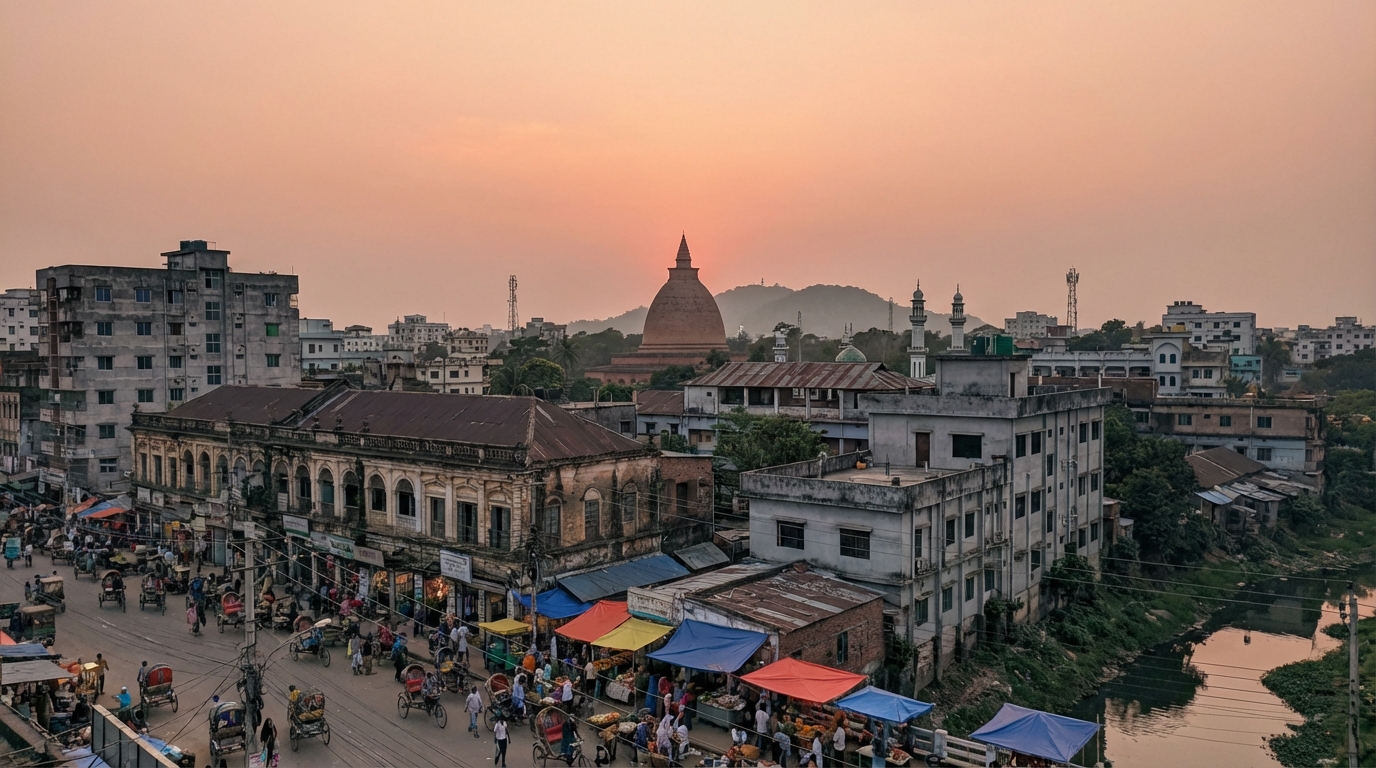
Comilla is a city in the Chittagong region of Bangladesh. Comilla serves as a crucial transit hub in eastern Bangladesh, situated 97 kilometers from the capital and bordered by the Indian state of Tripura. It is defined by its ancient red-soil highlands and a legacy of social innovation that transformed rural economics across South Asia.
Geography
The landscape is defined by the Lalmai-Mainamati hills, an 11-mile long ridge of Pleistocene terrace rising 45 meters above the surrounding delta. This elevation creates a unique microclimate where temperatures stay 2 degrees cooler than the floodplain. The district is divided by the Gomti River, known as the 'Sorrow of Comilla' for its 15 seasonal flash-flood loops.
History
In 1959, Dr. Akhtar Hameed Khan launched the 'Comilla Model' at the Bangladesh Academy for Rural Development. This pivotal social experiment introduced the world to grassroots micro-credit and agricultural cooperatives. It successfully replaced traditional high-interest moneylending with a community-managed system, providing a blueprint for poverty alleviation that has since been adapted by over 20 different countries globally.
Landmarks
- Shalban Vihara: 7th-century terracotta plaques here depict 115 distinct animals, including rare rhinoceroses that once roamed these red clay hills during the Deva dynasty.
- Dharmasagar Dighi: Excavated in 1458 by King Dharma Manikya, this 52-acre reservoir features a central island that attracts thousands of migratory Siberian ducks every December.
- Mainamati War Cemetery: This site contains 737 Commonwealth graves; the meticulously manicured grass is kept at exactly two inches to maintain colonial-era horticultural standards.
- Magic Paradise: Locals frequent this modern park to see a 100-foot replica of the Eiffel Tower, built to provide a European backdrop for local wedding photography.
- Itkhola Mura: This excavation site houses a massive blue basalt sun-god statue, a stone type completely absent from the local geology, indicating ancient 8th-century trade routes.
Cuisine
The local cuisine is anchored by the high calcium content of the milk from cows grazing on the mineral-dense Lalmai hill grass. This produces a thicker, creamier milk fat that is essential for the region's famous slow-reduced dairy sweets, which are prepared without the common addition of flour or thickening agents.
- Rasmalai: Tiny hand-rolled curd balls soaked in milk reduced for four hours; the original Matri Bhandar shop produces only 500 kilograms daily to ensure quality.
- Comilla Khadi Curry: A thick, savory yogurt gravy flavored with crushed ginger and sun-dried chilies, traditionally eaten at 6:00 AM by farmers before heading to the fields.
- Pancamrita: A ritual mixture of five ingredients including raw honey and ghee, served in small earthen cups during household ceremonies to ensure family prosperity.
- Mattha: Salted buttermilk churned in porous clay pots; the evaporation through the clay walls keeps the liquid exactly 10 degrees cooler than the outside air.
- Raw Date Palm Juice: Collected at 4:00 AM in winter from slit trees; it must be consumed before the morning sun triggers fermentation and alters the sugar profile.
Culture
Comilla is the center of the Khadi movement, where the 'clack-clack' of 5,000 wooden looms provides a rhythmic backdrop to village life. The local dialect is characterized by the 'f' sound replacing 'p', while the traditional dress emphasizes hand-spun textures that offer natural insulation against the humid 35-degree Celsius summer heat.
- Mainamati Mela: Every February, artisans gather near the ruins to sell wooden toys painted with natural dyes extracted from local seeds and tree bark.
- Poush Pitha Utsav: A winter harvest celebration where neighbors compete to create the most intricate 'Nakshi Pitha', a fried rice cake carved with floral patterns.
- Jagannath Bari Rath Yatra: Established in 1800, this event involves exactly 108 devotees pulling a massive wooden chariot through the streets to symbolize the journey of the deities.
- Khadi Panjabi: A men's tunic made of hand-spun cotton; its coarse texture allows air to circulate, making it the preferred garment for formal summer meetings.
- Chandina Saree: Woven with vegetable-dyed yarn, these sarees take three weeks to finish; the heavy weight signifies the quality of the hand-twisted cotton threads.
- Lalmai Lungi: A checkered sarong worn by men, traditionally tucked to knee-height to prevent the red hill mud from staining the fabric during monsoon walks.
- Nakshi Kantha Shawl: Embroidered during winter evenings using 12 distinct stitches; the patterns often record the family's history of agricultural success or major life events.
- Gamsa: A thin, red-checkered towel used by rickshaw pullers to wipe sweat; it is often tied around the head as a makeshift sun shield.