Hāthazāri
Hāthazāri is a city in the Chittagong region of Bangladesh. Hāthazāri sits north of Chittagong city as a major educational and ecological corridor. It is most striking for housing the world's only natural tidal spawning ground for carp and one of South Asia's largest theological seminaries.
Geography
Hāthazāri is defined by the 81-kilometer Halda River, where the water turns a murky gold during the monsoon. The terrain transitions from the low-lying alluvial plains at 10 meters above sea level to the sharp 350-meter rises of the Sitakunda hill range, creating a localized rain-heavy microclimate with 85% humidity.
History
In 1896, Habibullah and Sufi Azizur Rahman established the Moinul Islam Madrasa. This single event transformed a rural agricultural outpost into a global hub for the Deobandi movement. The school's founding shifted the local economy from rice farming to a massive center for book publishing and theological tourism that still dictates the town's rhythm.
Landmarks
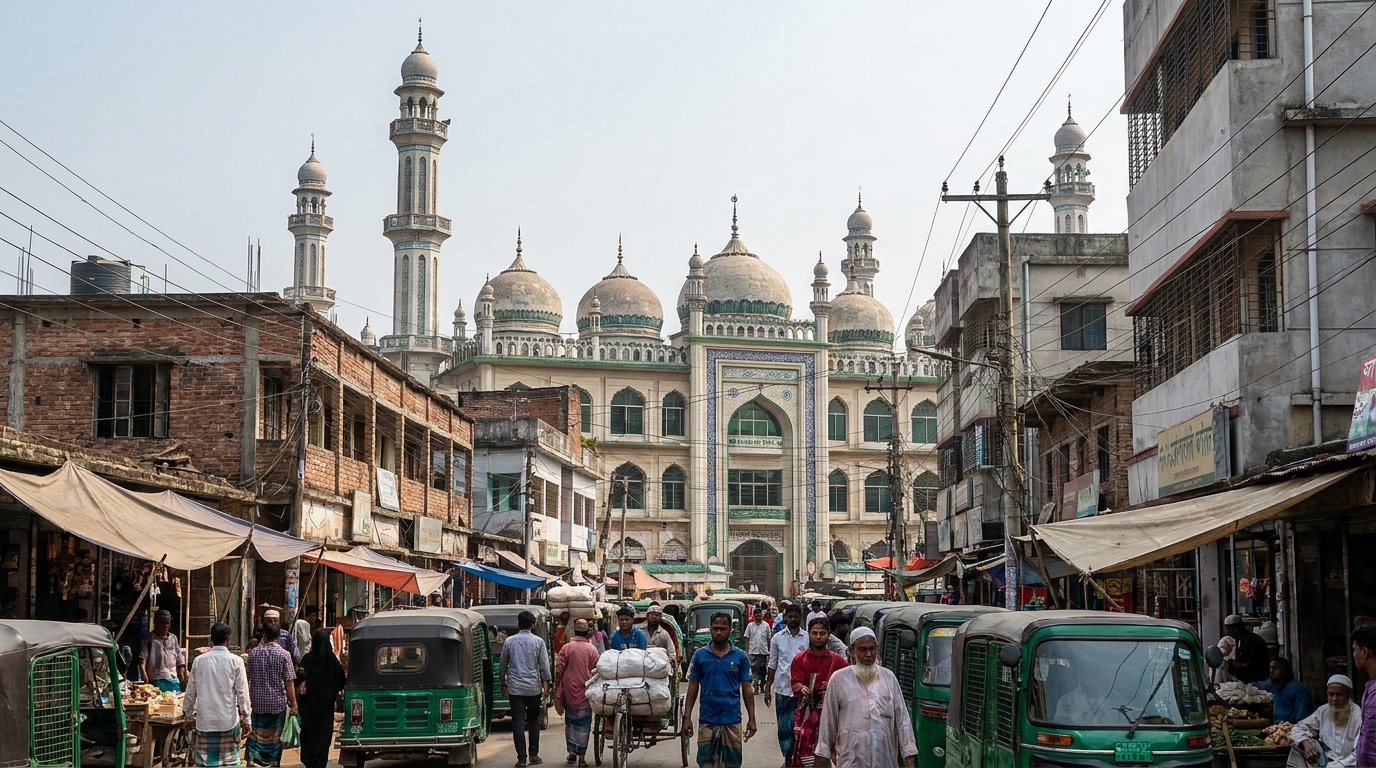
- Moinul Islam Madrasa Minarets: Built starting in 1896, these white spires overlook courtyards where 20,000 students study manuscripts under the 4 AM morning light.
- Halda River Spawning Confluence: At Gorduara, during the first May thunderstorm, the water surface ripples with the eggs of thousands of carp released in a single night.
- Hāthazāri Railway Station: A 1929 red-brick colonial structure where the morning train's steam whistle signals the start of the daily commute to the Chittagong port.
- University of Chittagong Museum: Located on the Hāthazāri border, it preserves a 15-meter whale skeleton and rare 12th-century stone carvings found in the neighboring hills.
- Sultanpur Brick Mosque: A 19th-century mosque with 3-foot thick walls that keep the interior exactly 24 degrees Celsius, even when the outside heat hits 38 degrees.
Cuisine
The cuisine is driven by the 10-month harvesting cycle of the Halda River and heavy reliance on sun-dried red chilies. Cooks use clay ovens fueled by dried coconut husks to maintain a steady 200-degree Celsius heat for slow-cooking regional meats.
- Halda Ruhi Curry: Fresh carp cooked with turmeric and green chilies; the fish scales are unusually thick due to the river's high mineral content.
- Mezbani Gosht: Beef slow-cooked for 6 hours in copper pots with a 12-spice blend including radhuni, creating a sharp, earthy aroma.
- Loitta Shutki Bhorta: Dried ribbon fish mashed with mustard oil and charred garlic, traditionally eaten by farmers for a high-protein breakfast before tilling.
- Ginger-Salt Tea: A sharp, savory brew served in glass tumblers at 5 PM to soothe the throats of students after long recitation sessions.
- Saline Green Coconut Water: Sourced from coastal-adjacent groves, the water has a distinct salty finish because of the region's brackish underground water table.
Culture
Life follows the 'Madrasa clock,' with market activities pausing during the five daily prayers. The aesthetic is a mix of white cotton garments and the indigo-dyed fabrics of the river boatmen, punctuated by the rhythmic sound of wooden oars on the Halda.
- Halda Egg Collection: During the April new moon, 200 handmade boats gather at midnight to scoop carp eggs from the river using fine silk nets.
- February Mahfil: A three-day gathering of 50,000 pilgrims where the scent of woodsmoke from communal kitchens fills the air for miles.
- Chaitra Sankranti Fair: On the last day of the Bengali year, artisans sell bamboo hand-fans and clay whistles at the central Hāthazāri crossing.
- Blue-Checked Lungi: A 2-meter cotton sarong tied with a double knot, favored by Halda fishermen for its quick-drying properties in 90% humidity.
- Starched White Panjabi: A knee-length tunic with chikan embroidery on the placket, worn by scholars to signify purity and status during Friday prayers.
- Hand-Crocheted Topi: A white skullcap with a honeycomb pattern that allows heat to escape the head during the intense midday sun.
- Tant Sari with Red Border: Women wear these 6-yard cotton drapes, heavily starched to maintain a sharp silhouette despite the pervasive river dampness.
- Gamosa: A thin, red-and-white checkered towel carried over the shoulder to wipe sweat or cover the head during the 2 PM heat.