Rangamati
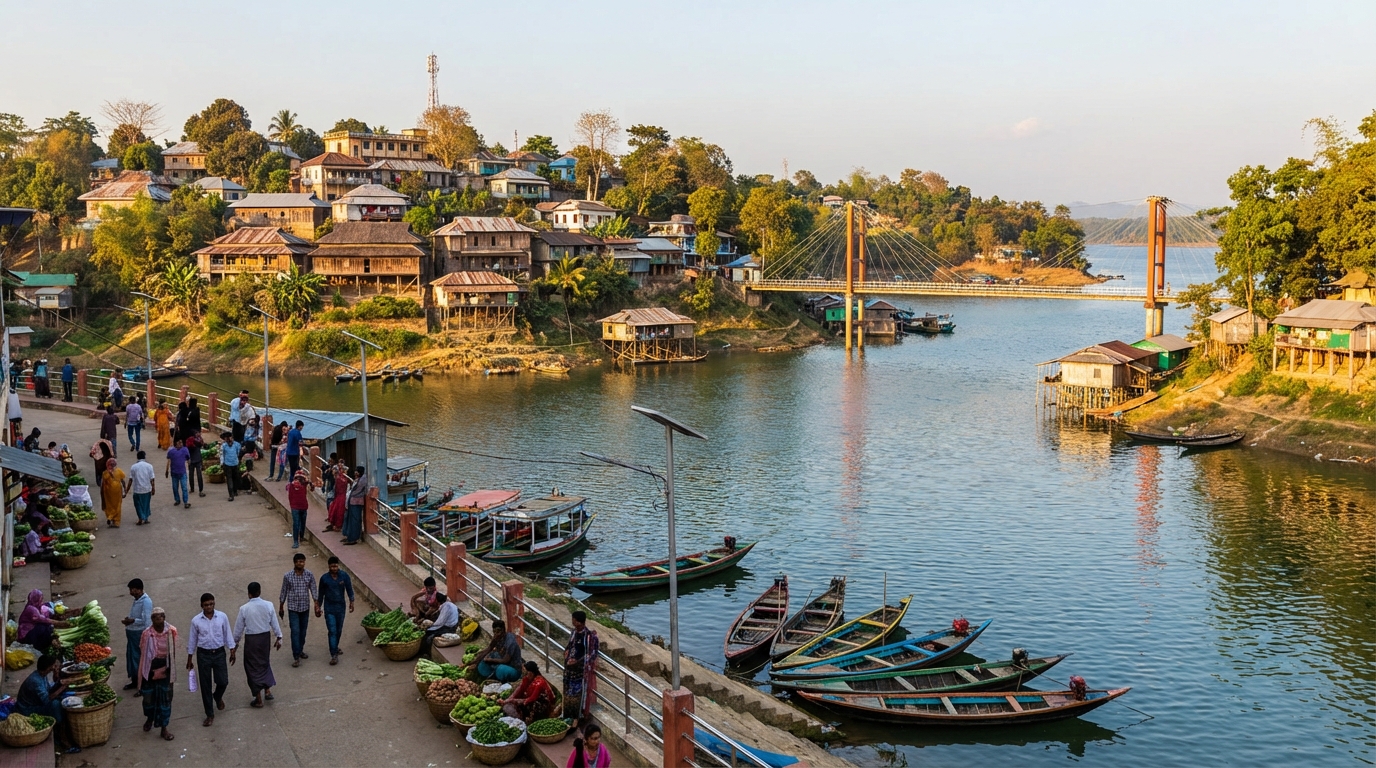
Rangamati is a city in the Chittagong region of Bangladesh. Rangamati is a hilltop administrative center in southeastern Bangladesh, where the lives of 11 indigenous communities revolve around the 68,000 hectares of Kaptai Lake. This location is defined by the sharp contrast of sandstone peaks rising 300 meters above emerald waters and the rhythmic sound of backstrap looms in stilted bamboo houses.
Geography
Formed in 1962 by the damming of the Karnaphuli River, Rangamati is a drowned landscape where former mountain peaks now serve as 1,000 separate islands. The terrain consists of north-south trending ridges composed of Pliocene clay and sandstone. Temperatures average 26 degrees Celsius, with 2,500 millimeters of annual rainfall feeding the dense tropical evergreen forests.
History
On December 2, 1997, the Chittagong Hill Tracts Peace Accord was signed, ending 20 years of internal conflict. This pivotal agreement formally recognized the distinct identity of the ethnic groups and restored the administrative authority of the Chakma Circle Chief. It transformed the region from a restricted zone into a center for indigenous cultural autonomy and local governance.
Landmarks
- Hanging Bridge (Jhula Bridge): This 335-foot suspension bridge, painted in vibrant red and yellow, vibrates noticeably when more than twenty people walk across its wooden planks at once.
- Chakma Rajbari: A functional royal palace built in 1960 that houses 18th-century brass artifacts and serves as a tribal court for solving local community disputes.
- Shuvolong Waterfalls: During the August monsoon, this 140-foot vertical drop creates a mist so thick it obscures boat navigation within a 50-meter radius of the falls.
- Polwel Park: A lakeside park featuring a 'Love Lock' bridge where locals secure padlocks engraved with dates to mark the exact moment of their engagement.
- Banarupa Floating Market: Every Saturday at 7:00 AM, 300 wooden 'shampan' boats gather to trade turmeric and silver-scaled fish directly on the water without using land stalls.
Cuisine
The flavor profile is defined by 'Heba,' a fermented fish paste, and wild 'Khorol' bamboo shoots harvested at dawn. Cooking techniques avoid oil, instead using 'Kola Pata' leaves to steam ingredients or green bamboo tubes to roast meats over 400-degree charcoal embers.
- Bamboo Chicken: Small pieces of poultry are stuffed into a 12-inch green bamboo tube with wild ginger and slow-roasted until the wood outer layer chars.
- Pajon: A festive vegetable stew containing 20 different ingredients including jungle potatoes and dried shrimp, traditionally prepared for the Bizu festival in mid-April.
- Binni Rice: A naturally purple, sticky rice variety grown on hillsides and steamed in bamboo, giving it a floral aroma and a gummy, chewy texture.
- Do-Chowani: A clear, high-proof spirit distilled from fermented rice, traditionally served in small clay cups to welcome guests into indigenous village homes.
- Wild Honey Tea: Black tea brewed with honey harvested from the Pablukhali forest, infused with a specific variety of mountain ginger that provides a sharp, peppery heat.
Culture
Cultural life follows the 'Jhum' lunar agricultural calendar, marked by intricate textile weaving and percussive music. Society is organized through 11 ethnic groups, primarily the Chakma and Marma, each maintaining their own distinct language and script while sharing a collective identity tied to the hill landscape.
- Bizu: A three-day festival where children place flowers in Kaptai Lake at 5:00 AM to bid farewell to the old year and welcome the new.
- Sangrai: The Marma community's water festival where residents splash each other with bowls of water to symbolize the ritual cleaning of the soul and spirit.
- Kathin Chibar Dan: A Buddhist ceremony where women must spin, dye, and weave cloth into a monk's robe within a single 24-hour period to show spiritual devotion.
- Pinon: A heavy, hand-woven wrap-around skirt with a specific 'Sabugi' border design that indicates the wearer's specific clan and marital status.
- Khadi: A rectangular breast-band worn over the Pinon, often featuring 50 or more small, hand-stitched geometric patterns that tell a story of ancestral migration.
- Phamyak: A Marma man's waist-cloth, usually woven from thick dark cotton to withstand the abrasion of hill climbing and daily labor in the fields.
- Enji: A short-sleeved, side-fastening blouse tailored from breathable, locally woven fabric specifically to handle the 85% humidity of the monsoon season.
- Chakma Pagri: A ceremonial white turban worn by village elders; the specific number of folds signifies the wearer's level of seniority within the community.