Bagerhat
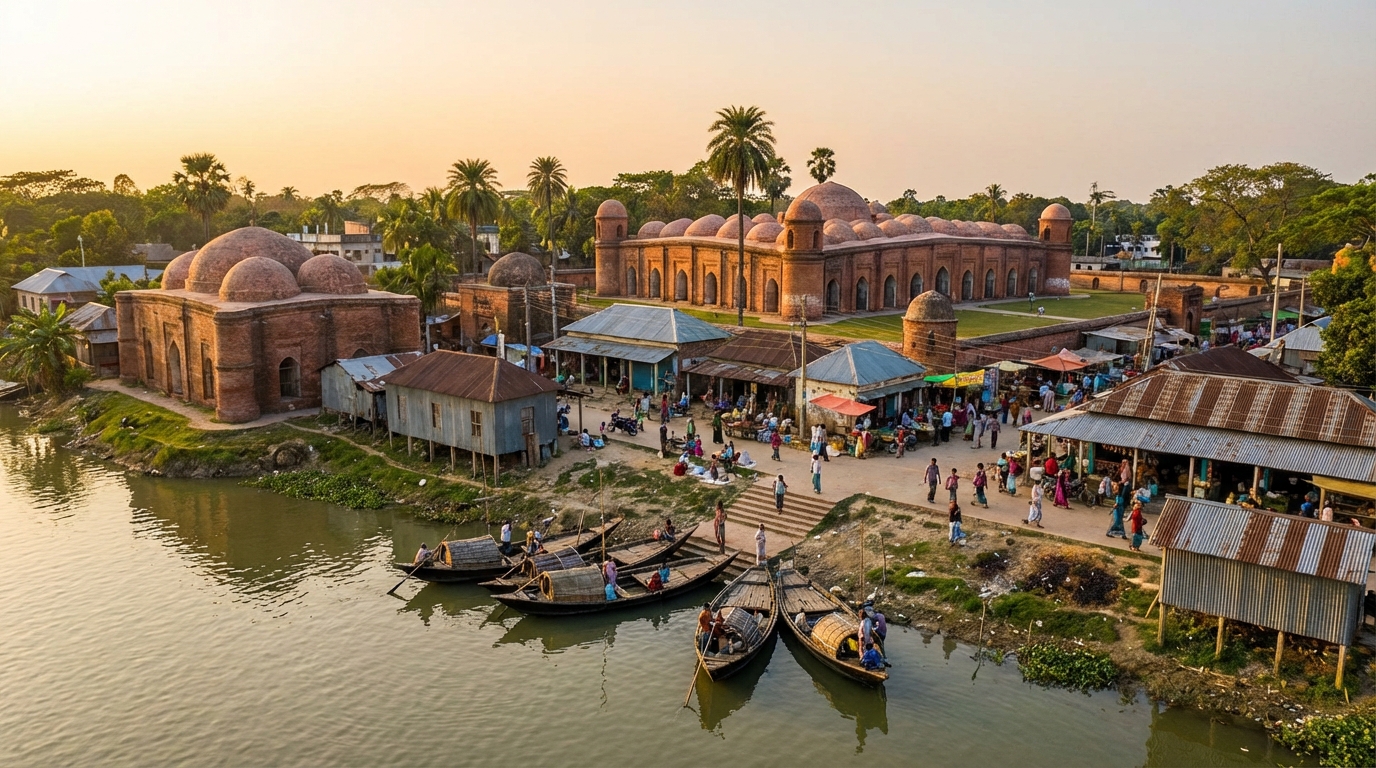
Bagerhat is a city in the Khulna region of Bangladesh. Located in the silt-rich delta of southwest Bangladesh, Bagerhat is a 15th-century outpost defined by its terracotta mosques and engineered water tanks. The city sits at the edge of the Sundarbans where the Bhairab River snakes through terrain shaped by tidal rhythms and ancient brickwork.
Geography
The terrain sits just 2 to 3 meters above sea level, consisting of tidal mudflats and mangrove fringes. Bordered by the Pasur and Baleswar rivers, the humidity often hits 90% in July, and the air carries a distinct scent of brackish water and damp silt.
History
In 1459, the Turkish general Khan Jahan Ali established the Khalifatabad mint town. He engineered a complex 360-tank water filtration system to provide fresh drinking water to thousands in a saline-heavy delta, turning a swamp into a functional administrative center using baked silt and lime mortar.
Landmarks
- Sixty Dome Mosque: Actually contains 77 domes; the walls are 2.5 meters thick to maintain a constant 22-degree Celsius interior temperature during the intense monsoon heat.
- Tomb of Khan Jahan Ali: Features floor tiles with unique Persian floral patterns; the adjacent pond is home to marsh crocodiles that locals have traditionally considered the site's guardians.
- Singair Mosque: A single-domed square structure showcasing intricate brick cornices that mimic the curved rooflines of traditional Bengali thatched bamboo huts through stylized terracotta relief.
- Ranbijoypur Mosque: Boasts the largest single dome in Bangladesh, spanning 11 meters, constructed using a specialized 15th-century mortar blend of lime and ground brick.
- Kodla Math: A 17th-century Hindu temple with vertical ridges resembling pleated fabric, built by a Brahmin to honor his father's memory using local clay.
Cuisine
The diet centers on river-caught Golda Chingri and the heat of the Chui Jhal vine. Because the soil is salt-saturated, locals utilize sarjan farming—raised mounds that allow them to grow ginger and turmeric directly above the brackish water line.
- Chui Jhal Mutton: Stewed with chunks of Piper chaba vine, which dissolves into a peppery, citrus-like heat far more intense than standard black pepper.
- Golda Chingri Malaikari: Giant river prawns simmered in coconut milk; the heads are prized for their rich, buttery orange fat that deeply flavors the rice.
- Shidol Shutki Paste: Fermented fish pounded with local chilies and steamed in banana leaves, creating a salty, umami-rich condiment that defines the delta's traditional palate.
- Khejur Rosh: Date palm sap harvested at 4 AM in clay pots; it is drunk raw or boiled into Nolen Gur molasses within hours.
- Salted Green Coconut: Grown in saline soil, these coconuts offer water with a distinct electrolyte-heavy tang compared to inland varieties, often served chilled in the heat.
Culture
Social life revolves around the mazar of Khan Jahan Ali and the seasonal cycles of the Sundarbans. Men favor lungis for ventilation, while women’s attire often features Nakshi Kantha embroidery, preserving ancestral folklore in every hand-stitched thread.
- Khan Jahan Ali Urs: A religious gathering in the month of Chaitra where thousands eat communal meals to honor the city's 15th-century engineer-saint.
- Nabanna: A post-harvest celebration in November involving the preparation of over 20 types of rice cakes to welcome the new Aman rice crop.
- Rash Mela: A moonlit festival by the Sundarbans edge where Hindu pilgrims bathe in the river and light thousands of small oil lamps.
- 80-Count Cotton Saree: Essential for the 90% humidity, these hand-loomed garments are thin enough to dry quickly after sudden, heavy tropical downpours.
- Checkered Lungi: The standard garment for men, tied in a tubular knot that allows maximum leg movement for navigating muddy riverbanks.
- White Panjabi: A knee-length tunic worn during Friday prayers; it is typically made of Mughal-style fine muslin or light local cotton.
- Nakshi Kantha Wrap: Heavily embroidered quilts used in winter; the patterns often depict the Bhairab river’s waves and local kingfisher birds.
- Gamcha: A thin, checkered towel often worn around the neck or head by farmers to wipe sweat during the intense noon sun.