Mymensingh
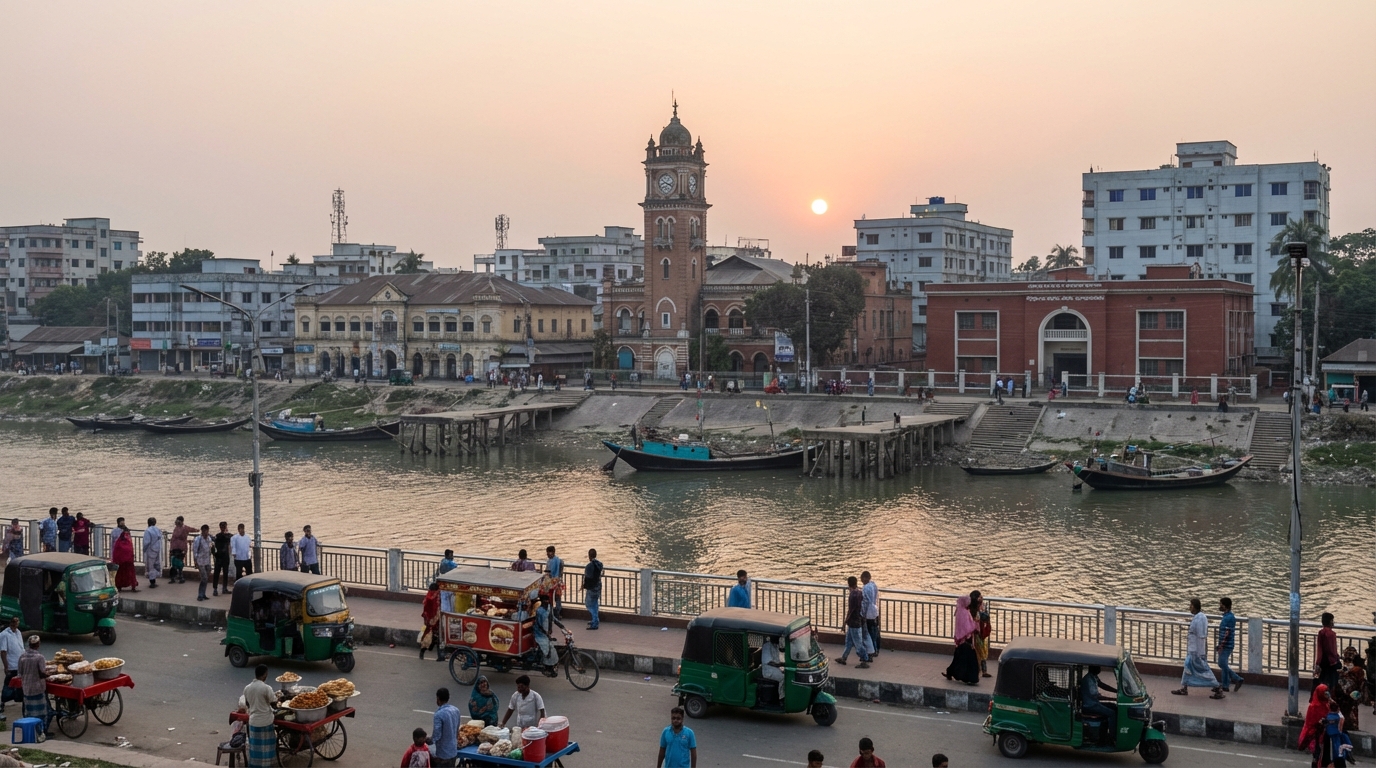
Mymensingh is a region of Bangladesh. Mymensingh is a riverine hub in north-central Bangladesh, positioned along the banks of the Old Brahmaputra River. It is most striking for its concentration of 19th-century colonial architecture and its role as the nation's agricultural heartland, where the smell of drying jute fills the humid air.
Geography
Mymensingh is defined by the Old Brahmaputra River, which shifted its main path during the 1762 earthquake. To the north, it shares a 140-kilometer border with India’s Meghalaya state. The terrain is flat, silt-rich alluvial plain where humidity averages 75%. Temperatures fluctuate between 12°C in January and 35°C in May, supporting an ecosystem of 148 indigenous fish species in local wetlands.
History
A defining moment occurred on May 1, 1787, when W. Wroughton established the district to manage regional revenue. While the 1897 Great Indian Earthquake destroyed most colonial brickwork, the community rebuilt using local timber and iron. This resilience turned the city into an educational hub, leading to the 1961 founding of the Agricultural University, which remains a cornerstone of the region.
Landmarks
- Shashi Lodge: The 1905 palace features a French-imported musical marble fountain that still sits within its lotus pond today, surviving the 1897 earthquake.
- Alexander Castle: Built in 1879 with iron frames, this 'Lohar Kuthi' hosted Rabindranath Tagore, who wrote poetry in its drafty, high-ceilinged library rooms.
- Germplasm Centre: This 1961 facility preserves 173 indigenous mango varieties, smelling of ripening fruit and damp earth throughout the humid summer months.
- Zainul Abedin Sangrahashala: Established in 1975, this gallery houses 70 original charcoal sketches capturing the 1943 famine, drawn on rough brown packing paper.
- Brahmaputra Bridge: A modern concrete span where locals gather at dusk to hear the rhythmic thrum of tires against the steel expansion joints.
Cuisine
The cuisine relies on 'Boro' rice and river fish, seasoned with mustard oil and Nigella seeds. Local clay ovens reach 300°C to bake flatbreads, while the river's high mineral content gives local vegetables a distinct metallic sweetness. Cooking involves slow-simmering in heavy iron 'Karai' pots, a method that intensifies the flavors of fermented fish and hand-ground turmeric roots.
- Muktachachir Monda: Created in 1824, this 20-ingredient sweet uses fresh milk curd and sugar, traditionally served on small, square pieces of brown paper.
- Chepa Shutki: This fermented fish paste is pounded with 10 bird's eye chilies and garlic for a sharp, pungent breakfast served with rice.
- Katari Bhog: An aromatic short-grain rice grown in silt-heavy soil, known for its popcorn-like scent when boiled at precisely 100°C.
- Khejur Rosh: Collected at dawn from date palm trees in clay pots, it has a cool, smoky, sugary flavor popular in 15°C winters.
- Labang: A thick, salted yogurt drink served in brass tumblers, flavored with crushed black pepper and roasted cumin to combat 35°C heat.
Culture
Culture is anchored by the Mymensingh Gitika, folk ballads compiled in 1923 that celebrate local legends. Residents speak a dialect influenced by Sanskrit, characterized by softer dental consonants. Men typically wear cotton lungis, while women favor hand-embroidered Kantha wraps during winter. The city celebrates harvest cycles with Lathi Khela, a martial art using 5-foot bamboo sticks to the beat of traditional drums.
- Baishakhi Mela: On April 14, craftsmen display ivory-colored 'Shital Pati' mats, which feel cool to the touch even in 32°C humid weather.
- Nabanna: In late autumn, farmers celebrate the Aman harvest by preparing rice cakes using newly ground flour and dark date molasses.
- Lathi Khela: A traditional martial art performed with bamboo sticks, where players move to the rhythmic, heavy beat of large Dhak drums.
- Shital Pati Wrap: A cool, ivory-colored mat woven from Murta plants, often wrapped around the body during peak 32°C summer humidity.
- Nakshi Kantha: Hand-quilted cotton wraps using 5,000 stitches to depict rural folklore, worn during the 15°C January evenings for warmth.
- Lungi: A 2-meter cylinder of checkered cotton, knotted with a double twist to provide airflow during humid agricultural work.
- Jamdani Saree: A 6-yard ceremonial garment featuring 300-count thread patterns that take two weavers four months to complete by hand.
- Panjabi: A knee-length cotton tunic with fine 'Chikan' embroidery, worn by men for communal Friday prayers at the local mosque.