Sylhet
Sylhet is a region of Bangladesh. Sylhet is a high-altitude plateau in northeastern Bangladesh where the Surma River meanders through 150 tea estates. It serves as a spiritual hub defined by the 1303 arrival of Sufi saints and a distinct dialect that separates it from the rest of the country.
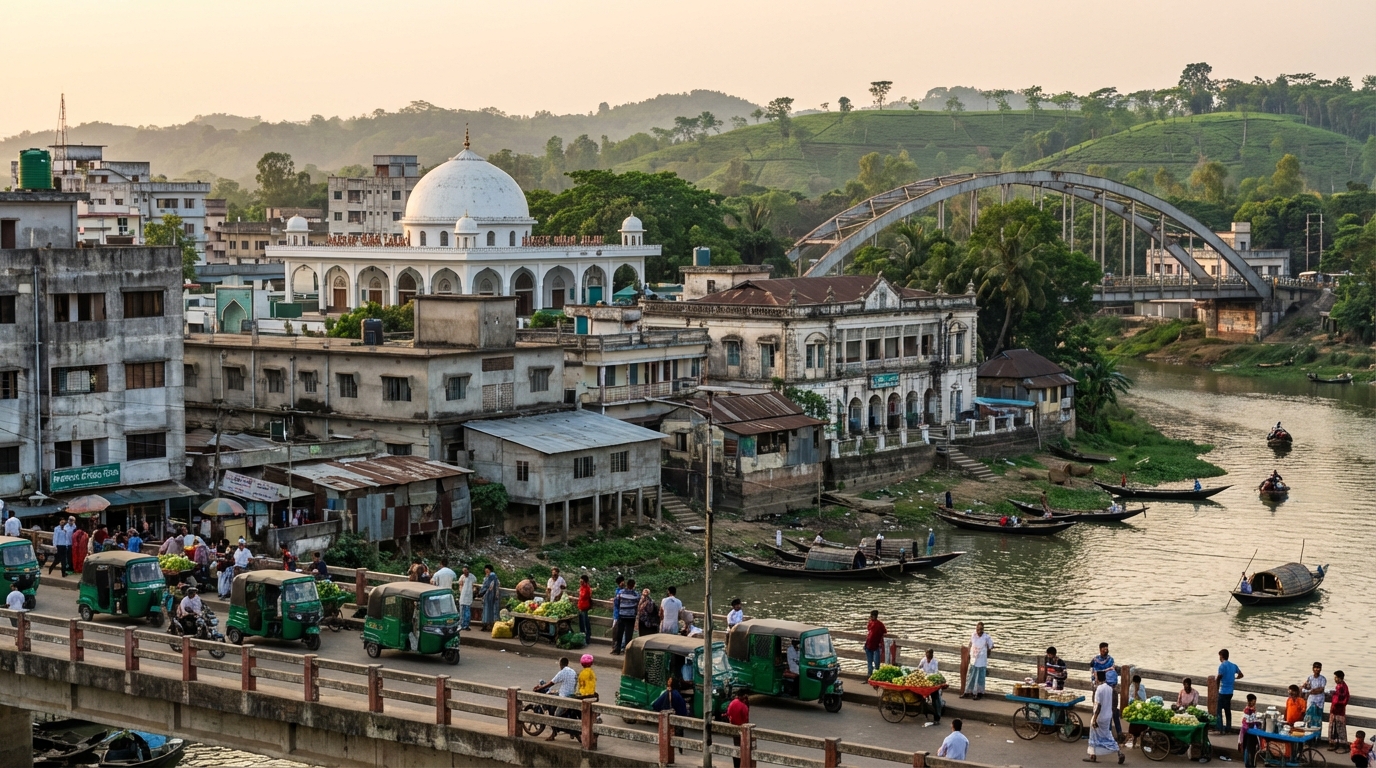
Geography
Sylhet sits on a tectonic shelf bordering India, receiving 4,000mm of rain annually. The landscape is defined by tillas—elevated sandy mounds—and the Haor basin, a massive depression that transforms into a 30,000-hectare inland sea during the monsoon.
History
In 1303, the Sufi saint Shah Jalal arrived with 360 companions, defeating King Gour Govinda. This pivotal event replaced the local monarchy with a Sufi tradition that still dictates the city’s social rhythm and architectural identity today.
Landmarks
- Dargah-e-Shah Jalal: This shrine features a sacred pond containing ancient catfish that locals feed chickpeas to, honoring a tradition of spiritual guardianship.
- Keane Bridge: A 1936 iron-truss bridge over the Surma River that vibrates underfoot; it remains the primary pedestrian artery connecting the old and new city.
- Malnicherra Tea Estate: Founded in 1854, this is the oldest tea garden in South Asia, where the sharp, herbal scent of drying leaves fills the air.
- Bholaganj Sada Pathar: A newer attraction where the Dhalai River deposits white limestone from the Indian hills, creating a terrain of smooth, bone-white stones.
- Ratargul Swamp Forest: A freshwater marsh where evergreen trees stay submerged in 10 feet of water; locals navigate the silent canopy in hand-carved wooden canoes.
Cuisine
Sylheti cuisine is built around the shatkora, a bitter-sour citrus fruit. The local palate favors extreme heat from naga morich peppers and the pungent depth of fermented fish prepared in earthen pots.
- Beef Shatkora: The rind of the Citrus macroptera fruit is slow-cooked for 90 minutes with beef, releasing a medicinal, floral tang into the fatty marrow.
- Shutki Shira: A fermented fish stew boiled with seasonal vegetables and naga peppers, known for a pungent aroma that can be detected from several houses away.
- Huroos: A traditional Sylheti chicken roast prepared during weddings, heavily spiced with cumin and coriander until the sauce reduces to a thick, dark paste.
- Seven-Color Tea: A glass containing seven distinct layers of tea, milk, and ginger, each with a different density to prevent the colors from mixing.
- Kha Tea: A high-tannin black tea brewed in copper vessels and sweetened with thick condensed milk, traditionally served in 100ml glasses to retain heat.
Culture
Culture is anchored by the Sylheti Nagri script and the 'Londoni' diaspora. Festivities often blend Sufi mysticism with the rhythmic seasonal cycles of the tea harvest and monsoon rains.
- Urs of Shah Jalal: A two-day gathering in the month of Zil-Hajj featuring rhythmic chanting and communal kitchens that serve thousands of pilgrims for free.
- Haluar Mela: A dry-season agricultural fair where farmers trade cattle and participate in wooden boat races across the receding waters of the haors.
- Pous Sankranti: A harvest celebration marked by rooftop kite flying and the preparation of steamed rice cakes made from freshly threshed Aman rice.
- Sylheti Lungi: A checkered cotton wrap worn by men, knotted specifically at the navel to allow air circulation in the 90% humidity.
- Manipuri Saree: Hand-loomed by indigenous artisans, these sarees feature the Moirang Phee temple pattern, traditionally worn for formal family gatherings.
- Phanek: A wrap-around skirt with horizontal stripes worn by indigenous Manipuri women, often paired with an embroidered green velvet blouse.
- Cotton Panjabi: A long, knee-length tunic worn by men for Friday prayers, usually made of thin white muslin to reflect the tropical sun.
- Ghomta Saree Style: A specific draping technique where the saree tail is used as a head covering, symbolizing respect in conservative tea-farming villages.