Henan
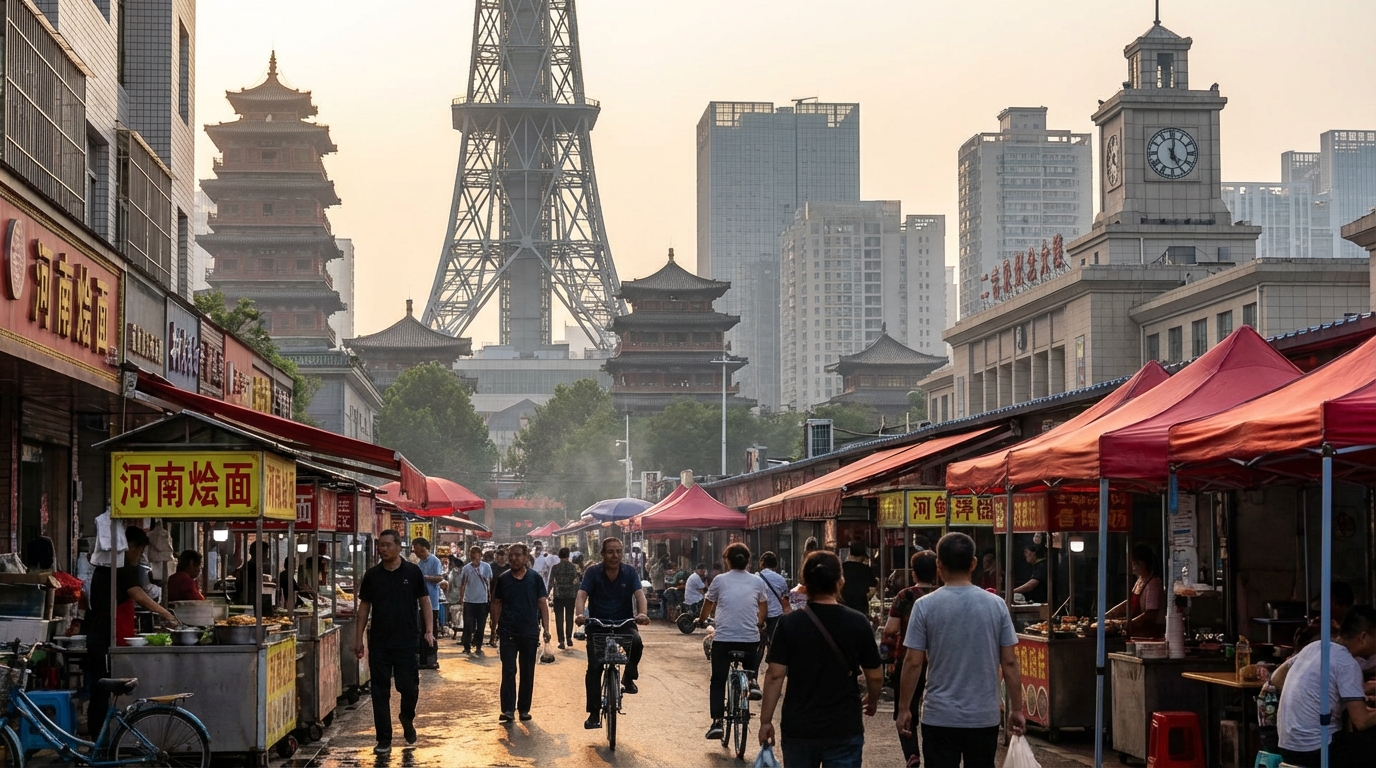
Henan is a region of China. Henan sits in the central heart of the Yellow River valley, serving as the physical and spiritual anchor where the earliest Chinese dynasties first established their administrative power. Its landscape is defined by the massive silt deposits of the Yellow River and a population of 99 million people who maintain deep ties to the land's agricultural and martial heritage.
Geography
The province transitions from the 2,000-meter peaks of the Taihang Mountains in the west to the flat North China Plain. The Yellow River carries nearly 1.6 billion tons of sediment annually, resulting in a 'suspended river' where the waterbed sits 10 meters above the surrounding land in certain eastern stretches near Kaifeng.
History
In 960, General Zhao Kuangyin staged a strategic coup at Chenqiao, establishing the Northern Song Dynasty with its capital in Kaifeng. This pivotal move transformed the region into a global center for urban innovation, where the world's first paper currency, the Jiaozi, and complex mechanical clocks were developed to manage a rapidly expanding metropolitan economy.
Landmarks
- Longmen Grottoes: The 17-meter-tall Vairocana Buddha has ears exactly 1.9 meters long, intentionally modeled after the facial features of Empress Wu Zetian in 675.
- Shaolin Temple: The courtyard's ancient trees feature deep circular depressions made by monks practicing finger-striking techniques over a period of three hundred years.
- White Horse Temple: This site features a distinct 21st-century 'Thai Style' hall, constructed with gold-leaf roofing as a diplomatic gift, standing beside 1st-century Chinese pagodas.
- Henan Museum: This truncated pyramid houses a 9,000-year-old crane-wing bone flute that still produces a clear seven-note scale when played by modern musicians today.
- Only Henan Drama City: A 628-meter-long architectural theater complex using 56 different courtyards to tell stories of grain and survival through shifting light and yellow earth.
Cuisine
The cuisine centers on wheat-based staples and long-simmered bone broths rather than rice. Chefs utilize heavy iron woks and rely on star anise and black pepper to create a warming heat that characterizes the region's transition between northern and southern flavor profiles.
- Hui Mian: Hand-pulled, wide elastic noodles slapped against the counter for texture, served in a milky lamb broth simmered for exactly five hours.
- Hu Spicy Soup: A breakfast dish thickened with wheat gluten and seasoned with heavy black pepper, creating a temperature-focused heat that warms the chest instantly.
- Kaifeng Soup Dumplings: These 18-pleated dumplings contain a solid sphere of pork that liquifies into broth at 100 degrees Celsius, requiring a specific 'lift-and-sip' technique.
- Xinyang Maojian Tea: Harvested in early April, these needle-shaped leaves are covered in fine white down and produce a nutty, thick liquor when steeped.
- Du Kang Liquor: A clear, 52-percent alcohol grain spirit distilled using Luoyang spring water, named after the legendary figure who allegedly invented fermentation 4,000 years ago.
Culture
Henan culture is anchored by Yu Ju opera, known for its high-pitched vocals, and the martial discipline of the Songshan mountains. Festivals follow the lunar calendar, blending agricultural cycles with 11th-century imperial ceremonies and a modern passion for botanical aesthetics.
- Luoyang Peony Festival: Every mid-April, over 1,200 varieties of peonies bloom simultaneously, continuing a floral tradition that became an imperial requirement in the year 600.
- Shaolin Wushu Festival: Thousands of practitioners perform synchronized 'Taolu' forms, where the collective sound of feet striking the pavement creates a rhythmic boom throughout the valley.
- Kaifeng Chrysanthemum Festival: In October, the city displays 3 million flower pots arranged into massive dragons and pagodas, honoring the Song Dynasty’s historical botanical obsession.
- Shaolin Yi: Saffron-colored robes featuring wrap-around leggings called 'bindings' that prevent fabric from snagging during high-velocity kicks and mountain training.
- Mianfu: A formal black ritual robe with twelve distinct symbols, including the sun and moon, historically worn for imperial sacrifices at Mount Song.
- Song-style Hanfu: Kaifeng-style garments with straight-collar jackets and narrow pleated skirts, replicating the middle-class fashions seen in 11th-century scroll paintings.
- Tiger-Head Shoes: Handmade silk toddler shoes featuring embroidered tiger faces and 3D ears, designed to protect children from spirits through animal symbolism.
- Doupao: A floor-length velvet cloak lined with fur, worn by local opera performers to maintain vocal warmth during outdoor winter performances.