Jiangsu
Jiangsu is a region of China. Jiangsu occupies the fertile Yangtze River Delta on China's eastern coast, acting as a historical bridge between the northern wheat lands and southern rice paddies. It is striking for its dense network of 2,900 kilometers of the Grand Canal and the fact that every one of its major cities ranks among the wealthiest in the nation.
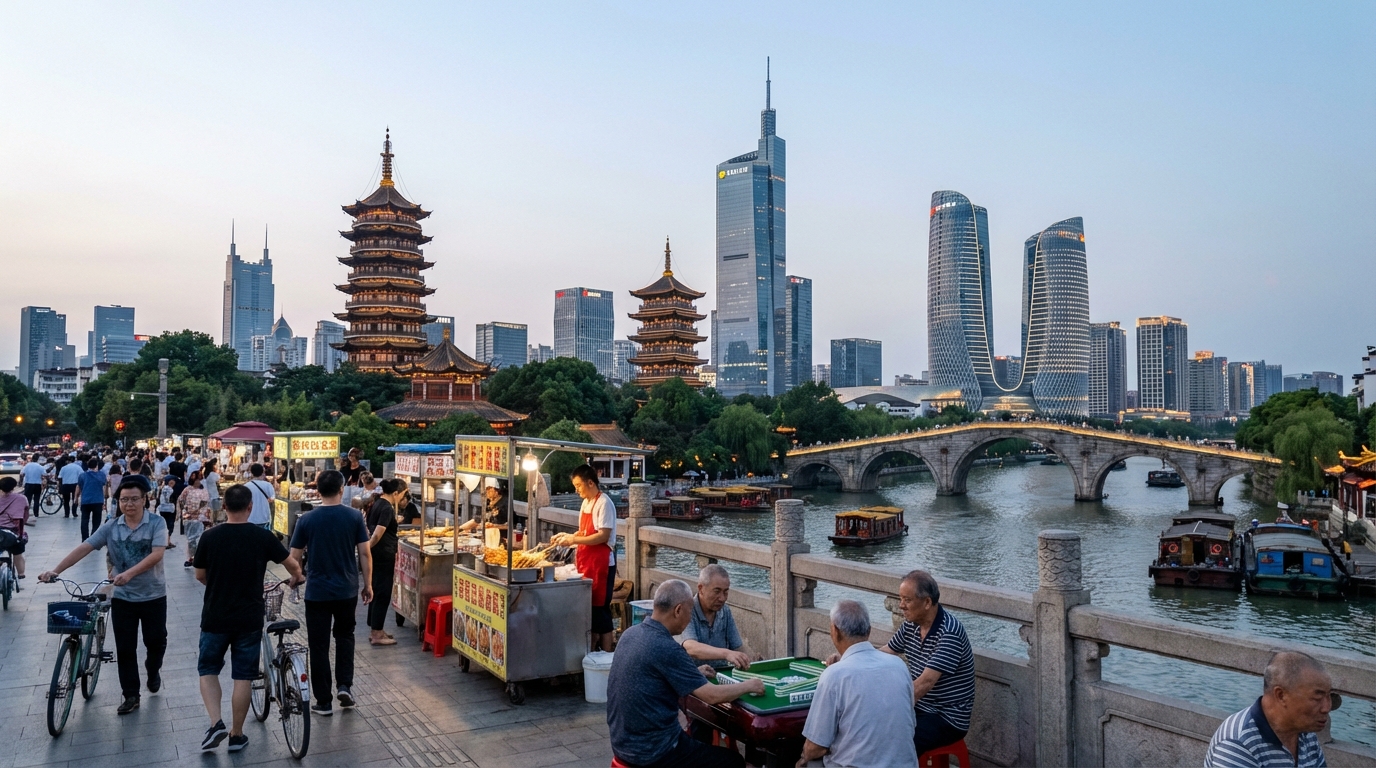
Geography
Jiangsu is China's flattest province, with 95 percent of its 102,600 square kilometers sitting below 50 meters in elevation. The Huai River divides the province, creating a boundary where the humid, rice-growing south meets the cooler, wheat-growing north. One-sixth of the total land area is composed of rivers and silt-rich plains.
History
On January 23, 1368, the Hongwu Emperor established his capital in Nanjing, making Jiangsu the political center of the Ming Dynasty. To protect his seat of power, he commissioned a 35-kilometer wall made of seven million bricks, each inscribed with the names of the kiln workers to ensure structural accountability for six centuries.
Landmarks
- Sun Yat-sen Mausoleum: This site features 392 blue-tiled steps that appear as a single vertical plane when viewed from below, symbolizing the difficult ascent to national unity.
- Humble Administrator's Garden: Constructed in 1509, this garden uses borrowed scenery techniques where the distant North Temple Pagoda is framed perfectly through 48 unique window lattice designs.
- Nanjing City Wall: The 650-year-old bricks bear deep-etched signatures of Ming Dynasty kiln workers who were held personally accountable for the wall's structural integrity.
- Suzhou Museum: Designed by I.M. Pei in 2006, the building uses dark gray granite accents to mimic traditional ink-wash paintings against stark white plaster walls.
- Lianyungang Crystal Market: This massive hub handles 80% of the world's raw quartz, where traders navigate aisles of unpolished amethyst that scent the air with stone dust.
Cuisine
Huaiyang cuisine is defined by its gentle preparation, avoiding heavy spices to let the natural sweetness of Yangtze river fish shine. It is famous for knife work where chefs slice tofu into 5,000 threads thin enough to pass through the eye of a needle.
- Nanjing Salted Duck: Marinated in a 600-year-old brine, this duck is air-dried until the skin is creamy white and the meat tastes of salt and osmanthus.
- Wensi Tofu: A 17th-century dish where a soft block of tofu is shredded into 5,000 hair-thin strands that dance in a clear, savory chicken broth.
- Lion’s Head Meatballs: These oversized pork meatballs are braised for four hours until they become so tender they can be eaten using only a ceramic spoon.
- Biluochun Tea: Picked in early spring, these tiny, curled leaves smell like the peach and apricot blossoms that grow alongside tea bushes on Dongting Mountain.
- Yanghe Daqu: This blue-bottled spirit is distilled using water from the Beauty Spring in Suqian, creating a smooth flavor that lacks the typical baijiu burn.
Culture
Jiangsu culture centers on refined arts like Kunqu Opera and silk weaving. The local Wu dialect is melodic and soft, often used in storytelling traditions that date back to the 14th century in the narrow alleyways of old Suzhou.
- Qinhuai Lantern Festival: Every Lunar New Year, 500,000 handmade lanterns light up the Qinhuai River, reflecting off the dark water as crowds release floating paper wishes.
- Suzhou Silk Festival: Held each September, this event showcases the Kesi weaving technique, where silk tapestries are made so precisely they look identical on both sides.
- Grand Canal Cultural Festival: In Suzhou, this event honors hydraulic heritage with dragon boat races featuring 20-meter vessels decorated with carved heads that compete on ancient waterways.
- Nanjing Yunjin Brocade: Known as Cloud Brocade, this ceremonial fabric uses gold thread and peacock feathers; it takes two weavers a full day to produce two centimeters.
- Su-style Qipao: This dress features high collars and hand-stitched buttons, often requiring sixty hours of labor for its delicate and detailed silk floral embroidery.
- Zhenhu Embroidery Scarf: These silk scarves use thread split into 16 strands, creating double-sided patterns that appear three-dimensional when held up to the light.
- Tangzhuang Jacket: Worn during celebrations, these silk jackets feature hand-knotted frog buttons and round longevity patterns woven directly into the sapphire or crimson fabric.
- Blue Calico Apron: Traditionally worn by rural women, this indigo-dyed cotton features white floral patterns created using a soybean-and-lime paste resist that smells of earth.