Shandong
Shandong is a region of China. Shandong, a coastal province on China's eastern edge, anchors the Bohai Rim with its rugged peninsula and fertile plains. It is defined by the silhouette of Mount Tai and the legacy of Confucius, balancing industrial might with ancient ritual.
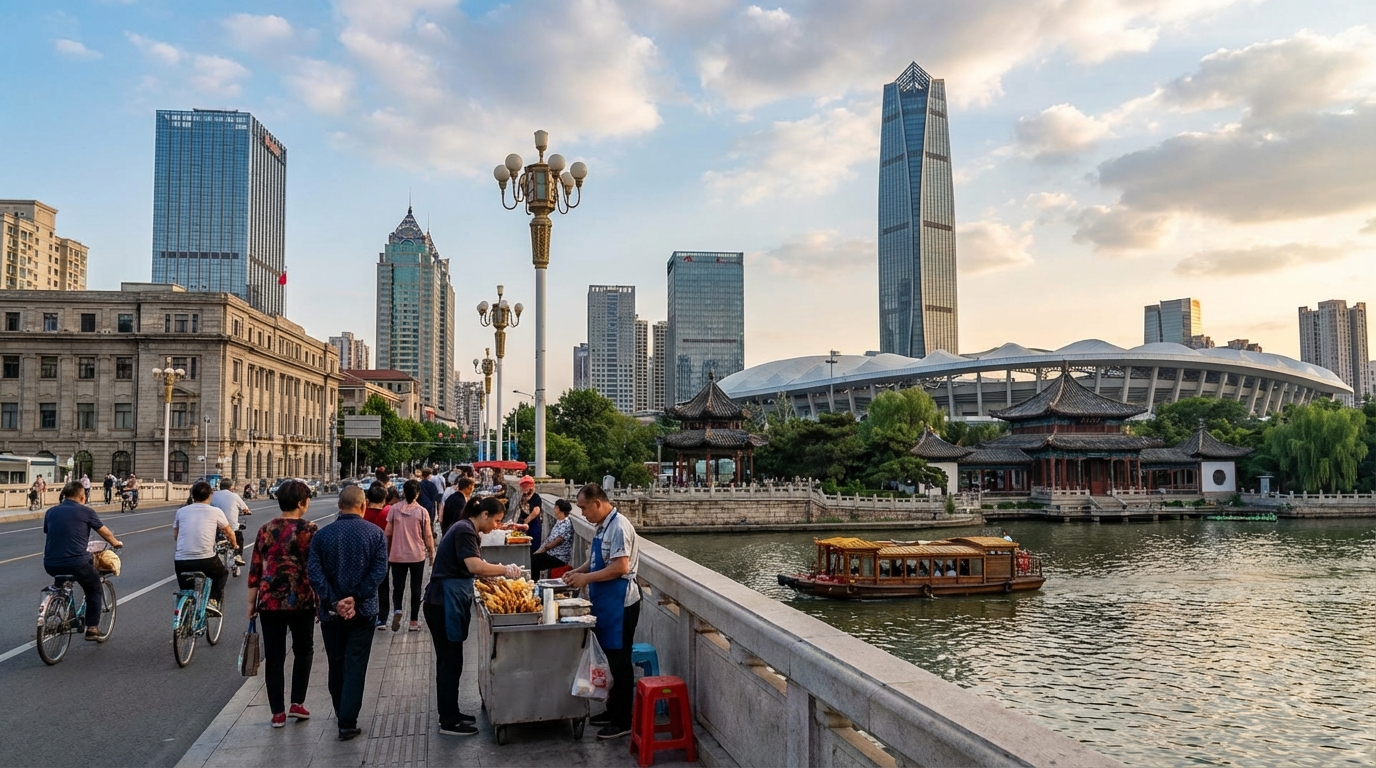
Geography
The 3,345-kilometer coastline meets the Yellow River's terminus. The terrain splits between the flat western plains and the granite peaks of the central highlands, reaching 1,532 meters at Mount Tai, where cold winds collide with maritime moisture.
History
In 551 BCE, the birth of Kong Fuzi in the State of Lu established a philosophical lineage. His teachings on social harmony and hierarchy were codified here, creating a moral framework that governed imperial Chinese society for two millennia.
Landmarks
- Mount Tai: The 6,293 stone steps lead to the Jade Emperor Summit, where emperors have performed Feng Shan sacrifices since 219 BCE to claim heavenly legitimacy.
- Qufu Confucius Temple: This 14th-century complex features 466 rooms and nine courtyards, reflecting the architectural hierarchy typically reserved for imperial palaces in Beijing to honor the sage.
- Zhanqiao Pier: Constructed in 1891, this 440-meter pier served as a naval wharf before becoming the iconic symbol on Tsingtao Beer bottles, surviving multiple colonial occupations.
- Qingdao Beer Museum: Located inside the original 1903 brewery, it houses the copper brewing kettles used by German engineers and offers unpasteurized beer directly from the production line.
- Weifang Kite Museum: This site celebrates the 1984 inauguration of the world’s largest kite festival, housing a 12th-century kite reconstruction and giant dragon-headed centipede kite models.
Cuisine
Shandong’s Lu cuisine relies on high-heat stir-frying and heavy use of scallions. Chefs master the Bao technique, searing ingredients in seconds to preserve a crisp, tender-inside texture.
- Sweet and Sour Carp: Caught from the Yellow River, the fish is deep-fried to a leaping shape symbolizing success, then glazed in a sharp vinegar-sugar reduction.
- Braised Sea Cucumber with Scallions: Slow-cooked with Zhangqiu scallions that grow 2.5 meters tall, this dish emphasizes the gelatinous texture of sun-dried Dalian sea cucumbers in a savory sauce.
- Dezhou Braised Chicken: Created in 1692, this dish uses twelve spices; the meat is so tender it separates from the bone with a single shake of the bird.
- Tsingtao Beer: Brewed since 1903 using mineral water from the granite springs of Mount Lao, it retains a distinct German pilsner carbonation and crisp maltiness.
- Laoshan Cola: Developed in 1953, this beverage infuses carbonated water with traditional herbs like jujube and ginger, offering a medicinal, spicy-sweet profile unique to the region.
Culture
Shandong culture is built on Hao Ke hospitality. Locals speak a dialect where the third tone is exceptionally low, and they value communal dining around massive tables.
- Weifang International Kite Festival: Held every April 20th, thousands fly complex dragon-headed centipede kites, some stretching over 100 meters, to honor the legendary inventor and local hero Lu Ban.
- Qingdao Beer Festival: Starting the second weekend of August, this 16-day event involves Gan Bei culture and massive tents serving fresh stout brewed specifically for the local population.
- Qufu Confucius Festival: On September 28th, dancers wear Ming-style robes and perform the Eight-Row Dance to the sound of ancient bronze bells and chimes at the Sage's temple.
- Cross-collared Ruqun: A Ming-dynasty style favored in Qufu, featuring heavy embroidery of plum blossoms, worn during traditional coming-of-age ceremonies for young women to symbolize purity.
- Dark Blue Cotton Tunic: Historically worn by Jinan merchants in the 1920s, these feature hand-carved sandalwood buttons and high-standing collars to resist the harsh winter winds of the north.
- Sea-Salt Workers' Gear: Coastal laborers in Weihai wear thick, indigo-dyed hemp trousers and straw-woven sandals designed to withstand corrosive salt-pan environments during the intense summer salt harvests.
- Ceremonial Baogua: A black silk overcoat with wide sleeves worn by elders during the Spring Festival to symbolize stability, wisdom, and respect within the family hierarchy.
- Laoshan Headscarf: Elderly women in coastal villages wear vibrant, floral-patterned silk scarves knotted under the chin to protect against the damp, salty 15-knot sea breezes of autumn.