Sichuan
Sichuan is a region of China. Sichuan is a southwestern Chinese province nestled in a mountain-rimmed basin, acting as a geological sanctuary for giant pandas and the cradle of the ancient Shu civilization. It is defined by its misty climate and the intense, numbing heat of its world-renowned culinary traditions.
Geography
The 260,000 square kilometer Sichuan Basin is encased by 7,000-meter peaks of the Tibetan Plateau. Its red sandstone soil acts as a thermal sponge, trapping moisture to create a permanent low-altitude cloud cover that blocks the sun for over 250 days a year, keeping humidity levels above 80 percent.
History
In 256 BC, engineer Li Bing conquered the Min River floods by carving a channel through Yulei Mountain using fire and water to crack the stone. His Dujiangyan system avoided dams, using a Fish Mouth levee to divert water naturally, transforming the region into a drought-proof agricultural powerhouse.
Landmarks
- Leshan Giant Buddha: Carved in 803 AD, this 71-meter statue features a complex hidden drainage system of 18 internal channels that carry rainwater away to prevent stone erosion.
- Mount Emei: At 3,099 meters, the summit displays the Buddha’s Halo, a diffraction of sunlight through water droplets creating a spectral ring around a viewer's own shadow.
- Jinsha Site: Discovered in 2001, this museum displays a 94 percent pure gold foil sun disk, only 0.02cm thick, proving the advanced metallurgy of ancient Shu people.
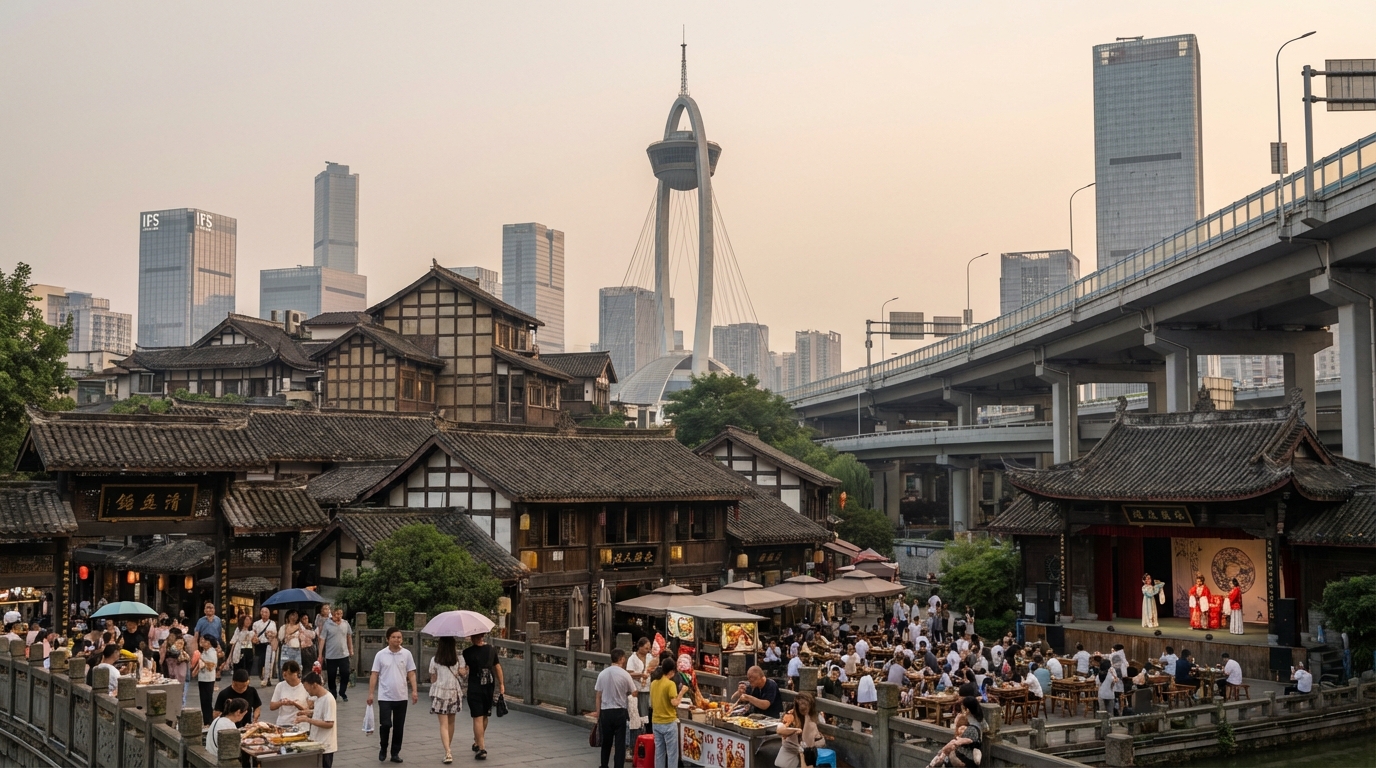
- IFS Climbing Panda: A 15-meter, 13-ton steel and fiberglass sculpture by Lawrence Argent that has become the primary urban meeting point for Chengdu’s youth since 2014.
- Tianfu Greenway: A massive 16,900-kilometer network of urban parks currently under construction, aiming to create the world’s largest continuous city-level ecological cycling and walking path.
Cuisine
Sichuan food is defined by Ma (numbing) and La (spicy). The unique use of the prickly ash berry creates a 50Hz vibrating sensation on the tongue, chemically masking the pain of capsaicin from chilis so complex flavors emerge.
- Mapo Tofu: Created in 1862 by Mrs. Chen, it utilizes fermented broad bean paste from Pixian and a final dusting of raw, toasted peppercorns for grit.
- Twice-Cooked Pork: Slabs of pork belly are boiled with ginger then stir-fried at 200 degrees Celsius until the fat curls into lantern oil shapes for texture.
- Kung Pao Chicken: Invented for Governor Ding Baozhen, the secret is the Lychee flavor, achieved by precisely timing the flash-frying of sugar and black vinegar in lard.
- Wuliangye: A 52% alcohol spirit crafted from a 600-year-old Ming Dynasty recipe, blending five distinct grains to create a pineapple-like aroma and smooth finish.
- Gaiwan Tea: Jasmine tea served in a three-piece set; placing the lid upright inside the saucer signals to the waiter that the guest needs more water.
Culture
Culture revolves around the Ba-Shu spirit, a blend of Taoist relaxation and resilient mountain heritage. Life slows down in teahouses where rhythmic dialect tones accompany the clicking of mahjong tiles and regional opera strings.
- Sichuan Opera Festival: Showcases Bian Lian, where actors pull hidden silk threads to swap ten different hand-painted masks in seconds during dramatic climaxes.
- Zigong Lantern Festival: Thousands of craftsmen use glass bottles and silk to build 20-meter-tall glowing structures, a tradition that has evolved since the Tang Dynasty.
- Chengdu Flower Fair: Held every lunar February 15th since the 8th century, it features massive bonsai competitions and the display of rare, locally-grown orchids.
- Shu Brocade: A heavy silk fabric with 2,000 years of history, woven on grand looms to create iridescent patterns that change color under different light.
- Qiang Cross-stitch: Worn by mountain minorities, these vests feature geometric rhododendron patterns meant to provide spiritual protection to those traversing high-altitude trails.
- Pipa Knots: Hand-braided buttons shaped like lutes used on traditional high-collar shirts, signifying cultural refinement and marital harmony during modern festival banquets.
- Bamao Straw Sandals: Historically essential for tea-horse road porters, these are now worn during folk dances to honor the province's history of rugged trade.
- Scholar's Fan: A foldable bamboo and silk accessory used during humid summers, often inscribed with local poetry to signal social status and intellect.