Tibet
Tibet is a region of China. Resting on the massive Qinghai-Tibet Plateau at an average elevation of 4,500 meters, this region acts as the primary water source for Asia's greatest rivers. It is defined by its thin, crystalline air and the massive Himalayan range that forms a natural frozen fortress along its southern border.
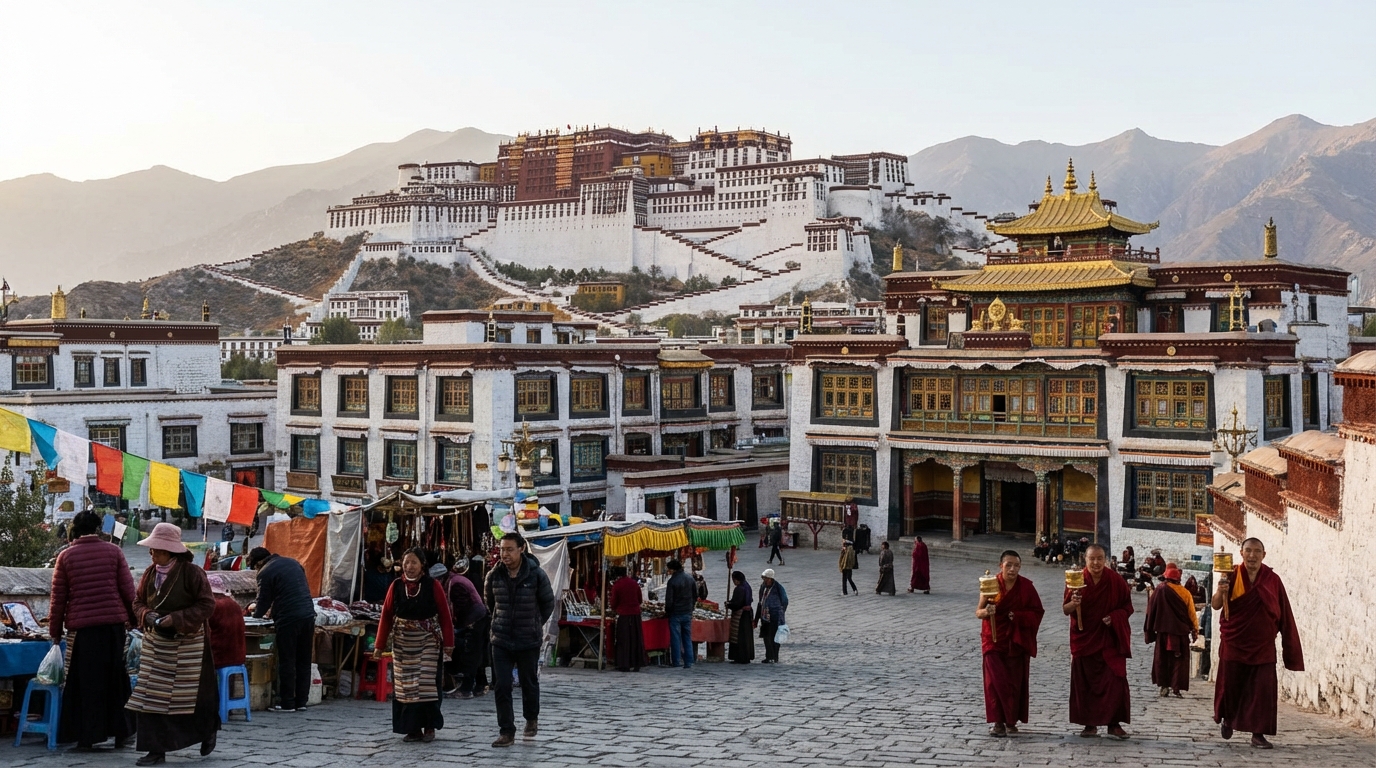
Geography
The plateau is a frozen desert where air contains 40% less oxygen than at sea level. The terrain is dominated by 46,000 glaciers that feed the Yangtze and Mekong rivers. In the northern Changtang wilderness, temperature swings reach 30 degrees Celsius in a single day, while the ground remains permafrost-locked up to 30 meters beneath the surface.
History
In 641 AD, the marriage of King Songtsen Gampo and Princess Wencheng forged a transformative alliance. This union brought the Jowo Shakyamuni statue to Lhasa and introduced the Sanskrit-based script. These elements unified warring nomadic clans into a centralized empire, establishing the spiritual and administrative foundations of the plateau that have persisted for over thirteen centuries despite the region's extreme isolation.
Landmarks
- Potala Palace: Builders mixed milk, honey, and sugar into the red clay plaster to bond the 5-meter-thick stone walls against high-altitude seismic tremors and winds.
- Jokhang Temple: The stone floor at the entrance is polished to a glass-like sheen by millions of prostrating pilgrims sliding over 1,300 years of prayer.
- Mount Everest North Base Camp: The 5,200m camp features the world's highest post office, where travelers send mail using specialized ink that flows despite the extreme lack of oxygen.
- Lhasa Railway Station: Opened in 2006, this solar-powered hub utilizes advanced oxygen-enrichment systems to help passengers acclimate immediately upon arrival from the 1,142km Golmud line.
- Tibet Museum New Wing: Reopened in 2022, the facility uses 10,000 intelligent sensors to maintain 40% humidity, protecting 12th-century Thangka scrolls from the plateau's naturally desiccating air.
Cuisine
Dietary survival relies on high-calorie fats to combat thin air. Because water boils at only 85 Celsius here, pressure-cooking is essential for softening grains and meat. Preparation involves heavy cast-iron pots and manual churning, with fermentation used to preserve dairy through the nine-month winters where fresh produce is historically scarce.
- Tsampa: Roasted barley flour is kneaded into small balls using tea; this portable meal sustained 7th-century nomadic caravans for months across the high passes.
- Momo: Hand-pinched dumplings stuffed with fatty yak meat and chives, traditionally steamed in birchwood baskets that absorb excess moisture during the high-altitude cooking process.
- Thenthuk: A hand-pulled noodle soup where dough is snapped into flat squares, serving as a vital thermal meal during -20 Celsius winter harvest nights.
- Po Cha: Butter tea made by churning tea, salt, and yak butter 100 times, creating a savory emulsion that prevents lips from cracking in dry air.
- Chang: A fermented barley wine with low alcohol content, traditionally served in silver-lined wooden bowls to guests during the arrival of the spring season.
Culture
Culture revolves around the Kora prayer circuits and the lunar cycle. Clothing is designed for extreme thermal regulation; the chuba robe allows for shedding layers as the sun intensifies. Festivals are community-wide events where social hierarchies are set aside for religious rituals, yogurt feasts, and the sound of constant prayer wheels.
- Shoton Festival: Occurring in August, this Yogurt Festival features the unveiling of a 30-meter silk Thangka on the hillsides of Drepung Monastery amidst traditional opera.
- Losar: On New Year’s Day, families prepare Guthuk soup with dough-ball fillings like coal or wool to jokingly predict a person's inner character.
- Saga Dawa: During the fourth lunar month, thousands perform the 52km trek around Mount Kailash to honor Buddha’s enlightenment, often completing the circuit through prostration.
- Chuba: A heavy robe tied with a sash; during midday heat, the right sleeve is pulled off to regulate body temperature against the sun.
- Pangden: A horizontally striped woolen apron worn by married women, dyed with vivid mineral pigments and woven on 19th-century style backstrap looms.
- Pulu: Dense, hand-woven woolen cloth used for robes; it is so tightly knit that it remains waterproof and lasts for over three generations.
- Kombe: Boots made of felt and thick yak leather with upturned toes, designed to protect feet from the sharp rocky mountain scree.
- Xuan: A 5kg ceremonial headdress from Western Tibet, decorated with silver discs and large turquoises, traditionally passed from mother to daughter as dowry.