Yunnan
Yunnan is a region of China. Yunnan bridges the Tibetan Plateau and the Southeast Asian tropics, bordering Vietnam, Laos, and Myanmar. It contains 25 ethnic groups and the world's highest concentration of plant species within its vertical, jagged landscape.
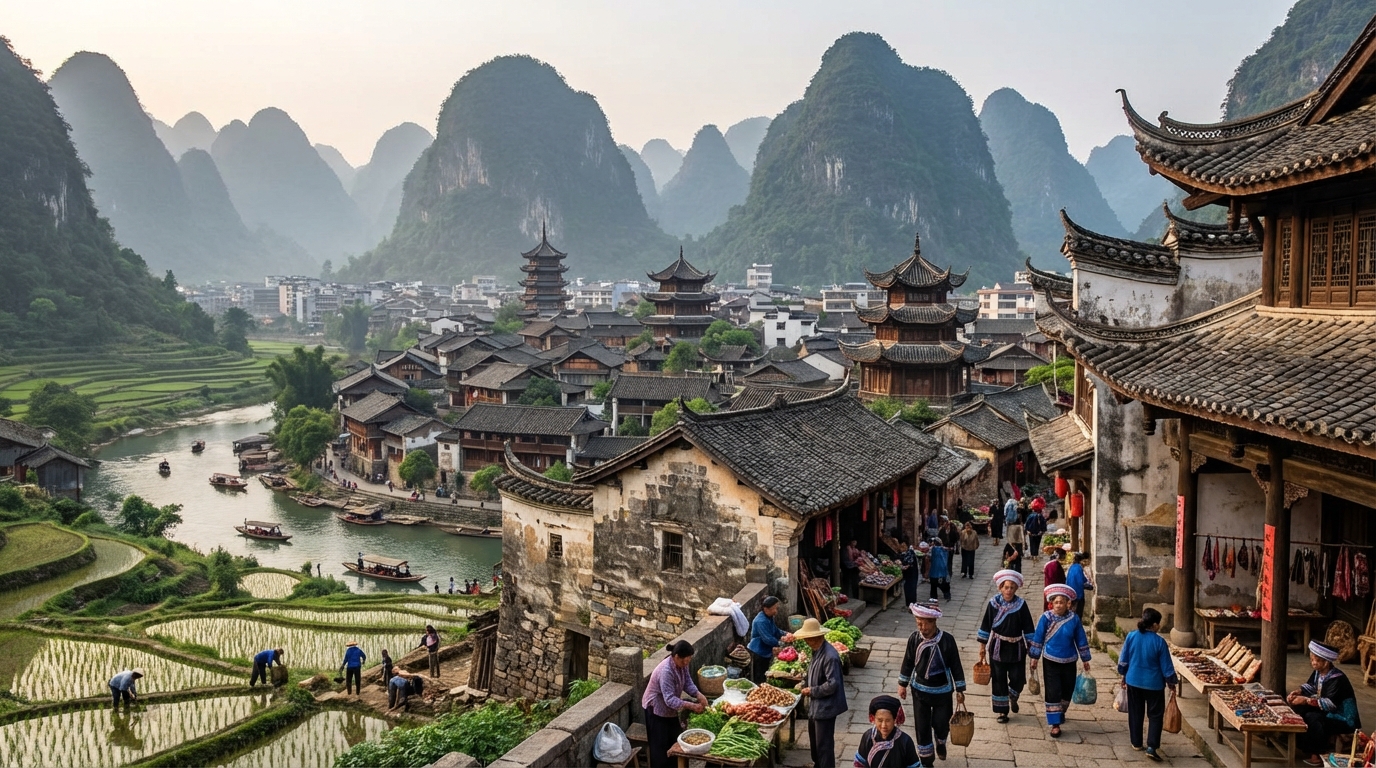
Geography
Yunnan's elevation drops from 6,740 meters at Meili Snow Mountain to 76 meters at the Hekou border. The Three Parallel Rivers—the Yangtze, Mekong, and Salween—run through 3,000-meter-deep canyons within 66 kilometers of each other but never touch.
History
In 1253, Kublai Khan’s army crossed the Jinsha River on inflated sheepskin rafts to bypass the Dali Kingdom’s fortifications. This Great Bypass ended 300 years of local rule, integrating the province into the Yuan Dynasty and permanently connecting it to the central Chinese administrative system.
Landmarks
- Stone Forest (Shilin): These 270-million-year-old limestone pillars were once an ocean floor; the Sani people believe the Ashima rock is a girl turned to stone while waiting.
- Dali Three Pagodas: The 69-meter Qianxun Pagoda, completed in 844, survived a 1925 earthquake with a 7.0 magnitude that flattened every surrounding wood-and-mud structure in the valley.
- Songzanlin Monastery: Built in 1679, this complex houses 600 monks and features copper roofs gilded with 50 kilograms of gold to reflect the high-altitude ultraviolet sun.
- Kunming Eye: A 120-meter ferris wheel where locals watch 35,000 black-headed gulls arrive from Siberia every November to winter on the green-algae waters of Dianchi Lake.
- Dongchuan Red Lands: High iron and aluminum levels in the soil created a rust-colored landscape over millennia, which farmers contrast with bright green barley and white flowers.
Cuisine
Yunnan cuisine focuses on 800 types of wild mushrooms harvested between June and September. Preparation often uses Jianshui steam pots, ceramic vessels where a central chimney circulates steam to cook meat without adding a drop of water.
- Crossing-the-Bridge Noodles: 90-degree broth is served with a layer of oil to trap heat; locals dip paper-thin pork and jasmine petals into the liquid to cook.
- Rubing: A firm goat cheese made by the Sani people, usually pan-fried until the edges are golden and served with a sprinkle of salt or sugar.
- Xuanwei Ham: Cured for 12 months in cold mountain air; the meat develops a deep rose color and a flavor profile resembling toasted walnuts and honey.
- Pu’er Tea: Fermented tea leaves compressed into bricks; the raw variety ages for decades, developing a complex scent of damp earth and aged wood.
- Dali Beer (V8): Brewed with Cangshan mountain spring water; this lager is traditionally shared in small bowls during outdoor barbecue sessions on the shores of Erhai Lake.
Culture
Yunnan culture is a mosaic of 25 ethnic groups, including the Naxi, who use Dongba—the only living pictographic script. Festivals often follow the lunar calendar, focusing on agrarian success and spiritual cleansing through water or fire.
- Water Splashing Festival: The Dai celebrate the New Year in April by splashing water with silver bowls to wash away bad luck and bless the entire community.
- Torch Festival: On the 24th day of the sixth lunar month, Yi people light pine torches to drive pests from crops and dance around large bonfires.
- March Fair: Since the Tang Dynasty, thousands gather in Dali to trade horses, herbal medicine, and indigo tie-dye cloth under the Cangshan mountain peaks.
- Naxi Seven-Star Cape: A sheepskin cape with seven embroidered circles; the stars and moon represent the Naxi women’s dedication to working from dawn until deep into the night.
- Dai Narrow Skirt: Ankle-length wrap skirts made of shimmering silk with horizontal stripes, worn by women for formal temple visits and the April Water Splashing Festival.
- Yi Cockscomb Hat: A crescent-shaped headpiece adorned with hundreds of silver beads, representing the comb of a rooster that brings light and wards off evil spirits.
- Hani Layered Tunic: Men wear indigo-dyed hemp jackets with silver buttons; the durable fabric is designed for the high humidity and mud of the Honghe rice terraces.
- Bai Headdress: A white cap featuring four symbols—wind, flower, snow, and moon; the position of the long white tassel indicates a woman’s marital status.