Zhejiang
Zhejiang is a region of China. Zhejiang is a coastal powerhouse in East China where the jagged peaks of the south meet the intricate canal networks of the Yangtze Delta. It is defined by the Qiantang River's massive tidal bore and a 6,486-kilometer coastline that has driven its identity as a global maritime and digital trade hub.
Geography
70% of the terrain is mountainous, leaving only 20% for farming and 10% for water. The Qiantang River creates a 9-meter high 'Silver Dragon' tidal bore that travels at 40 kilometers per hour. Temperatures fluctuate from 3°C in damp winters to 38°C in humid summers, shaping the province's dense, misty bamboo forests.
History
In 1127, the Jurchen invasion forced Emperor Gaozong to flee south, establishing Lin'an (modern Hangzhou) as the Southern Song capital. This pivotal shift moved China's economic and cultural heart to Zhejiang, sparking a golden age of maritime trade and porcelain production that permanently transformed the region into a center of global commerce.
Landmarks
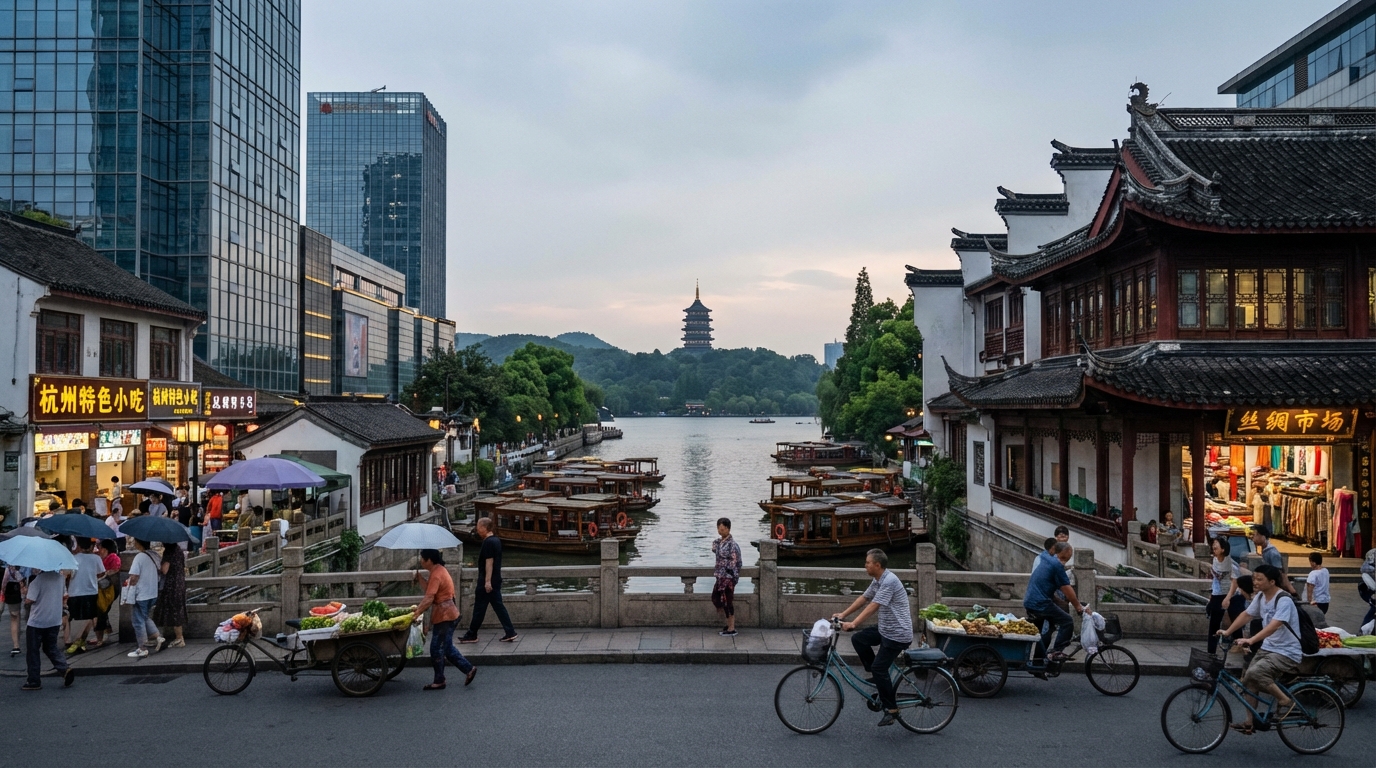
- Broken Bridge at West Lake: In winter, snow melts on the sunny side while remaining on the shaded side, creating a visual illusion that the stone span is severed.
- Wuzhen Water Town: Residents still use 72 stone bridges to navigate canals where sun-dried blue calico fabric is hung from 10-meter high drying frames.
- Putuoshan Island: The island features a 33-meter gold-plated bronze statue that faces the sea; the surrounding sand creates a unique humming sound when stepped upon.
- Ningbo Museum: The exterior is built from 20 million recycled bricks and tiles salvaged from demolished local villages, using the ancient 'wa pan' masonry technique.
- Hangzhou 'Big Lotus' Stadium: This 80,000-seat arena uses 28 large and 27 small 'petals' made of perforated metal, designed to naturally ventilate the space during 35°C summers.
Cuisine
Zhejiang cuisine, or Zhe Cai, focuses on 'xian' (freshness) and delicate presentation. Chefs often use 45-degree angled knife cuts to maximize flavor absorption and prioritize ingredients harvested within a 50-kilometer radius to ensure peak seasonal quality.
- Dongpo Pork: Belly meat braised in Shaoxing wine for 3 hours until the fat reaches a gelatinous texture that melts at exactly 37°C.
- West Lake Vinegar Fish: Grass carp are fasted for 48 hours to remove earthy tastes before being poached in 90°C water and coated in dark ginger glaze.
- Longjing Shrimp: River shrimp are stir-fried with tea leaves harvested before the April Qingming Festival, providing a grassy aroma and a subtle tannic crunch.
- Dragon Well Tea: Hand-pressed in iron woks at 200°C, these flat jade leaves produce a liquor with a distinct scent of toasted chestnuts.
- Shaoxing Rice Wine: Fermented from glutinous rice and Jian Lake water, then aged in ceramic jars sealed with river mud for over 10 years.
Culture
The culture is rooted in the Wu dialect and a history of meticulous craftsmanship. It is famous for celadon pottery fired at 1,300°C to achieve a jade-like translucency and Yue Opera, which uses exclusively female casts for all roles.
- Qiantang Tide-Watching Festival: On the 18th day of the eighth lunar month, thousands gather to witness the roar of the world's largest tidal bore.
- Jiaxing Zongzi Festival: Locals compete to wrap glutinous rice in bamboo leaves, specifically using 5-centimeter cubes of marinated pork fat to flavor the rice.
- Longjing Tea Harvest: Beginning in late March, thousands of pickers descend on the hills at dawn to harvest only the youngest, single-bud tea leaves.
- Hangzhou Silk Qipao: Tailored from 14-momme mulberry silk, featuring hand-embroidered peonies that require over 150 hours of needlework per garment.
- Blue Calico Apron: Rural daily wear dyed with natural indigo using soy-paste stencils to create patterns of phoenixes, symbolizing domestic harmony.
- Shaoxing Felt Hat: A stiff, black, water-resistant cap with a semi-circular brim, worn by canal boatmen to withstand the constant river humidity.
- Wuzhen Bamboo Sun Hat: Woven from split bamboo strips and lined with dried leaves to deflect the intense 38°C heat of the harvest season.
- Embroidered Silk Slippers: Soft-soled shoes with upturned toes, traditionally given to brides to ensure a smooth, obstacle-free path in their new marriage.