Dominican Rep.
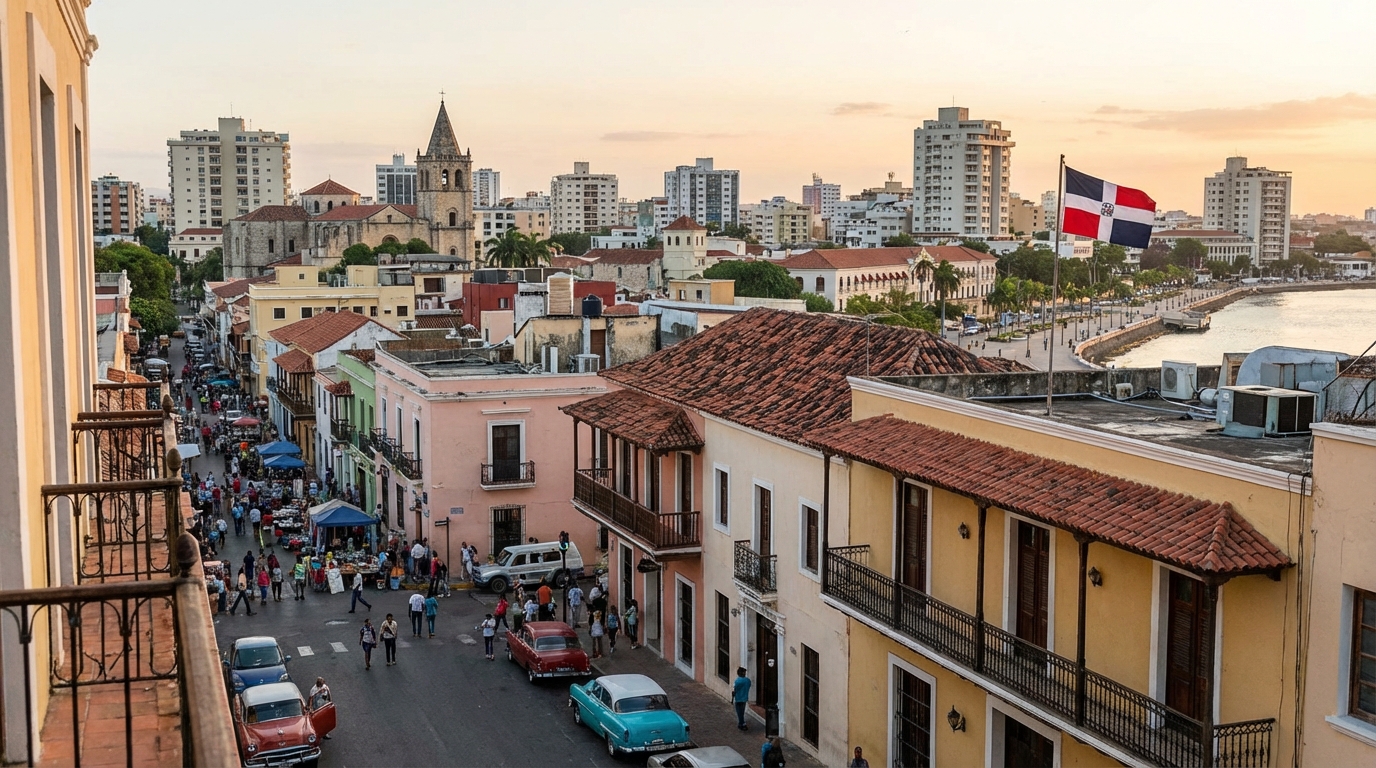
Dominican Rep. is a country. Occupying the eastern two-thirds of Hispaniola, the Dominican Republic is defined by its dramatic elevation changes, ranging from the Caribbean's lowest point to its highest peak. The nation is a study in contrasts, where the 120-beat-per-minute tempo of merengue echoes against 1,288 kilometers of coral-fringed coastline.
Geography
The terrain is dominated by four major mountain ranges, including the Cordillera Central, home to the 3,087-meter Pico Duarte. Uniquely, Lake Enriquillo sits 46 meters below sea level, a hypersaline basin where American crocodiles thrive in 35°C heat. The Cibao Valley contains thick, black alluvial soil, sustaining one of the world's most productive organic cacao regions.
History
On February 27, 1844, the secret society La Trinitaria launched a bloodless coup at the Puerta del Conde. Matías Ramón Mella fired a 'trabucazo' or blunderbuss shot, signaling the end of twenty-two years of Haitian rule. This singular act of defiance, coordinated by Juan Pablo Duarte via clandestine theatrical plays, established the first sovereign Dominican Republic.
Landmarks
- Alcázar de Colón: Built in 1512 with coral blocks, this palace features fifty-five doorways and lacks a single nail, utilizing 16th-century timber joinery techniques.
- Basilica of Our Lady of Altagracia: A 1971 Brutalist structure in Higüey featuring an 80-meter concrete arch that generates a haunting, low-frequency hum when wind passes through it.
- Columbus Lighthouse: This 1992 cross-shaped monolith houses 210 sky-beams; when lit, the massive electricity draw often causes the surrounding residential lights to flicker and dim.
- Altos de Chavón: A meticulous 1982 recreation of a Mediterranean village, hand-carved entirely from local stone by Italian cinematographer Roberto Copa and Dominican craftsmen.
- Teleférico de Puerto Plata: Inaugurated in 1975, this cable car carries passengers 793 meters high, where the air temperature sharply drops by 8 degrees at the summit.
Cuisine
Dominican cooking utilizes the 'caldero', a cast-iron pot that produces 'concón', the prized, toasted rice layer at the bottom. Meat is often marinated in 'agrio de naranja' (bitter orange juice) and 'orégano de la sierra', a pungent, camphor-heavy herb that grows wild in the mountains.
- La Bandera Dominicana: The standard lunch consisting of white rice, red beans, and stewed meat, served strictly at 1:00 PM to signify the day's main meal.
- Sancocho de Siete Carnes: A dense stew requiring seven meat varieties, simmered for four hours until the pumpkin dissolves into a thick, golden-orange base.
- Mangú: Green plantains boiled in salted water and mashed with cold water to maintain smoothness, topped with red onions pickled in vinegar.
- Mamajuana: A deep-red infusion of rum, honey, and wine soaked in a bottle filled with bohuco caro barks and cinnamon sticks.
- Morir Soñando: A mixture of chilled evaporated milk and fresh orange juice; it must be whisked with ice to prevent the citrus from curdling the milk.
Culture
Culture is anchored by the 'Güira', a metal scraper that provides the metallic heartbeat of national music. Religious life centers on the 'Cofradía' traditions, while social life happens on the 'Malecón'. Every February, the streets transform into a cacophony of 'vejigas' (dried bladders) hitting the pavement during carnival celebrations.
- Carnaval Dominicano: Celebrated every Sunday in February; participants wear heavy paper-mâché masks with real cow horns to portray 'Diablos Cojuelos' or Limping Devils.
- Festival del Merengue: A late July event in Santo Domingo where the oceanfront boulevard hosts 48 hours of continuous percussion and brass band competitions.
- Guloya Festival: An January 1st celebration in San Pedro de Macorís featuring African-British mummers' dances, recognized for its unique 'Wild Indian' costumes.
- Chacabana: A formal four-pocket shirt made from white linen, featuring precisely 28 buttons and vertical pleats known as alforzas.
- Traje Folklórico: A tiered skirt for women in flag colors, designed to be held wide during the 'perico ripiao' dance steps.
- Malla de Pelo: A ubiquitous fine-mesh hairnet worn by women to protect 'tubi' hair wraps while commuting or performing household chores.
- Lechón Mask: A Santiago-specific carnival headpiece with a long, curved duck-like bill, hand-painted with thousands of tiny, colorful dots.
- Robalagallina Costume: An exaggerated female silhouette worn by men during carnival, featuring massive padded hips and a colorful parasol for rhythmic dancing.
Regions of Dominican Rep.
- Azua
- Baoruco
- Barahona
- Dajabón
- Duarte
- Elías Piña
- El Seíbo
- Espaillat
- Hato Mayor
- Hermanas Mirabal
- Independencia
- La Altagracia
- La Romana
- La Vega
- María Trinidad Sánchez
- Monseñor Nouel
- Monte Cristi
- Monte Plata
- Nacional
- Pedernales
- Peravia
- Puerto Plata
- Samaná
- Sánchez Ramírez
- San Cristóbal
- San José de Ocoa
- San Juan
- San Pedro de Macorís
- Santiago
- Santiago Rodríguez
- Santo Domingo
- Valverde