Goa
Goa is a region of India. Located on India's southwestern Konkan coast, Goa is a maritime enclave where the Arabian Sea meets the red laterite cliffs of the Sahyadri Range. It is defined by its Luso-Indian synthesis, visible in the scent of feni fermenting in earthen pots and the sound of church bells mingling with temple gongs.
Geography
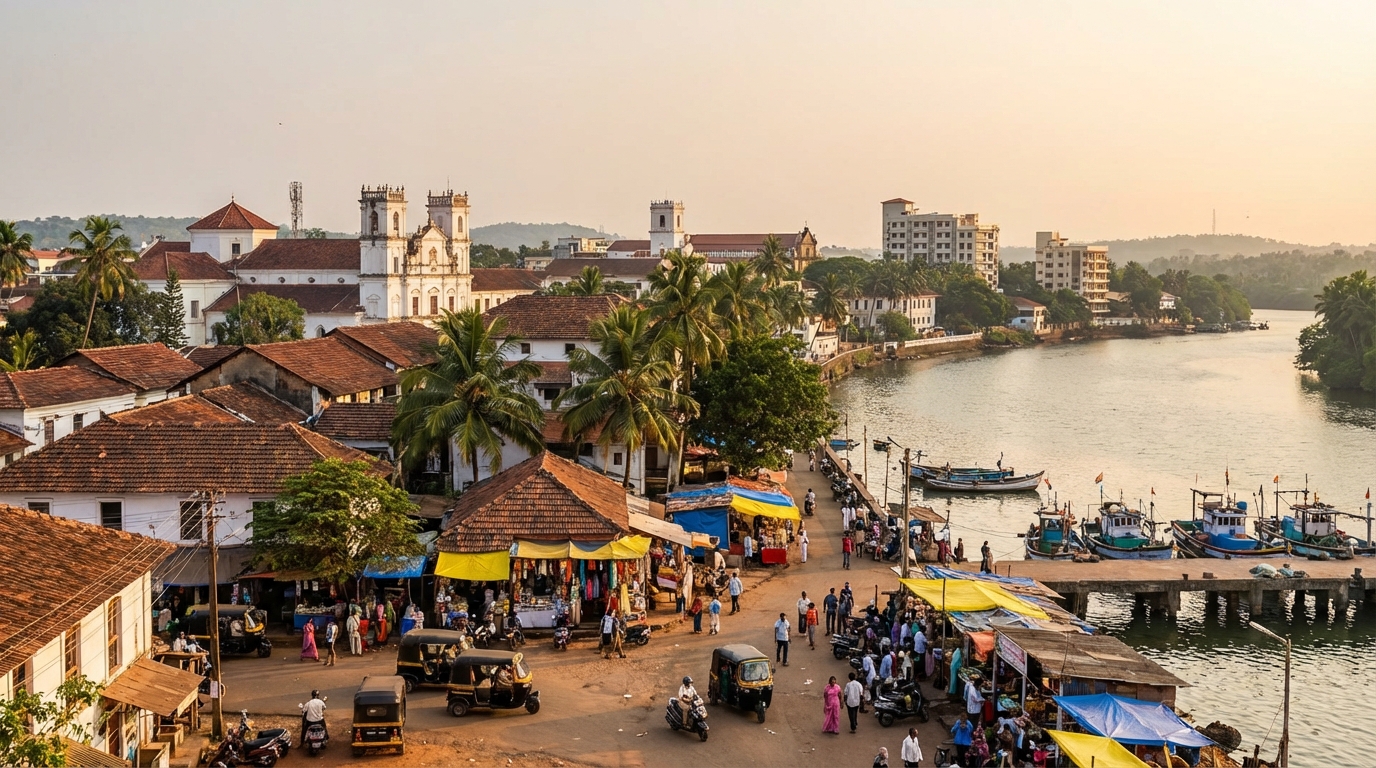
Goa spans 3,702 square kilometers, dominated by the Western Ghats rising to 1,022 meters at Sonsogor. The soil is heavy with iron oxide, staining the white sands of its 101-kilometer coastline a subtle rust-red. In June, the monsoon delivers 3,000mm of rain, turning the Zuari and Mandovi rivers into massive, turbulent arterial flows of silt and salt.
History
On December 19, 1961, General Manuel António Vassalo e Silva signed the instrument of surrender, ending 451 years of Portuguese sovereignty. This 36-hour military action, known as Operation Vijay, integrated Goa into India without the prolonged armed conflict seen in other colonies, preserving the unique Susegad lifestyle that balances Mediterranean leisure with Indian spiritual traditions.
Landmarks
- Basilica of Bom Jesus: Completed in 1605, the silver casket holds the remains of St. Francis Xavier, which allegedly resist decay without any chemical embalming.
- Shanta Durga Temple: Rebuilt in 1738, this structure features a unique fusion of Roman arched windows and traditional Hindu shikharas with red-and-white tiling.
- Museum of Goa: Founded by Subodh Kerkar in 2015, it uses contemporary art installations to explain the 16th-century history of the global spice trade.
- Reis Magos Fort: Dating to 1551, it was a jail until 1993; its restoration uses original lime plaster and laterite stones without modern cement.
- Big Foot Cross Museum: In Loutolim, it features a 14-meter Sant Mirabai sculpture carved in just 30 days from a single block of laterite rock.
Cuisine
The use of coconut vinegar, distilled from palm toddy, provides a sharp tang distinct from other Indian regions. Preparations often involve Recheado masalas ground on stone rogal rollers, blending Kashmiri chilies with ginger, garlic, and cinnamon to create a thick, pungent paste.
- Bebinca: A 16-layered dessert made from coconut milk and nutmeg, traditionally baked layer-by-layer using heat from hot coconut husks.
- Ros Omelette: An evening street staple where a spicy xacuti gravy is poured over a fresh lime-infused omelette served with local poi bread.
- Ambot Tik: A shark or squid curry that balances ambot (sourness) from kokum with tik (spiciness) from sun-dried red chilies.
- Cashew Feni: A potent spirit distilled twice from cashew apples; the juice is traditionally stomped by foot in stone basins called colms.
- Sol Kadhi: A cooling pink digestive made from kokum extract and fresh coconut milk, seasoned with green chilies and garlic.
Culture
The Susegad philosophy prioritizes a relaxed pace, where businesses often close from 1:00 PM to 4:00 PM for an afternoon siesta. Linguistic identity is fierce, with Konkani written in Devanagari script since 1987, alongside a legacy of Portuguese-style brass bands and choral singing in village squares.
- Sao Joao: Celebrated June 24th, men wear floral crowns called kopels and jump into village wells to honor St. John the Baptist.
- Shigmo: A 14-day spring festival where dancers perform Ghode Modni, a horse dance commemorating the return of warriors from battle.
- Bonderam: Held every August on Divar Island, locals reenact 18th-century land disputes using bamboo flags and colorful parade floats.
- Kunbi Saree: A hand-woven checkered cotton saree, typically red or yellow, worn short with a knot on the shoulder for farm work.
- Pano Bhaju: A formal 19th-century ensemble consisting of a velvet blouse and a silk sarong, heavily embroidered for the Mando dance.
- Kashti: A traditional loincloth worn by fishermen, tied around the waist to allow ease of movement in salty paddy fields.
- Valkal: A wrap garment made from tree bark or coarse cotton, used historically by forest-dwelling communities during ritual ceremonies.
- Goan Fedora: A felt or straw hat, a 20th-century staple for men attending Sunday Mass, reflecting European formal fashion influence.