Himachal Pradesh
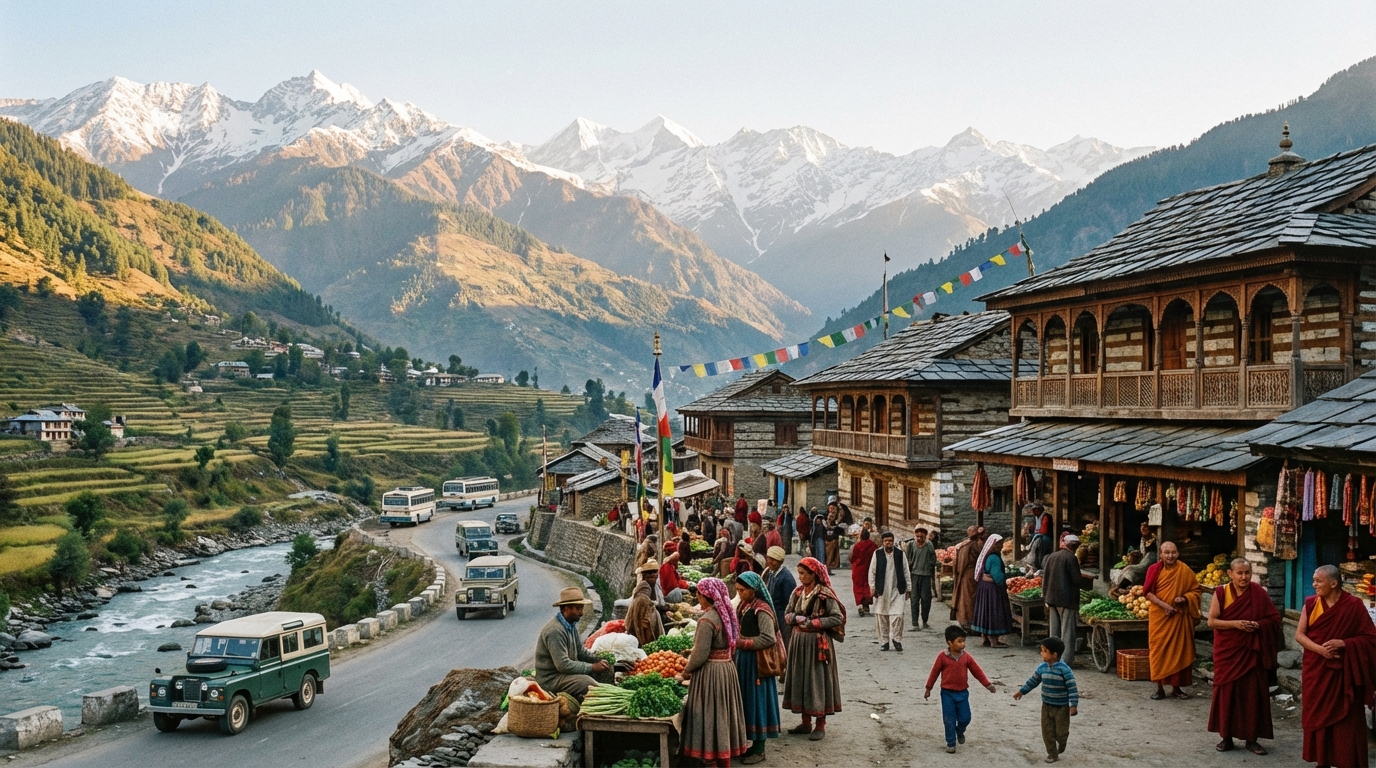
Himachal Pradesh is a region of India. Himachal Pradesh sits in the northern Himalayas where elevation climbs from 350 meters to 6,816 meters at the Reo Purgyil peak. This region acts as the primary water tower for the Indus and Ganges basins, defined by its sheer verticality and cool alpine air.
Geography
The terrain shifts from the 350-meter Shivalik hills to the cold deserts of Spiti Valley. While the Dhauladhar range receives 3,400mm of annual rainfall, the Trans-Himalayan Spiti rain shadow drops below 50mm, creating a stark climatic contrast within just 200 kilometers.
History
On January 25, 1971, amidst a heavy snowfall on Shimla's Ridge, Prime Minister Indira Gandhi declared Himachal Pradesh India’s 18th state. Dr. Yashwant Singh Parmar successfully unified 30 princely states, ensuring political autonomy for hill communities who had campaigned for self-governance.
Landmarks
- Masroor Rock Cut Temple: Carved from a single sandstone monolith in the 8th century, these 15 shrines feature intricate carvings that mirror the 5,000-meter Dhauladhar peaks.
- Atal Tunnel: This 9.02-kilometer tunnel sits at 3,000 meters altitude, allowing travelers to bypass the Rohtang Pass and shortening the journey by four hours.
- Tabo Monastery: Founded in 996 CE, its mud-brick walls house vegetable-dye frescoes that have been shielded from sunlight for over 1,000 years.
- Jakhu Temple: A 33-meter tall neon-orange Hanuman statue stands at 2,455 meters elevation, serving as a beacon visible across the entire Shimla valley.
- Sissu Lake: Created by diverting the Chandra River, this high-altitude artificial lake freezes into a 1.5-meter-thick solid ice sheet during the winter months.
Cuisine
The cuisine centers on the 'Dham,' a ritual midday feast prepared in heavy brass 'charoti' pots. Using fermented sourdough and locally grown legumes like 'Rajmah,' dishes are slow-cooked over wood fires to provide high-calorie nutrition necessary for -10°C temperatures.
- Siddu: Sourdough bread steamed over walnut leaves, stuffed with poppy seed paste and served with 50ml of melted clarified butter.
- Madra: Chickpeas simmered in curd and twenty spices until the oil forms a distinct 5-millimeter golden layer on the surface.
- Babru: Deep-fried flatbreads containing black gram paste, typically served at 7:00 AM to provide energy for the day's steep mountain climbs.
- Lugri: A fermented rice ale created by soaking grains with 'Phab' yeast for five days, traditionally consumed in shallow ceramic bowls.
- Chhang: A warm barley-based brew sipped through a thin wooden pipe from a bamboo vessel, a staple during winter social gatherings.
Culture
Culture revolves around 'Devta' institutions where village deities dictate communal life. People wear hand-loomed woolens to survive freezes. Festivals feature 'Nati' folk dance, where participants move in a rhythmic chain accompanied by 1.5-meter-long brass trumpets.
- Kullu Dussehra: Starting when national celebrations end, 300 deities on wooden palanquins gather at Dhalpur Maidan to pay homage to Lord Raghunath.
- Halda: Celebrated in Lahaul during January, locals light cedar-twig torches to dispel negative spirits, marking the beginning of the lunar year.
- Minjar Mela: Since 935 CE, participants throw silk-tasseled maize shoots into the Ravi River in Chamba to petition the gods for rain.
- Kullu Topi: A round woolen cap with a 5-centimeter geometric 'Patti' border that identifies the wearer’s specific home valley.
- Pattu: A 4-meter-long hand-woven woolen drape used by women for insulation against the sharp -15°C northern mountain winds.
- Thippu: A square silk or cotton headscarf tied by women to protect against intense 10,000-foot altitude ultraviolet radiation.
- Chola: A heavy white woolen gown worn by Gaddi shepherds, featuring a wide skirt for mobility on 45-degree rocky slopes.
- Dora: A 60-meter-long black sheep-wool rope wrapped around the waist to provide lumbar support while navigating high-altitude terrain.