Ladakh
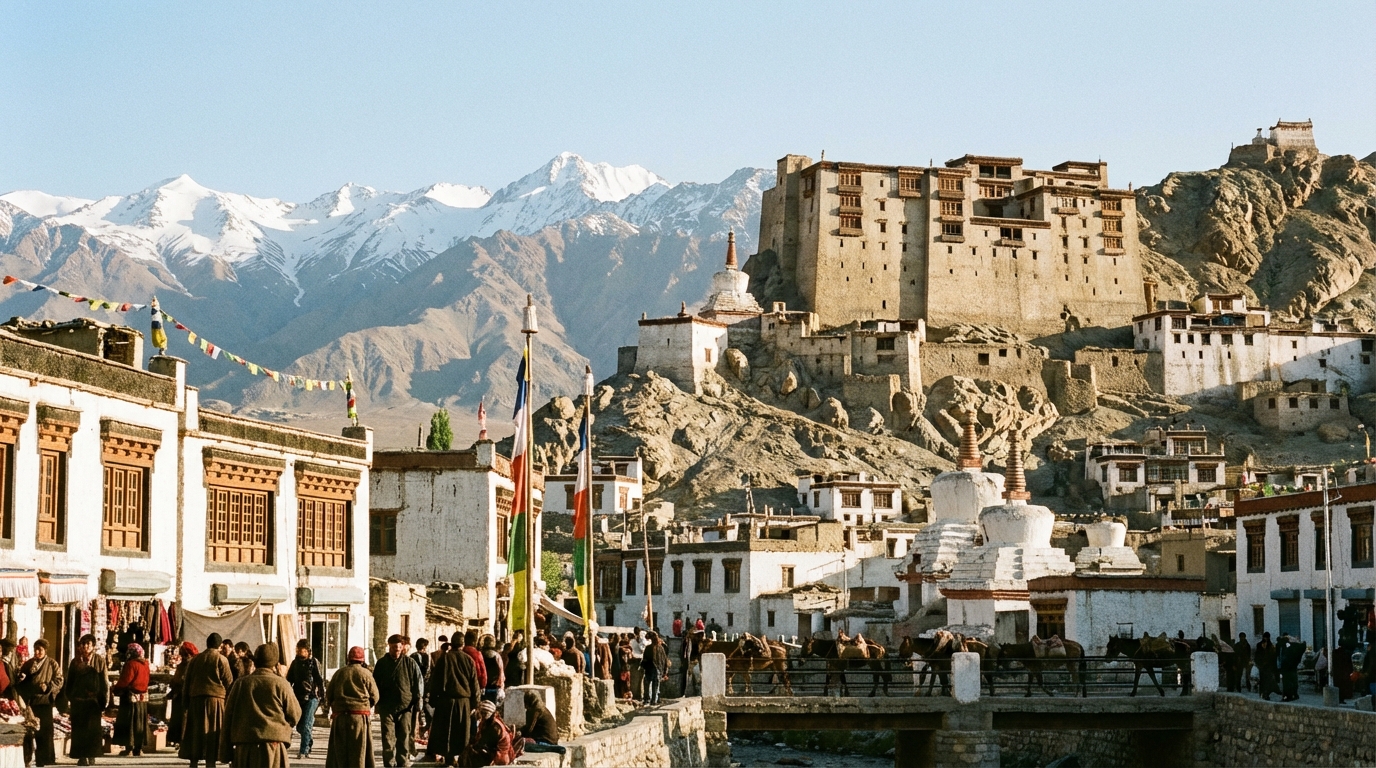
Ladakh is a region of India. Ladakh sits at a mean elevation of 3,500 meters between the Kunlun and Great Himalayan ranges. This high-altitude desert serves as a strategic crossroads where Tibetan Buddhism and Indo-Aryan influences meet in a landscape of granite and thin oxygen.
Geography
This high-altitude desert experiences temperatures dropping to -40°C in winter, yet the sun's intensity causes sunburn and frostbite simultaneously. Receiving only 100mm of annual rainfall, life depends on the silt-heavy Indus River and precisely timed glacial melt channeled through hand-dug stone canals.
History
In 1684, the Treaty of Tingmosgang concluded the Tibet–Ladakh–Mughal War, defining the borders that remain largely unchanged today. King Delek Namgyal sought aid from the Mughals, leading to the construction of the Jama Masjid in Leh, blending Islamic and Buddhist social fabrics into a singular mountain kingdom.
Landmarks
- Leh Palace: Built by King Sengge Namgyal in 1600, its nine stories of rammed earth and stone once housed the world’s highest-altitude royalty.
- Thiksey Monastery: A 12-story complex housing a 15-meter Maitreya Buddha; its morning chanting rituals echo across the Indus Valley through cold, thin air.
- Pangong Tso: This 134-km saline lake at 4,225 meters freezes solid in winter, emitting loud, haunting cracking sounds that carry miles in the silence.
- SECMOL Campus: An eco-school using solar-heated mud walls to maintain 15°C indoors when the January midnight air outside drops to a brutal -20°C.
- Hall of Fame: A military museum displaying a 1999 Kargil War soldier’s final letter, highlighting the deep local connection to the mountain border.
Cuisine
Ingredients focus on hull-less barley and dried apricots that survive the 12,000-foot altitude. Cooking relies on pressure cookers because water boils at only 88°C in the thin atmosphere, necessitating long fermentation for breads and calorie-dense fats like yak butter to maintain body heat.
- Khambir: A thick, sourdough flatbread fermented for 12 hours and baked directly over hot embers to create a charred, chewy crust.
- Thukpa: Hand-pulled wheat noodles served in a savory broth with dried yak meat, flavored with local shing-shing or wild mountain pepper.
- Chhurpi: A hard, smoked cheese made from yak milk that requires 30 minutes of chewing before it softens and releases a nutty flavor.
- Gur-Gur Chai: Tea churned with yak butter, salt, and soda; its oily layer prevents lips from cracking in the arid, sub-zero winds.
- Chang: A fermented barley ale served in wooden bowls, traditionally offered with a small dab of butter on the rim as a blessing.
Culture
Identity centers on Phaspun community groups and the iconic Goncha robe. Following the 2019 transition to a Union Territory, there is an intense focus on preserving the Bodhi language and the traditional pastoralist cycles of the nomadic Changpa people.
- Hemis Festival: Celebrated on the 10th day of the Tibetan lunar month, featuring Cham dancers in silk brocade masks performing slow-motion exorcism rituals.
- Losar: The Ladakhi New Year, started in the 17th century when King Jamyang Namgyal advanced it to precede a winter military campaign.
- Naropa: Occurring every 12 years, the bone ornaments of Saint Naropa are displayed to thousands in a rare Himalayan Buddhist spiritual gathering.
- Goncha: A thick woolen robe tied with a sash at the waist, designed to carry wooden bowls and snacks inside the chest fold.
- Perak: A heavy turquoise-studded headpiece passed from mother to eldest daughter, symbolizing the family's wealth and protecting the wearer's health.
- Tibi: A colorful, stiff felt hat with upturned earflaps, worn by men to signal formal respect during village council meetings or weddings.
- Lokpa: A goatskin cape worn with the fur facing inward for warmth, used primarily by shepherds in the high Changthang pastures.
- Pabu: Stitched leather boots with upturned toes and wool embroidery, designed to grip slippery scree slopes and keep toes warm in permafrost.