Meghalaya
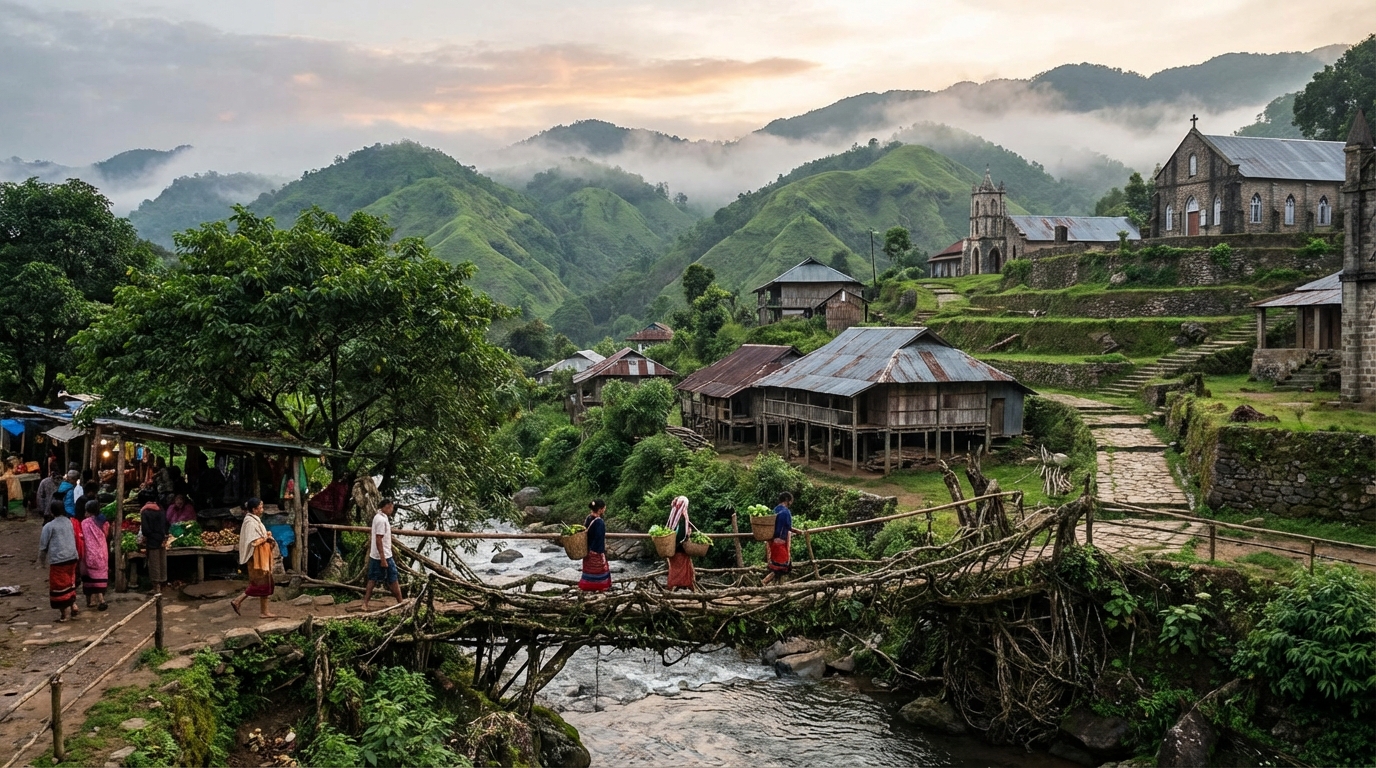
Meghalaya is a region of India. Meghalaya, the 'Abode of Clouds,' is a highland state in Northeast India where the Khasi, Jaintia, and Garo tribes maintain a unique matrilineal social system. It contains the rainiest spot on Earth and is characterized by deep limestone caves and rivers that run crystal clear over ancient sandstone beds.
Geography
The state sits on a plateau of Archean gneissic rocks rising to 1,961 meters at Shillong Peak. Mawsynram receives 11,872mm of annual rain, while the southern border features a sharp 1,000-meter drop into the Bangladesh floodplains. The terrain is a labyrinth of 1,700 documented limestone caves and deep, river-cut gorges.
History
On January 21, 1972, Meghalaya was carved out of Assam. This occurred after the peaceful Hill State Movement, led by Captain Williamson A. Sangma, achieved legislative success without the violent insurgencies common in neighboring regions, establishing a unique three-tribe state.
Landmarks
- Nongriat Double-Decker Root Bridge: These Ficus elastica roots are trained by Khasi villagers over 15 years to cross rivers, growing stronger as they age and soak.
- Nohkalikai Falls: India's highest plunge falls drops 340 meters into a pool that changes from green to turquoise depending on the monsoon intensity.
- Mawsmai Cave: A 250-meter section of this limestone network is open to the public, revealing 50-million-year-old sea shell fossils embedded in the rock.
- Laitlum Canyons: Locals use long wire pulleys to transport heavy potato harvests across the 1,200-meter deep gorge, bypassing the steep, treacherous footpaths.
- Kongthong Village: In this village, mothers compose a unique musical whistle for each child, serving as their permanent name and cultural identity.
Cuisine
Khasi cuisine relies on fermented soybeans, black sesame paste, and wood-smoking. Unlike other Indian regions, it uses minimal oil, focusing on 'jadoh' (blood rice) and foraged wild greens like 'jali' and 'dandei' that provide a sharp, earthy flavor profile unique to the highland climate.
- Jadoh: Red hill rice cooked with pork stock, ginger, and occasionally pig blood, served as a staple morning meal for strength.
- Doh-Khlieh: A cold pork salad with raw onions and chilies; traditional versions include pig brain to add a creamy, rich texture.
- Tungrymbai: Pungent fermented soybeans saut ed with ginger, garlic, and fried black sesame, serving as a protein-rich condiment during the winter months.
- Kyat: A fermented rice beer essential for Khasi naming ceremonies; it is traditionally sipped from bamboo tubes during village council meetings.
- Sha Shiahkrot: A medicinal herbal tea brewed from the roots of a local creeper plant, prized for its ability to settle the stomach.
Culture
The Khasi, Jaintia, and Garo people practice matrilineal inheritance, where the youngest daughter becomes the custodian of family property. Life revolves around the 'Niam Khasi' animist philosophy, which emphasizes the sacred link between humans and the forest, celebrated through elaborate drumming and silk-draped communal dances.
- Nongkrem: A five-day Khasi harvest festival in Smit where the Syiem performs goat sacrifices to ensure a bountiful agricultural year.
- Wangala: The Garo 100 Drums festival where men in feathered headgears play long oval drums to honor the Sun God, Saljong.
- Behdienkhlam: A Jaintia festival in July where men drive away the plague using polished bamboo poles in the mud-filled sacred space.
- Jainsem: Two pieces of fabric draped over the shoulders and pinned; it creates a distinctive rectangular silhouette preferred by Khasi women.
- Dhara: A heavy silk ceremonial garment, often yellow or gold, worn by Khasi women at weddings to signify their ancestral lineage.
- Dakmanda: A Garo wrap-around skirt featuring a broad border of hand-woven floral motifs, traditionally worn with a matching headbulb.
- Jainkup: A heavy woolen wrap worn by Jaintia elders, typically in dark patterns, to provide insulation against the highland chill.
- Jymphong: A sleeveless, V-neck fringed coat for men, fastened with thongs and worn during dances to display tribal warrior heritage.