Odisha
Odisha is a region of India. Located on India’s eastern coast, Odisha is defined by a 480-kilometer shoreline and the 1,100 square kilometer Chilika Lake. It is most striking for its transition from red-soil highlands to ancient sandstone temple complexes that have dictated the region's social rhythm for over 800 years.
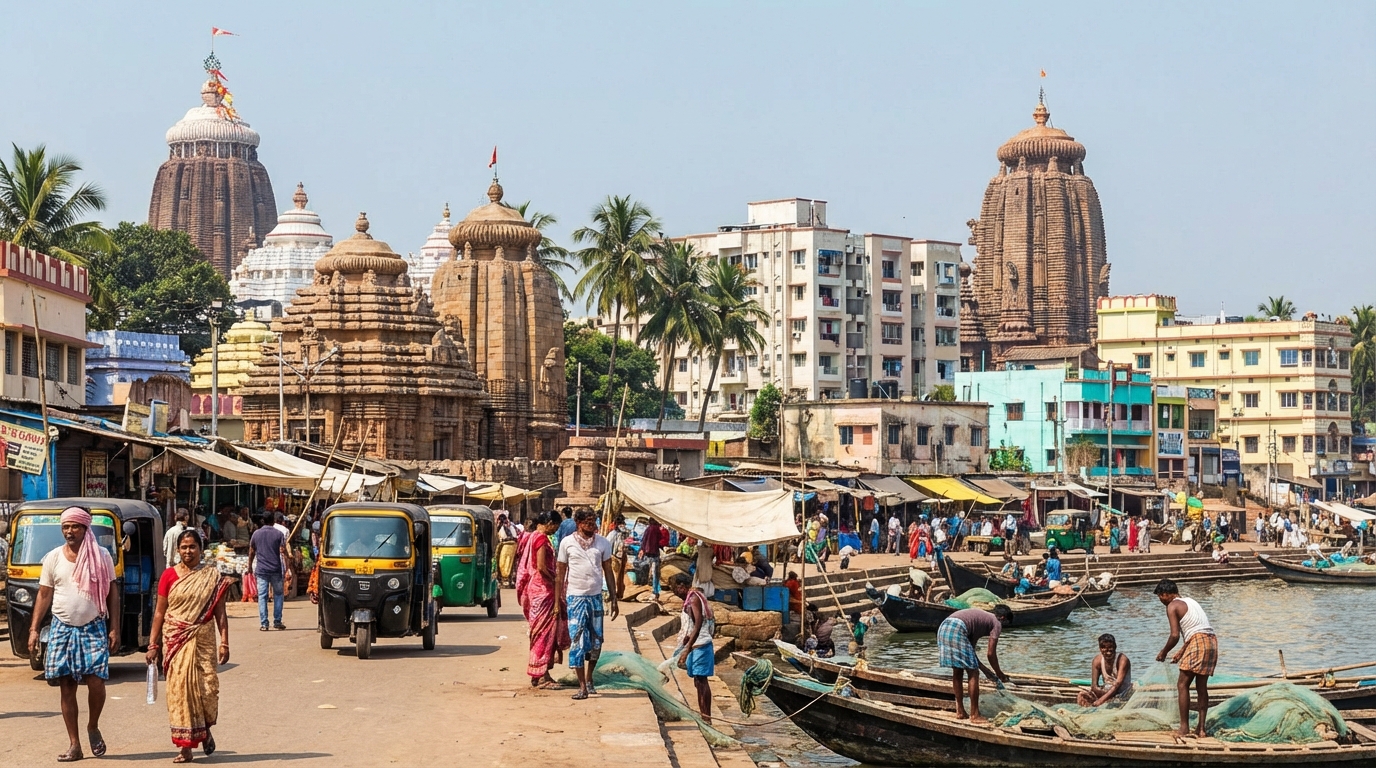
Geography
The state spans 155,707 square kilometers, featuring a 480-kilometer coastline along the Bay of Bengal. The terrain shifts from the 1,672-meter peak of Deomali to the brackish waters of Chilika Lake, where salinity varies by 30 parts per thousand between seasons. The Gahirmatha beach hosts over 500,000 nesting Olive Ridley turtles annually in a singular synchronized nesting event called Arribada.
History
On April 1, 1936, Odisha became the first Indian province formed solely on linguistic identity. This pivotal shift followed the 1903 Utkal Sammilani meeting led by Madhusudan Das. Maharaja Krushna Chandra Gajapati’s persistence at the 1930 Round Table Conference in London secured the administrative unification of Odia-speaking regions, ending fragmentation under different British Presidencies and local kingdoms that had persisted since 1568.
Landmarks
- Konark Sun Temple: The 24 stone wheels function as sundials that indicate the time within a three-minute accuracy using the shadow of the central axle.
- Jagannath Temple, Puri: The 1.8-meter metal wheel (Neelachakra) atop the spire appears to face the viewer regardless of their standing position in the 10-acre complex.
- Lingaraj Temple: The 55-meter main tower is constructed from sandstone blocks fitted together using iron ribs, standing without mortar since the 11th century.
- Kala Bhoomi: This 12-acre space features pathways of laterite stone that turn a deep oxidation red when exposed to the 1,500mm annual monsoon rainfall.
- Barabati Fort: The 14th-century site features a unique nine-story palace foundation surrounded by a 20-meter wide moat that historically served as a defensive barrier.
Cuisine
Odia cuisine uses 'pancha phutana'—a mix of mustard, cumin, nigella, fennel, and fenugreek. In the Puri temple, 752 hearths cook for 25,000 people daily using only earthen pots. Heat is transferred through steam as seven pots are stacked vertically over a single wood fire, ensuring the top pot cooks simultaneously with the bottom one.
- Dalma: A 700-year-old recipe combining split chickpeas with raw papaya and pumpkin, seasoned with roasted cumin and dried chilies in a single-pot preparation.
- Pakhala Bhata: Fermented rice soaked overnight in water and curd, served cold at 25 degrees Celsius to combat the humid 40-degree summer heat.
- Chhena Poda: Created in 1947 by Sudarshan Sahu, this 'burnt cheese' cake is baked in the residual heat of a coal oven overnight for a caramelized crust.
- Tanka Torani: A savory probiotic drink made from fermented rice water, green chilies, lemon leaves, and curd, traditionally served in chilled earthen bowls.
- Bela Pana: A thick pulp extracted from the wood apple, mixed with black pepper and chhena, traditionally consumed on the Odia New Year, Pana Sankranti.
Culture
Life centers on 'Jagannath Sanskruti' and the 64 traditional arts. The Odia language, classical since 2014, features a round script designed to prevent palm leaves from tearing during stylus writing. Traditional 'Gotipua' dance, where boys dress as women, predates the modern Odissi form, maintaining a lineage of religious storytelling since the 16th century.
- Ratha Yatra: In June, 45-foot wooden chariots are pulled by 100,000 people; the wood is sourced from specific forests exactly 12 months in advance.
- Bali Jatra: Commemorates maritime trade with Indonesia on the Mahanadi riverbank, where locals float toy boats made of banana pith every November.
- Nuakhai: A harvest festival in Western Odisha where the first grain of the season is offered to Goddess Samaleswari at a calculated 'Lagna' time.
- Sambalpuri Sari: Woven with 'Ikkat' where threads are tie-dyed before weaving, creating the 'Pasapalli' checkerboard pattern worn for formal ceremonial events.
- Khandua Patta: This ceremonial silk features verses from the 12th-century 'Gita Govinda' and is traditionally offered to the Puri deities during daily rituals.
- Kotpad Shawl: Thick cotton fabric dyed with 'Aal' tree root bark, worn by Koraput tribes to withstand the 10-degree winter nights in the highlands.
- Bomkai Sari: Sonepuri weavers use extra-weft techniques to depict fish and lotus motifs, signaling prosperity during wedding ceremonies across the southern districts.
- Dhadi Sari: A functional cotton garment with a simple thin border, draped by rural women for agricultural labor in 90% humidity.