Rajasthan
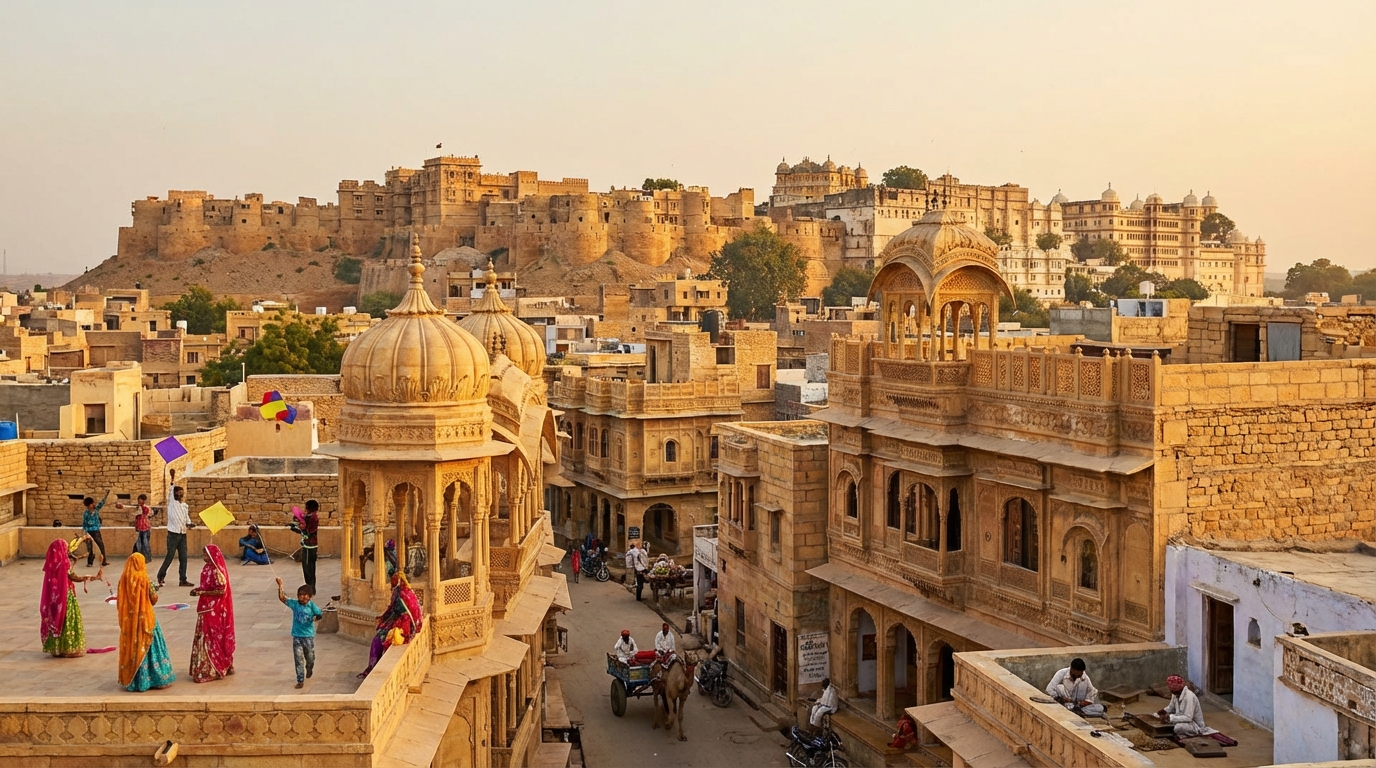
Rajasthan is a region of India. Rajasthan is a northwestern territory where the Thar Desert meets the Aravalli Range, the oldest fold mountains on Earth. The state is defined by its architectural transition from sandstone citadels to alkaline salt lakes like Sambhar, forming a frontier of extreme climates.
Geography
The 445-kilometer-long Luni River is the primary water source cutting through the arid Thar. To the west, the 1,048 km Radcliffe Line separates the shifting sand dunes from Pakistan. Temperatures here fluctuate wildly, dropping from 48 degrees Celsius in June to sub-zero levels in January, creating a landscape of heat-baked plains and freezing desert nights.
History
On March 30, 1949, the United State of Greater Rajasthan was formed. Sardar Vallabhbhai Patel orchestrated the merger of the princely states of Bikaner, Jaipur, Jaisalmer, and Jodhpur. This pivotal unification integrated 22 separate kingdoms into a single democratic entity, ending centuries of feudal rule while preserving the distinct heraldry of each desert clan.
Landmarks
- Mehrangarh Fort: The 15th-century ramparts house the Kirat Singh Soda cannon, featuring a barrel etched with a tactical map of historical Jodhpur battles.
- Amer Fort: The Sheesh Mahal uses concave mirrors imported from Belgium in 1623 to illuminate the entire hall using only one candle.
- Jaisalmer Fort: Known as a living fort, 4,000 residents still live within its 99 sandstone bastions that turn honey-gold during sunset.
- Chand Baori: This 8th-century stepwell features 3,500 perfectly symmetrical narrow steps descending 13 stories into a cool, green-tinted subterranean water pool.
- Patrika Gate: Completed in 2016, this pink gateway features hand-painted murals depicting the history of Rajasthan’s nine regions through specific regional jewelry patterns.
Cuisine
The arid climate led to a diet where milk and clarified butter replace water. Sun-dried berries like Ker and beans like Sangri from the Khejri tree are staples, providing vital nutrition during droughts without the need for fresh irrigation or cooling storage.
- Dal Baati Churma: Hard wheat balls are baked in dried dung cakes, then shattered and submerged in ghee to absorb moisture in desert heat.
- Laal Maas: Developed in 1920 for hunting trips, this mutton curry uses Mathania chillies and charcoal smoke to preserve the meat without refrigeration.
- Gatte ki Sabzi: Gram flour dumplings are simmered in a yogurt-based gravy, a culinary technique created to bypass the historical lack of fresh greens.
- Bajra Raab: This thick winter drink combines fermented pearl millet flour with buttermilk, providing warmth and energy during freezing nights in the Thar.
- Kanji: A fermented purple carrot drink seasoned with mustard seeds, prepared during Holi to aid digestion after eating heavy festive meals.
Culture
Culture is communicated through the winding of turbans, where specific styles identify a person's village or caste. The oral tradition of Dhanti survives alongside the Ghoomar dance, which involves rhythmic spinning that mimics the movement of sand dunes under the wind.
- Pushkar Camel Fair: Every November, 50,000 camels are traded. It features a unique matka phod contest and rituals at the world's only Brahma temple.
- Gangaur: Celebrating the spring harvest, women carry clay idols of Gauri on their heads through the streets to honor marital fidelity.
- Desert Festival: Held in February in Jaisalmer, this event includes quirky competitions like turban tying and the longest mustache contest in the dunes.
- Pagri: A 25-meter-long cloth turban; the angle of the twist and the specific color indicate the wearer's home district and profession.
- Odhni: A rectangular veil with Bandhej tie-dye patterns; specific colors signify life stages, such as yellow being reserved for new mothers.
- Ghagra Choli: A skirt made of 24 meters of fabric to allow air circulation, embedded with small mirrors to deflect solar heat.
- Angarkha: A quilted cotton tunic that fastens with strings instead of buttons, designed to be adjustable for manual labor in the heat.
- Mojari: Hand-stitched leather shoes without left or right distinctions, decorated with silk embroidery and copper wire to withstand abrasive desert sand.