Ubud
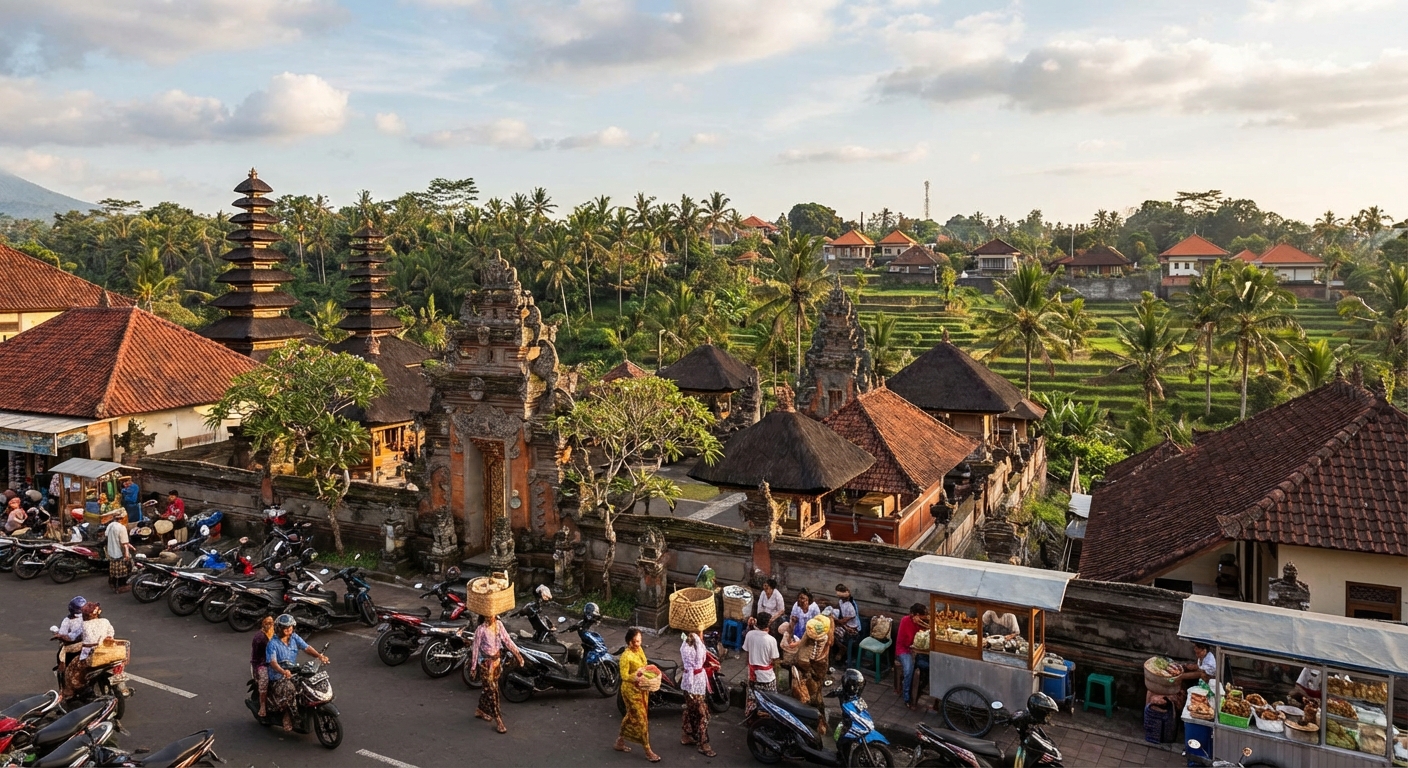
Ubud is a city in the Bali region of Indonesia. Ubud, nestled in the heart of Bali, Indonesia, serves as the island's spiritual and cultural core, far from the coastal beaches. Its atmosphere is defined by the constant, damp scent of frangipani blossoms mingling with incense smoke, contrasted against the emerald green terracing of rice fields.
Geography
Ubud sits astride the Ayung River gorge, characterized by steep riverbanks and deeply carved valleys. The relative coolness here, often 5 to 7 degrees Celsius lower than Denpasar, is due to its elevation around 150 meters above sea level, supporting dense tropical flora.
History
The founding moment centers around the arrival of Dang Hyang Nirartha in 1388. Following a meditative vision beside a confluence of sacred water sources, he established the Pura Taman Saraswati temple complex, formalizing Ubud's role as a center for spiritual learning and art patronage.
Landmarks
- Goa Gajah (Elephant Cave): Its entrance, carved with menacing demon faces, was excavated in 1923 after decades of being submerged by jungle growth, revealing Hindu-Buddhist iconography.
- Tegalalang Rice Terraces: Observe the intricate, 800-year-old Subak irrigation system; the sound of rushing water channeling from higher pools is constant here.
- Puri Saren Agung (Ubud Royal Palace): Notice the dark, volcanic stone carvings on the main gate, frequently used as a stage backdrop for nightly Legong dance performances.
- Nyuh Kuning Village: A newer community gaining attention for its focused organic farming cooperative, replacing traditional smallholdings over the last decade.
- Museum Puri Lukisan: This museum, established in 1956 by local artists, houses some of the earliest known Balinese paintings resisting Western stylistic influence.
Cuisine
Ubud cuisine strongly emphasizes raw, fermented, and carefully balanced vegetarian ingredients drawn directly from the surrounding cool highlands. Preparation often involves slow-smoking meats or using stone mortars to achieve specific coarse textures for spice pastes.
- Bebek Betutu: Duck stuffed with a complex spice paste (basa gede), then wrapped tightly in banana leaves and smoked over embers for up to 12 hours.
- Lawar Nangka Muda: Young jackfruit cooked down with minced meat and coconut, typically served only at temple feasts or significant family gatherings.
- Jaja Uli: Sweetened glutinous rice cakes steamed inside bamboo tubes; locals prefer the version coated with grated, slightly salty, dark brown palm sugar.
- Tuak (Palm Wine): Fermented sap collected daily from coconut or lontar palms; the potency changes rapidly within hours of collection.
- Jamu Beras Kencur: A thick, earthy health tonic made from ginger, rice, and tamarind, often consumed cold for morning energy boosts.
Culture
Ubud culture is deeply intertwined with Hinduism, manifesting in daily offerings (canang sari) seen everywhere, often made from precisely cut yellow coconut leaves. Dress is generally subdued, reserving elaborate gold-threaded textiles for specific ceremonies.
- Saraswati Day (Bhatara Saraswati): Celebrated every 210 days (based on the Pawukon calendar); involves reciting ancient texts at temples dedicated to the goddess of knowledge.
- Galungan: Marks the victory of Dharma over Adharma, characterized by families decorating streets with towering bamboo arches called penjor in the days leading up to it.
- Piodalan: Temple anniversary celebrations; the most intense aspect is the offering processions where hundreds of decorated trays are balanced overhead.
- Kamen (Sarong): Worn by both sexes wrapped from the waist down; men's often have less intricate patterns than the women's ceremonial cloth.
- Saput (Outer Cloth): A ceremonial sash draped over the shoulder for men entering temples; usually white or pale yellow signifying purity.
- Selendang (Sash): A brightly colored sash worn around the waist over the kamen, indicating respect and readiness for a holy activity.
- Kebaya: Fitted, often semi-transparent lace blouses worn by women, fastened typically with brooches rather than buttons.
- Udeng (Headcloth): Men's folded and tied headwear; the specific knot orientation can sometimes denote lineage or religious rank.