Almaty
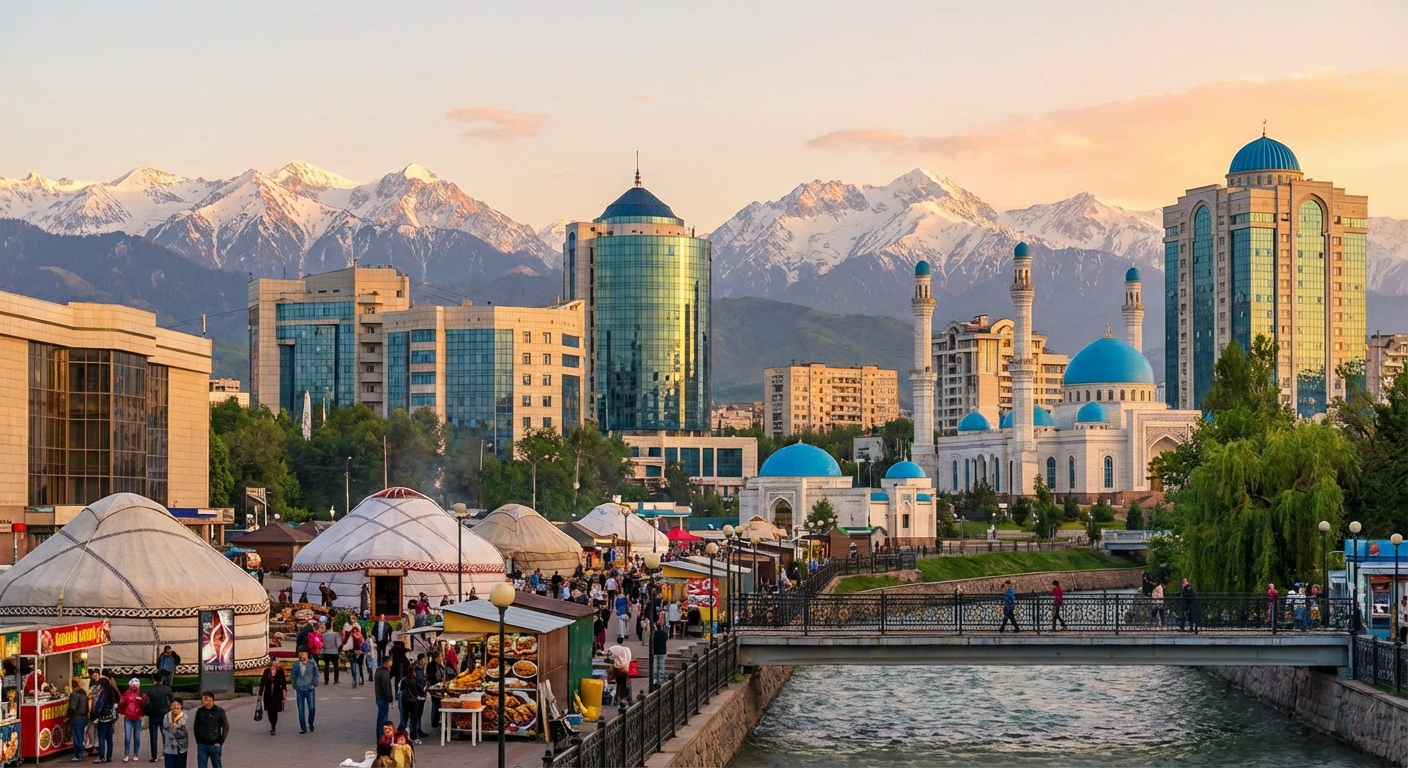
Almaty is a region of Kazakhstan. The Almaty Region, nestled in southeastern Kazakhstan, is defined by the colossal Tian Shan mountain range that scrapes the sky, creating alpine environments juxtaposed against fertile plains. Its most striking characteristic is the dramatic transition from arid steppe to glacial peaks, providing a unique ecological backdrop for its inhabitants.
Geography
The region is landlocked, sharing borders with Kyrgyzstan and China, marked by altitudes soaring from 300 meters above sea level to over 7,000 meters at Khan Tengri. The unique combination of Tien Shan glaciers feeding deep river canyons results in an unexpected microclimate supporting apple orchards near permanent ice fields.
History
A pivotal moment occurred in 1929 when Alma-Ata (now Almaty city, the former capital) was chosen as the Kazakh ASSR capital by the Soviet Central Executive Committee. This decision redirected massive infrastructural development and population influx directly into this mountainous basin, cementing its regional importance.
Landmarks
- Medeu Ice Rink: The massive concrete bowl, inaugurated in 1972, uses natural mountain water channeled down for its unparalleled fast ice surface, tested by Olympic skaters.
- Charyn Canyon: The 'Valley of Castles' features stratified sedimentary rock formations, sculpted over 12 million years by wind and water erosion into eerie, silent towers.
- Kolsai Lakes: These three interconnected, deep-green alpine lakes formed after a massive 1911 earthquake triggered a natural landslide damming the river valley.
- Zhetysu University Technology Park: A newer hub focusing on sustainable agriculture technology, locals discuss its recent development of drought-resistant grain strains for the northern plains.
- Alatau Mountain Railway Extension: Locals are keenly watching the 2024 budget allocation for extending this high-altitude rail line past Esentai for tourism access.
Cuisine
The cuisine heavily features nomadic traditions of meat preservation, notably horse and mutton, alongside intensive use of dairy products from high-altitude grazing. Preparation often involves long, slow boiling or baking within thick dough casings to retain moisture in the dry continental climate.
- Besbarmak: Finely chopped boiled meat mixed with thin, hand-rolled pasta sheets, traditionally eaten with the fingers during formal gatherings.
- Kazy: A prized, smoked horse sausage where the meat is packed tightly into the intestine casing and hung to cure for several weeks.
- Baursak: Small, square, deep-fried dough puffs served hot; their light, airy texture contrasts sharply with the density of the main meal.
- Kumis: Fermented mare's milk, slightly alcoholic and sour; it was historically vital for digestion during long summer migrations across the steppes.
- Shubat: Fermented camel milk, possessing a tangier, thicker consistency than Kumis, often consumed by elders for its perceived medicinal qualities.
Culture
The culture blends deep-rooted Kazakh nomadic heritage with Soviet-era administrative structures, evident in both social customs and apparel. Festivals frequently celebrate seasonal shifts or ancestral respect, often accompanied by specific stringed instrument music and recited poetry.
- Nauryz Meyramy: Celebrated on March 22nd, marking the vernal equinox; families gather to share the ceremonial soup, Nauryz Kozhe, symbolizing abundance.
- Kokpar (Buzkashi): Held sporadically during summer gatherings, this intense equestrian game involves competitors wrestling a headless goat carcass across a dusty field.
- Great Silk Road Festival (Historical Reenactment): A smaller annual event near Taraz showcasing 10th-century merchant life through meticulously crafted leatherwork and pottery demonstrations.
- Chapan: A quilted, long-sleeved outer coat for men, lined with sheep's wool or cotton, worn reversed for added insulation during cold snaps.
- Saukele: An elaborate, tall ceremonial headdress worn by brides, sometimes reaching up to 50 centimeters in height, heavily adorned with silver.
- Tyubeteyka: A small, embroidered skullcap worn by men, often featuring sharp black and white geometric patterns indicative of local tribal affiliation.
- Kimeshek: A white headscarf worn by married women, tightly wrapped to conceal the hair completely, indicating marital status and modesty.
- Malakhai: A distinctive fur hat with prominent flaps that protect the neck and ears, necessary for high-altitude shepherds working near the peaks.