Bishkek
Bishkek is a city in the Chuy Region region of Kyrgyzstan. Bishkek sits 800 meters above sea level at the base of the Kyrgyz Ala-Too Range. Originally a 19th-century mud-brick fort, it now features a grid of 20 irrigation canals and 150 species of trees that lower temperatures by 5 degrees during the dry July heat.
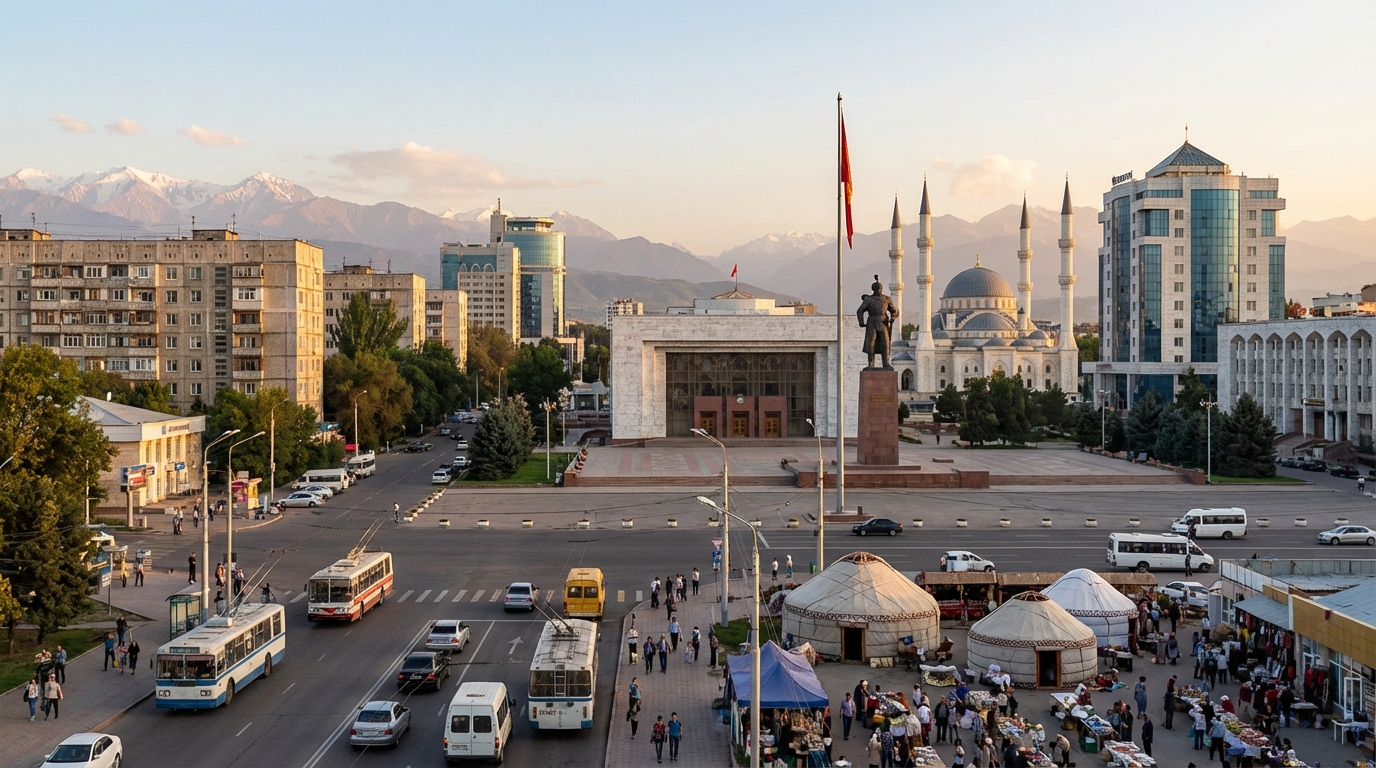
Geography
The city acts as a natural wind tunnel; 4,800-meter peaks of the Tien Shan send a downward flow of cool air every evening at 8:00 PM. The urban layout incorporates 12,000 hectares of green space, where the sound of rushing water from the 'aryk' irrigation ditches provides a constant 40-decibel background hum, filtering the desert dust from the surrounding steppe.
History
On April 29, 1878, Captain Mikhail Peryshkov relocated the regional administrative center from Tokmok to the ruins of the Pishpek fort following a catastrophic flood. Peryshkov mandated a 90-degree grid system for all 30 original streets, ensuring that mountain winds could sweep through the city, a design choice that still dictates the flow of traffic and air today.
Landmarks
- Ala-Too Square: Guard changes occur every 60 minutes, featuring synchronized high-kicking steps that produce a sharp metallic ring against the polished granite tiles.
- State Historical Museum: The 1984 ceiling frescos depict 20th-century geopolitical tension, including a surreal image of a skeletal figure representing western capitalism riding a bomb.
- Osh Bazaar: The air in the felt aisle smells of wet wool and lanolin, where 15-millimeter thick nomadic rugs are sold by weight.
- Asanbay Center: This repurposed 2,500-square-meter warehouse hosts digital art and techno nights, serving as the primary hub for the city’s underground electronic music scene.
- Imam Sarakhsi Central Mosque: Completed in 2018 with Ottoman-style architecture, the minarets stand 70 meters tall, featuring hand-painted tiles imported directly from workshops in Turkey.
Cuisine
Bishkek’s food relies on 40% fat content sheep tail lard and mineral-rich mountain salts. Chefs use heavy cast-iron 'kazans' to reach 300-degree temperatures, searing meat quickly to retain moisture. The flavor profile is defined by 'dzhamduu'—a savory depth achieved by slow-cooking onions until they dissolve into a sweet, dark base for noodle-heavy dishes.
- Beshbarmak: Finely minced horse meat served over 5-millimeter wide hand-cut noodles, meant to be eaten using five fingers to feel the texture of the broth.
- Boorsok: Exactly 3-centimeter squares of yeast dough fried for 45 seconds in hot oil until they puff into golden pillows for celebratory tea ceremonies.
- Kurdak: A 1,000-year-old recipe of mutton heart and liver braised with onions and potatoes, seasoned with enough black pepper to make the tongue tingle.
- Maksym: A fermented liquid of ground barley and corn that leaves a gritty, sourdough-like residue on the glass, cooling the body in 35-degree weather.
- Kymyz: Mare’s milk fermented for 72 hours in smoked sheepskin bags, resulting in a fizzy, slightly alcoholic drink with a distinct scent of campfire.
Culture
Culture revolves around the 500,000-line Manas epic, recited by specialists who enter trance-like states. Social life shifts with the seasons; in June, 20% of the population visits high-altitude pastures. Festivals center on horse-based games like 'Ulak Tartysh,' where riders compete for a 35-kilogram carcass, requiring immense physical grip and 10 years of training for both horse and man.
- Nooruz: Every March 21, locals stir Sumolok—a paste of sprouted wheat and seven stones—for 24 hours while whispering wishes into the steam.
- Orozo Ait: Marking the end of Ramadan, families prepare 50 to 100 liters of tea and dozens of plates of fried dough for visiting neighbors.
- World Nomad Games: A biennial event where 3,000 athletes compete in traditional archery and hunting with golden eagles, preserving skills developed over 15 centuries.
- Kalpak: A white felt hat with four panels representing peaks, designed with a brim that can be folded to signal a man's social status.
- Elechek: A turban for married women created by wrapping 20 meters of white cotton; the style of the wrap identifies the wearer's specific mountain tribe.
- Chapan: A quilted coat padded with 2 kilograms of raw wool, essential for surviving the 20-degree drops in temperature common after sunset.
- Beldemchi: A velvet over-skirt embroidered with 10 different colors of silk thread, traditionally gifted to a woman after she gives birth to her first child.
- Ichigi: Thin goatskin boots without heels, designed to be silent on wooden floors and worn inside felt-lined yurts to maintain floor cleanliness.