Solomon Is.
Solomon Is. is a country. Located northeast of Australia in the Melanesian archipelago, this nation of 992 islands is defined by the sound of 70 distinct languages and the constant humidity of 80%. It is home to the world’s most active submarine volcano, Kavachi, which frequently creates temporary landmasses in the warm Pacific waters.
Geography
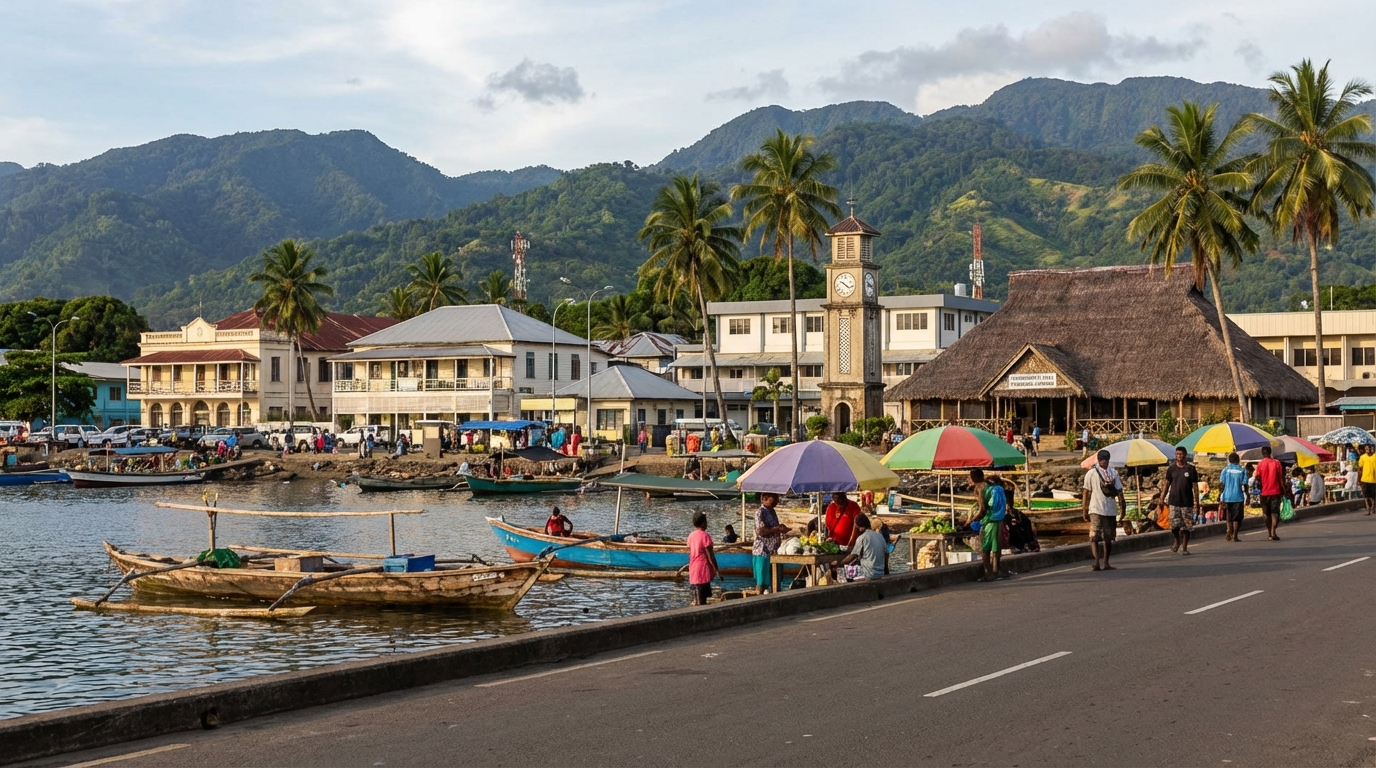
The archipelago spans 28,400 square kilometers, featuring the world’s largest raised coral atoll, East Rennell. Terrain varies from sharp volcanic ridges rising to 2,335 meters at Mount Popomanaseu to dense lowland rainforests receiving 3,000mm of annual rainfall. The maritime border with Australia and Papua New Guinea is defined by deep oceanic trenches and the unique movement of hammerhead sharks near acidic volcanic vents.
History
On July 7, 1978, at Lawson Tama Stadium in Honiara, the Union Jack was lowered for the final time. Prince Richard, Duke of Gloucester, handed the constitutional instruments to Sir Baddeley Devesi, the first Governor-General. This 10:00 AM ceremony transitioned the British protectorate into a sovereign nation, ending 85 years of colonial administration without a single drop of blood spilled.
Landmarks
- Kennedy Island (Kasolo): In 1943, John F. Kennedy swam to this 400-meter-wide islet after his PT-109 boat was sliced in half by a Japanese destroyer.
- Bonegi I and II: These submerged Japanese freighters, the Hirokawa Maru and Kinugawa Maru, rest just 5 meters below the surface, coated in stinging orange fire coral.
- Kavachi Volcano: Known as Sharkano, this submarine volcano breaches the surface every few years; locals watch the water turn a milky, sulfurous yellow from afar.
- National Parliament House: Completed in 1993, its conical roof mimics a traditional roundhouse, symbolizing unity across the nine provinces through its circular, non-hierarchical interior design.
- Vilu Military Museum: Located in a private garden, it houses rusted 155mm howitzers and soda bottles from 1942, still partially buried in the damp red clay.
Cuisine
Cooking revolves around the motu, an underground oven lined with hot stones and banana leaves. Ingredients like taro and yam provide a dense base, softened by the creamy fat of freshly squeezed coconut milk. The air during meal prep smells of woodsmoke and caramelized root vegetables, a process that takes four hours to reach the desired gelatinous texture.
- Cassava Pudding: Grated cassava root mixed with coconut cream and baked in a stone oven until it reaches a sticky, dense texture like heavy fudge.
- Ulu (Breadfruit): Often roasted directly on open coals until the skin chars black, revealing a white interior that tastes like roasted chestnuts and warm bread.
- Pana: A specific type of small, prickly yam harvested in June, prized for its sweetness and typically steamed inside large hibiscus leaves.
- Fresh Kulau: Green coconut water harvested by climbing 15-meter palms; the water is slightly effervescent and stays cool even in 30-degree Celsius heat.
- Bush Lime Juice: Made from small, thick-skinned citrus fruits crushed with cane sugar, providing a sharp, acidic contrast to the heavy starch of local meals.
Culture
Identity is woven into the exchange of akwalao (shell money) and the polyphonic scales of bamboo panpipes. In Malaita, the Langa Langa people construct artificial islands from coral blocks. Festivals are marked by the rhythmic thumping of feet on packed earth, with dancers wearing headpieces made of hornbill feathers and necklaces crafted from the teeth of dolphins.
- Shell Money Festival: Held every August in Langa Langa Lagoon, demonstrating the 10-step process of grinding and polishing red mollusk shells into valuable cultural currency.
- Spear Dancing Festival: In Santa Cruz, men perform the napa, involving synchronized movements while holding 2-meter long decorated wooden batons and woven shields.
- Independence Day: Every July 7th, Honiara fills with the sound of bamboo bands playing pipes made from PVC or bamboo, hitting them with rubber flip-flops.
- Tapa Cloth: Beaten from the inner bark of mulberry trees, this stiff fabric is painted with black charcoal geometric patterns for use in wedding ceremonies.
- Kavera: Intricate chest ornaments made of dolphin teeth and mother-of-pearl, worn by high-ranking men to signify status during traditional community negotiations.
- Bila: A decorative belt constructed from thousands of tiny red, white, and black shell beads, used as a dowry payment and ceremonial dress.
- Pocket Sulu: A formal, tailored wrap-around cloth worn by men with a shirt and tie for government business and Sunday church services.
- Purapura: Hand-woven skirts made from shredded hibiscus bark or dried palm fronds, stained with natural root dyes for traditional dance performances.