Chicago
Chicago is a city in the Illinois region of United States of America. Chicago is a massive freshwater terminal in the American Midwest, anchored by the massive expanse of Lake Michigan. It is most striking for its strictly engineered grid-iron layout and a river that flows backward, defying the natural gravity of the continental divide.
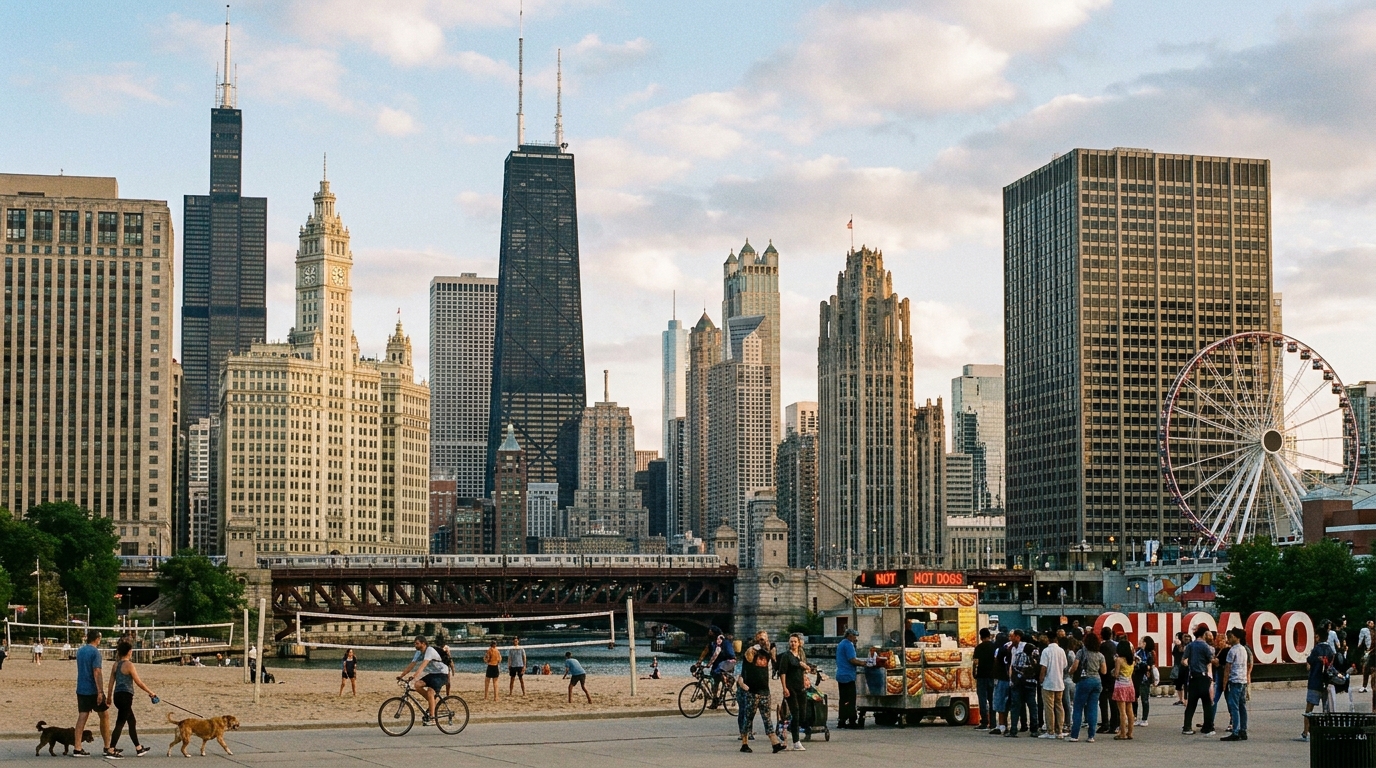
Geography
Chicago sits on a flat lacustrine plain 176 meters above sea level. The Chicago River's flow was reversed in 1900 via the Sanitary and Ship Canal. It experiences lake effect snow where freezing air picks up moisture from 22,300 square miles of water, dumping heavy flakes on the shoreline.
History
In 1885, William Le Baron Jenney completed the Home Insurance Building. Using a steel frame rather than load-bearing masonry, he allowed the structure to reach 10 stories without collapsing. This engineering shift turned the charred ruins of the 1871 fire into a vertical landscape, birthing the modern skyscraper and changing how humans inhabit urban spaces forever.
Landmarks
- Willis Tower: Look closely at the bundled tube structure; it is designed to sway up to 3 feet during 60 mph wind gusts to prevent snapping.
- Cloud Gate: The 168 stainless steel plates are welded so precisely that the seams are invisible, requiring daily buffing with microfiber cloths to maintain the shine.
- The Rookery Building: Its central light court features a 1905 renovation by Frank Lloyd Wright, utilizing white Carrara marble and intricate gold leaf accents throughout the lobby.
- The 606: An elevated rail line turned park where 1,400 trees grow along a 2.7-mile trail, repurposing industrial steel tracks originally laid down in 1913.
- The Salt Shed: A former industrial salt storage facility on the river where the interior smells faintly of brine during summer outdoor concerts held on the lot.
Cuisine
Chicago cuisine relies on heavy fats and starch to combat sub-zero winter temperatures. Preparation often involves slow-roasting meats and heavy layering of cheese within high-walled dough structures to retain heat in the biting wind.
- Deep Dish Pizza: Developed in 1943 at Pizzeria Uno, this butter-crust vessel contains nearly a pound of mozzarella beneath a chunky, thick tomato sauce layer.
- Chicago-Style Hot Dog: A 1929 depression sandwich on a poppy seed bun, strictly excluding ketchup but featuring neon-green relish and a heavy dusting of celery salt.
- Italian Beef: Thinly sliced roast beef dipped in hot jus until the bread reaches a soggy, sponge-like consistency, topped with vinegar-soaked serrano pepper giardiniera.
- Malört: A wormwood-based liqueur first distilled in 1934; it tastes like burnt grapefruit peel and pencil shavings, often used as a local hazing ritual.
- Atomic Coffee: Local roasters prioritize heavy body and high acidity to survive the 45-degree morning dampness found in the city during October and November.
Culture
Life revolves around the L train's screeching wheels and neighborhood loyalty. Residents mark territory during winter with dibs, placing plastic chairs in shoveled snow spots to claim parking, a practice tolerated since the 1970s.
- Dyeing the River Green: Since 1962, the Plumbers Local 130 dumps 40 pounds of secret vegetable dye into the water for St. Patrick's Day, turning it emerald green.
- Bud Billiken Parade: Founded in 1929, it is the oldest African American parade in the U.S., signaling the start of the school year with massive drumlines.
- The Maxwell Street Market: An open-air bazaar where blues music and the scent of grilled onions have defined Sunday mornings for immigrant families since 1812.
- The 1985 Varsity Jacket: Worn by older generations to signify neighborhood athletic pride and the 1985 championship era, typically featuring heavy wool and leather sleeves.
- The Sunday Church Hat: Elaborate, wide-brimmed felt or straw hats worn by women on the South Side during 10:00 AM services, often matching the color of the dress.
- The High-Visibility Carhartt Jacket: Worn by 35,000 city workers; its neon yellow fabric is the city's unofficial winter work uniform for surviving the January lakefront winds.
- The Polish Constitution Day Sash: Red and white silk worn during the annual May parade to honor the 1791 document, reflecting the city's massive Polish ancestry.
- The Steel-Toe Work Boot: Thick-soled leather footwear required for navigating the grease and salt of the city's 4,000 miles of paved alleys and construction zones.