Altay
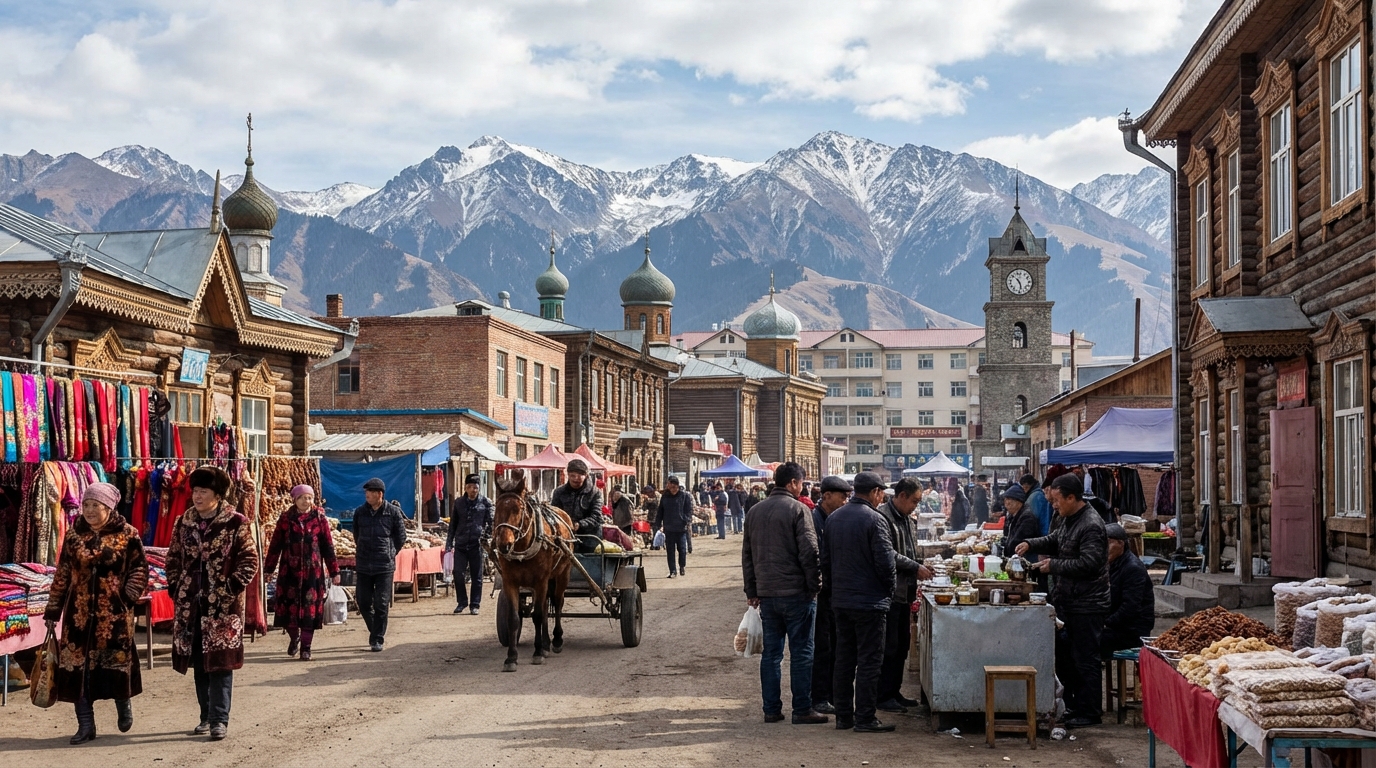
Altay is a city in the Xinjiang region of China. Situated at the precise geographic center of Eurasia, the Altay Republic is a high-altitude sanctuary where the Siberian taiga meets the Central Asian steppe. The region is defined by the three-headed peak of Mount Belukha and the turquoise Katun River, serving as a spiritual crossroads for Turkic nomadic traditions.
Geography
The region contains the 4,506-meter Mount Belukha, which is equidistant from the Earth’s four oceans. The ground is a patchwork of permafrost and alpine meadows where the temperature swings 30 degrees in a single day. In autumn, the Katun River turns a vivid shade of milky turquoise due to glacial silt, a phenomenon local residents call the 'emerald heart' of the mountains.
History
On July 3, 1991, the Altay Republic achieved sovereignty within the Russian Federation. This followed years of advocacy by Valeriy Kyatkov and indigenous leaders who lobbied to protect the Turkic language and ancestral lands from industrialization. The event secured administrative control for the Altay people, allowing them to legally protect sacred sites like the Golden Mountains while maintaining their traditional pastoral lifestyle.
Landmarks
- Mount Belukha: Its three-headed peak reflects a metallic silver light at dawn, believed by many to be the literal center of the universe.
- Lake Teletskoye: With a depth of 325 meters, its floor contains an 'underwater forest' where trees remain upright and undecayed for nearly a century.
- Ukok Plateau: Found at 2,500 meters, this permafrost-locked site preserved a 2,500-year-old mummy with sophisticated, flowing stag-shaped tattoos.
- Denisova Cave: In 2010, researchers identified a pinky bone here belonging to the Denisovans, an ancient human species distinct from Neanderthals.
- Kyzyl-Chin Valley: Iron-rich clay creates stripes of cinnabar and yellow, making the valley floors look like a frozen Martian surface under the sun.
Cuisine
The cuisine focuses on survival in extreme cold, utilizing high-fat dairy and Pinus sibirica nuts. Cooking is done over open larch-wood fires, which imparts a subtle resinous smoke to all dishes. Preservation is key, with dairy being fermented into hard cheeses or distilled into spirits that can withstand nomadic life across the shifting mountain passes.
- Tok-chok: Crushed cedar nuts and roasted barley kernels bound with honey; these dense balls provide immediate energy for high-altitude trekking.
- Kocho: A nutrient-dense broth made by boiling mutton on the bone with pearl barley, served hot to combat the biting Siberian wind.
- Kurut: These rock-hard balls of dried yak milk are so durable that nomads carry them for months as a non-perishable snack.
- Araka: Distilled from fermented milk, this clear liquor has a creamy aftertaste and is ritually flicked into the air as an offering.
- Chegen: Thicker than milk but thinner than yogurt, this fermented drink uses a specific bacterial strain passed down through generations.
Culture
Altay culture is rooted in Ak Jang, a spiritual movement established in 1904. It emphasizes the sanctity of mountain peaks and water sources. Traditional attire, like the fox-fur Shapk, is designed for -40°C winds. Festivals follow the lunar calendar, with communities gathering at sacred 'Arzhan' springs to offer milk and pray for the health of their herds.
- El-Oyin: Held every two years in July, thousands gather to compete in 'Kök-Börü,' a rugged game played on horseback with a goat carcass.
- Chaga-Bayram: Celebrating the White Month in February, locals climb mountains to offer milk to the spirits as the first lunar month begins.
- Jylgayak: This spring equinox event involves burning juniper branches to smoke-cleanse homes and livestock, signaling the end of the frost.
- Chegedek: A long, sleeveless vest worn by married women over a robe; it signifies the wearer’s status as a keeper of the hearth.
- Ton: A massive sheepskin coat with sleeves reaching past the fingertips, providing crucial insulation against -40°C winter temperatures.
- Altay Shapk: A fur-trimmed hat with a distinctive pointed crown, designed to mimic the shape of the mountain peaks surrounding the wearer.
- Kushak: A wide, woven belt used to secure the heavy robes, often embroidered with symbols representing the flow of the Katun River.
- Terlig: A summer robe made from thin fabric, featuring high collars and deep pockets for carrying essential tools like flint and steel.