Xinjiang
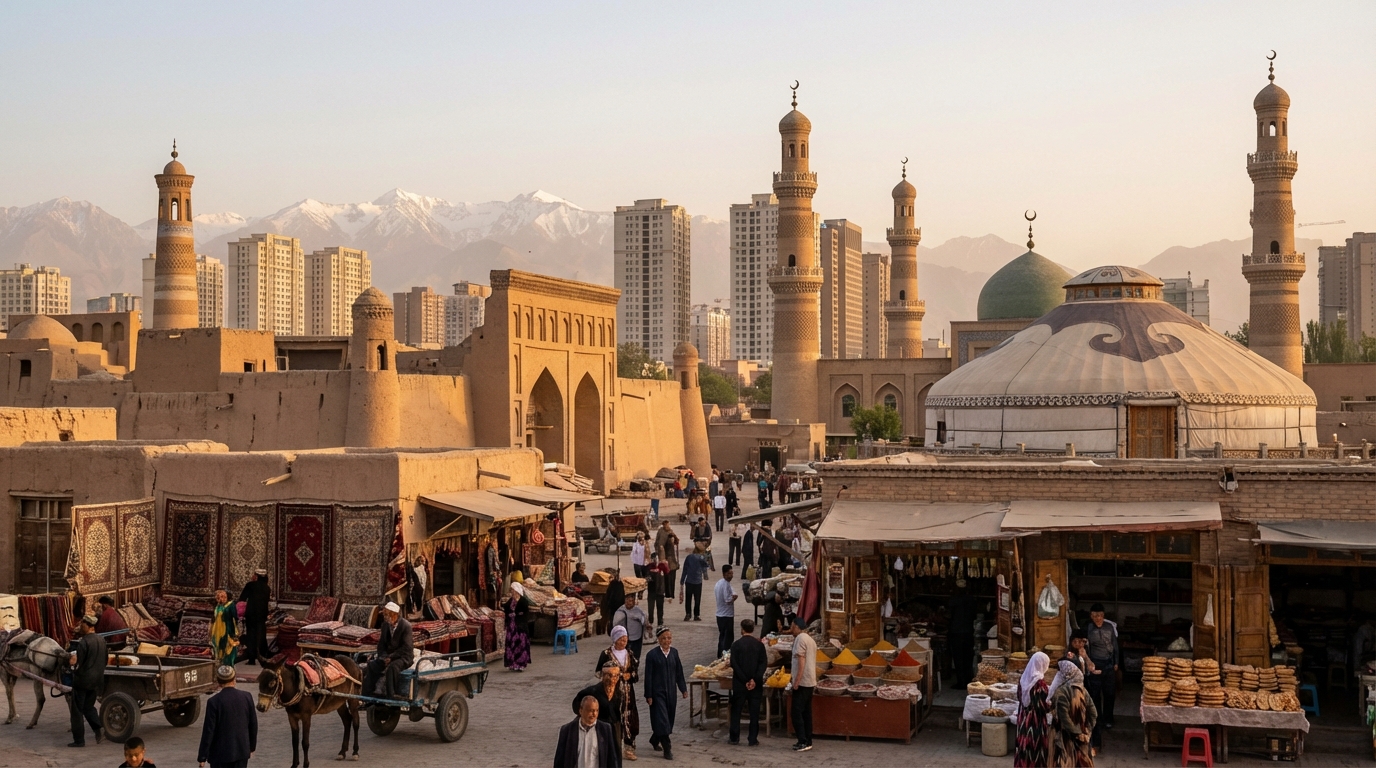
Xinjiang is a region of China. Xinjiang sits at the core of Eurasia, bordering eight nations along the historic Silk Road routes. It is defined by the massive Tianshan Mountains which divide the region into the northern steppes and the southern Tarim Basin where the Taklamakan Desert resides.
Geography
Xinjiang spans 1.6 million square kilometers, featuring the Turpan Depression which drops 154 meters below sea level. In the Taklamakan Desert, shifting dunes create a low-frequency singing sound when the wind hits a specific 50-degree temperature. Meltwater from the Tianshan peaks feeds ancient underground canals called Karez, supporting life in the arid heat.
History
In 60 BCE, the Han Dynasty established the Protectorate of the Western Regions under commander Zheng Ji. This pivotal move integrated the oasis city-states into a single administrative unit, securing the trade routes that allowed Roman glassware and Chinese silk to move across the continent safely.
Landmarks
- Emin Minaret: Built in 1777, this 44-meter tower features geometric floral patterns created solely by the arrangement of sun-dried bricks without using any paint or glaze.
- Id Kah Mosque: At the center of Kashgar, the yellow-tiled entrance leads to a courtyard cooled by 100-year-old poplar trees that dampen the city noise effectively.
- Grand Bazaar (Urumqi): This 100,000 square meter complex features a central tower where the smell of roasted cumin and sheep fat permeates the air from early morning.
- Sayram Lake: Known as the last tear of the Atlantic, this alpine lake sits at 2,073 meters and remains sapphire blue even through 1-meter thick ice.
- Bayanbulak Grassland: Located at 2,500 meters, this wetland contains the Swan Lake sanctuary where thousands of whooper swans arrive annually to breed in the thermal springs.
Cuisine
Heavy use of fat-tailed sheep, cumin, and Nan bread baked in 400°C clay ovens called tonir. Preparation emphasizes hand-pulled dough techniques that stretch strands.
- Laghman: Hand-pulled wheat noodles topped with mutton and peppers; the dough is stretched by hand until it reaches the thinness of a piece of twine.
- Polu: A rice dish cooked with yellow carrots and mutton fat; traditionally eaten with the fingers of the right hand to feel the grain texture.
- Lamb Kawap: Skewers of meat seasoned with salt and cumin, grilled over apricot wood charcoal to give a faint fruity smokiness to the finished protein.
- Kvass: A fermented drink made from black bread and honey, introduced by Russian settlers; it has a fizzy, bready tang and very low alcohol content.
- Salty Milk Tea: Brick tea boiled with sheep or cow milk and a pinch of salt; it provides essential electrolytes for herdsmen in the cold mountain passes.
Culture
Life revolves around the Meshrep, a traditional gathering involving music and dance. The Uyghur 12 Muqam forms the backbone of ceremonial musical life.
- Nawrus: Celebrated on the Spring Equinox, families cook a special porridge of seven ingredients to welcome the new year and the return of green pastures.
- Rozi Heyt: Marking the end of Ramadan, the streets of Kashgar fill with men performing the Sama dance to the beat of Nagra drums and horns.
- Qurban Heyt: A three-day festival where families share mutton with neighbors and the elderly, emphasizing community bonds and the redistribution of wealth through communal food.
- Doppa: A four-cornered embroidered skullcap worn daily; the patterns, such as almonds or flowers, often indicate the wearer's home city or specific marital status.
- Etles Silk: A vibrant, ikat-dyed fabric featuring bold patterns; the silk is dyed by hand using traditional recipes involving walnut shells and saffron for pigment.
- Chapan: A heavy, quilted outer robe worn by men in winter, often featuring high collars to block the biting winds of the Tianshan mountain passes.
- Koynek: A loose-fitting dress for women, typically worn over trousers, featuring intricate embroidery on the cuffs and collar to ward off the local evil eye.
- Yulugh: Hand-crafted leather boots with soft soles designed for both horse riding and indoor mosque use, often decorated with intricate floral leather appliqués and stitching.