Hotan
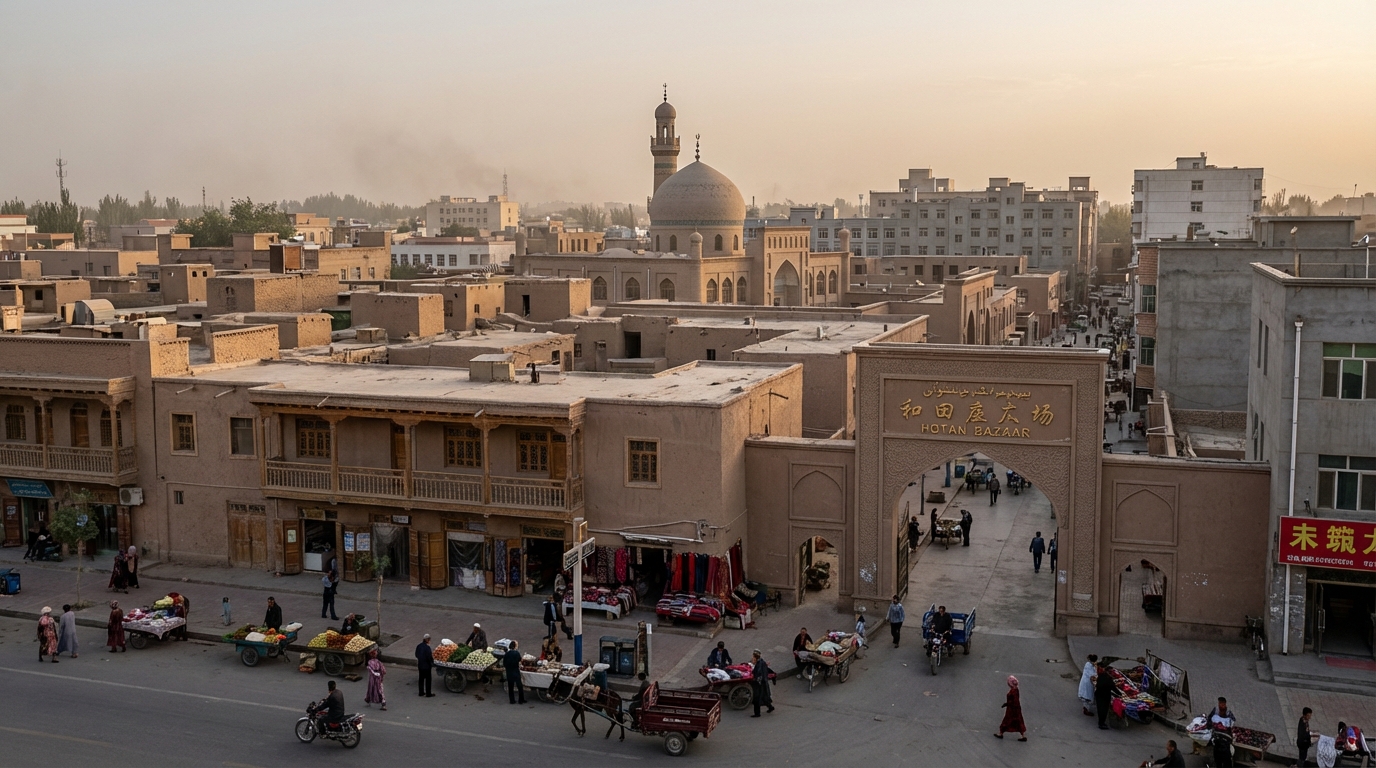
Hotan is a city in the Xinjiang region of China. Hotan sits at the southern edge of the Taklamakan Desert, where the 6,000-meter Kunlun Mountains meet shifting sands. It serves as the global epicenter for nephrite jade, a material that has dictated the region's trade and identity since the 2nd century BCE.
Geography
Hotan marks the transition from 6,000-meter Kunlun peaks to the 1,300-meter sands of the Taklamakan. With only 33 millimeters of annual rainfall, the city survives through glacial runoff from the White Jade and Black Jade rivers, which sustain 47 distinct oasis settlements along the desert's southern edge.
History
In 644, the monk Xuanzang documented the Kingdom of Khotan, describing a city flourishing from silk production and jade trade. This record established Hotan as a crucial diplomatic link for the Tang Dynasty, cementing its role as the primary supplier of nephrite jade to the imperial courts for thirteen centuries.
Landmarks
- Yurungkash River Bed: Locals wade through freezing meltwater in autumn to find mutton-fat jade pebbles tumbled smooth by thousands of years of erosion in the riverbed.
- Malikawat Ruins: Silt-covered foundations of a 2,000-year-old capital where archaeologists found 4th-century murals depicting silk-weaving princesses hidden under sand dunes for over a millennium.
- Hotan Sunday Bazaar: Spanning 13 hectares, this market smells of woodsmoke and roasted lamb, trading everything from hand-forged knives to medicinal desert herbs under a canopy.
- Kunlun Jade Museum: A 2018 structure housing a 5-ton nephrite boulder, showcasing the 5,000-year-old link between the mountain glaciers and Chinese imperial seals.
- Tuancheng Neighborhood: A recently renovated district where pigeon-keeping towers and carved poplar doors maintain 19th-century architectural styles using local yellow clay and intricate woodworking.
Cuisine
Hotan's kitchen relies on the tonur pit-oven. High-heat baking and the use of desert salt give breads and meats a distinct mineral crust and smoky aroma.
- Goshnan: A 12-inch double-layered meat pie crimped by hand, baked inside a clay oven until the lamb fat saturates the yeast-free dough.
- Owa Dumplings: Thin-skinned packets filled with minced mutton and black pepper, traditionally served to guests arriving from the long desert road to provide immediate warmth.
- Grilled Watermelon with Lamb: A 20-century-old technique where a melon is hollowed, filled with lamb and spices, then buried in hot desert coals for slow cooking.
- Medicinal Herbal Tea: A brew of rosebuds, saffron, and desert ginseng boiled in 90-degree water to combat the arid climate and revitalize desert travelers.
- Dogh: A mixture of fermented yogurt and crushed ice, often flavored with honey, served in clay bowls to cool travelers in 40-degree heat.
Culture
The culture revolves around the Muqam melodies and Atlas silk. Weaving involves 15 distinct dyeing stages using walnut husks and pomegranate skins for geometric patterns.
- Nowruz: Celebrating the spring equinox on March 21st, locals prepare seven-item puddings and perform the Sama dance to welcome the new agricultural cycle.
- Jade Harvesting Festival: Occurring after the autumn floods recede, this community gathering involves searching the riverbeds for stones revealed by the lower water levels.
- The Melon Festival: Held in mid-August when the Hami and Galia melons reach peak sugar content, featuring competitions for the heaviest 15-kilogram desert fruits.
- Atlas Silk Dress: Made from manually reeled cocoons, these dresses feature rainbow patterns dyed in 7-meter stretches to reflect desert light during summer celebrations.
- Doppa: A four-cornered skullcap embroidered with almond motifs, signaling the wearer's social status and regional origin within the oasis for daily wear.
- Etles Khan: A heavy ceremonial robe for men, lined with wool and silk, worn during wedding processions to show family prosperity and respect.
- Pashmet: A traditional wool shawl woven from 2-year-old goats, used by women to shield against 30-knot dust storms while traveling between towns.
- Karakul Boots: High-quality leather boots with slightly upturned toes, designed for walking on shifting sands without collecting heat or sinking into the dunes.