Turpan
Turpan is a city in the Xinjiang region of China. Turpan is a tectonic depression in Xinjiang located 154 meters below sea level, making it the second-lowest point on Earth. Life in this arid basin is sustained by a 5,000-kilometer network of hand-dug underground tunnels that carry mountain meltwater through the desert heat.
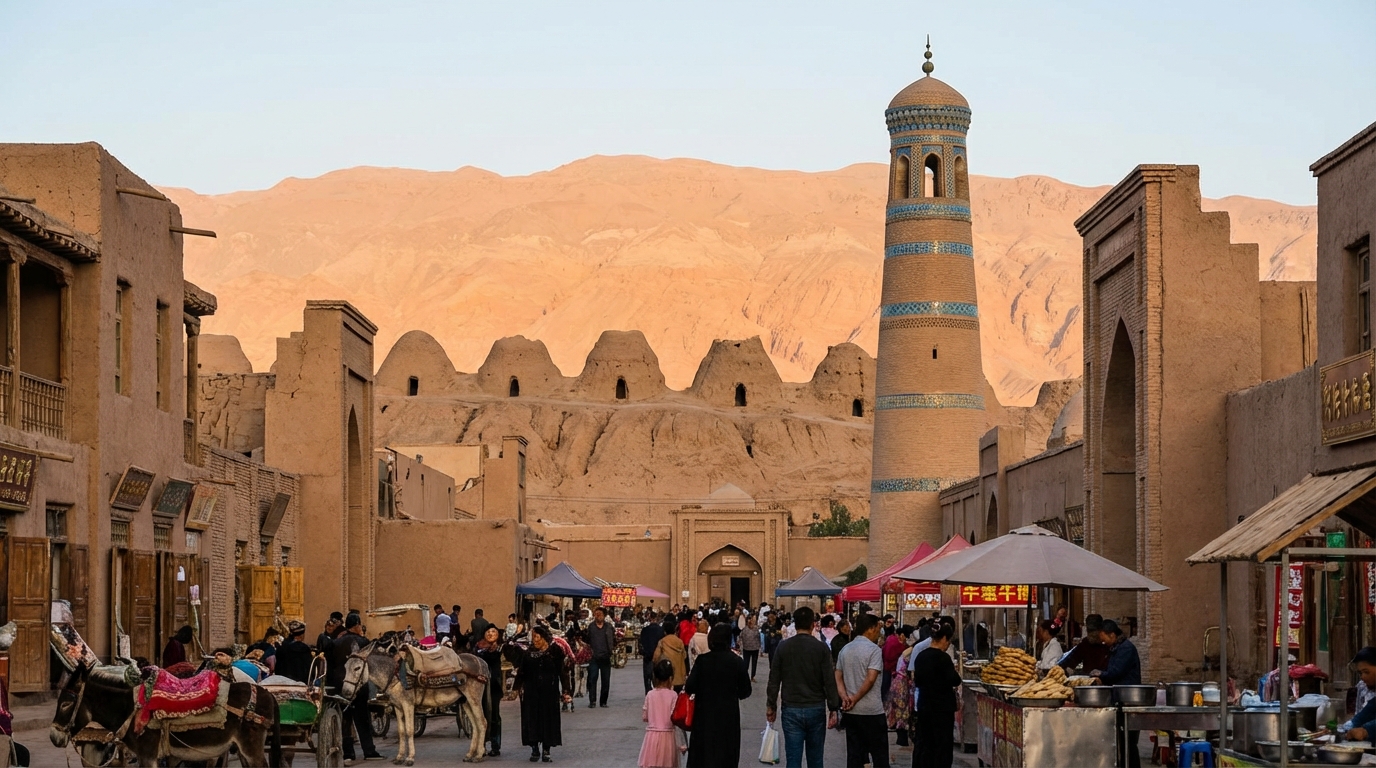
Geography
The basin experiences 49.6°C summers and receives only 16mm of annual rain. The red sandstone Flaming Mountains create shimmering thermal currents, while 1,100 Karez wells pull 10°C water from the Tianshan Mountains via gravity-fed underground channels to prevent evaporation.
History
In 640 AD, General Hou Junji led Tang Dynasty forces to capture the kingdom of Gaochang, turning Turpan into a pivotal Silk Road administrative hub. This moment solidified the region as a primary site for the exchange of paper-making technology and Manichaean scrolls.
Landmarks
- Jiaohe Ruins: A 2,300-year-old city carved entirely downward into a raw earth plateau rather than being built up with bricks or timber supports.
- Emin Minaret: Completed in 1777, this 44-meter mud-brick tower features 15 distinct geometric patterns created without a single piece of wood or stone.
- Karez Well System: A subterranean engineering marvel where vertical shafts reach 70 meters deep to access water flowing through thousands of kilometers of tunnels.
- Bezeklik Thousand Buddha Caves: These 77 rock-cut grottoes contain 9th-century murals painted with crushed malachite and lapis lazuli depicting diverse Silk Road merchants and royalty.
- Flaming Mountains: These red sandstone ridges reach surface temperatures of 70°C, causing the air to shimmer like rising orange flames against the horizon.
Cuisine
Cooking focuses on the Tandir clay oven and extreme solar heat. Local grapes reach 25% sugar content due to 14 hours of daily sunlight.
- Pit-Roasted Lamb: Whole lambs are marinated in egg and saffron, then sealed in a 300°C clay pit for two hours until the skin turns brittle.
- Thompson Seedless Grapes: Harvested in August, these are dried in brick towers where hot desert winds dehydrate them into translucent, sweet snacks within forty days.
- Polu: A rice dish cooked in mutton fat with yellow carrots and raisins, traditionally eaten from a communal copper tray at wedding feasts.
- Museles: An ancient, amber fermented grape drink brewed with rose petals and local herbs, predating modern wine traditions in the Turpan Basin.
- Salted Brick Tea: Compressed dark tea leaves boiled with fresh goat milk and salt to replenish essential minerals lost during the intense 50°C summer heat.
Culture
Turpan culture revolves around the grape harvest and the Heywan courtyard. It blends Persian-influenced silk designs with Central Asian musical traditions and meshrep gatherings.
- Grape Festival: Celebrated every August 20th, locals perform the Nazarkum dance, which features humorous movements mimicking the harvest of heavy, sweet grape clusters.
- Corban Festival: A major religious event where thousands gather at the Emin Minaret to perform the rhythmic Sama dance in massive, synchronized circles.
- Nowruz: The spring equinox celebration in March involving the manual cleaning of the Karez channels to ensure the year's water supply for vineyards.
- Doppa: A square skullcap with white-on-black embroidery, where the specific floral patterns identify the wearer's home village and social standing.
- Atlas Silk Dress: Women's ceremonial wear made from hand-dyed ikat silk, featuring sharp, rainbow-colored zig-zags that shimmer under the intense desert sun.
- Chapan: A heavy, quilted robe for men with elongated sleeves, designed to insulate against the extreme 30-degree temperature shifts between day and night.
- Etles: A versatile silk scarf worn by harvesters to protect their faces from the abrasive Karagay desert winds during the late summer months.
- Jughi: Hand-stitched leather boots with thin soles and pointed toes, originally designed for navigating the soft, hot silt of the Turpan depression.