Urumqi
Urumqi is a city in the Xinjiang region of China. Urumqi stands as the most inland major city on Earth, positioned roughly 2,500 kilometers from any coastline. This administrative capital of Xinjiang functions as a high-altitude oasis nestled between the desert sands of the Junggar Basin and the glaciated 5,445-meter peaks of the Tianshan range.
Geography
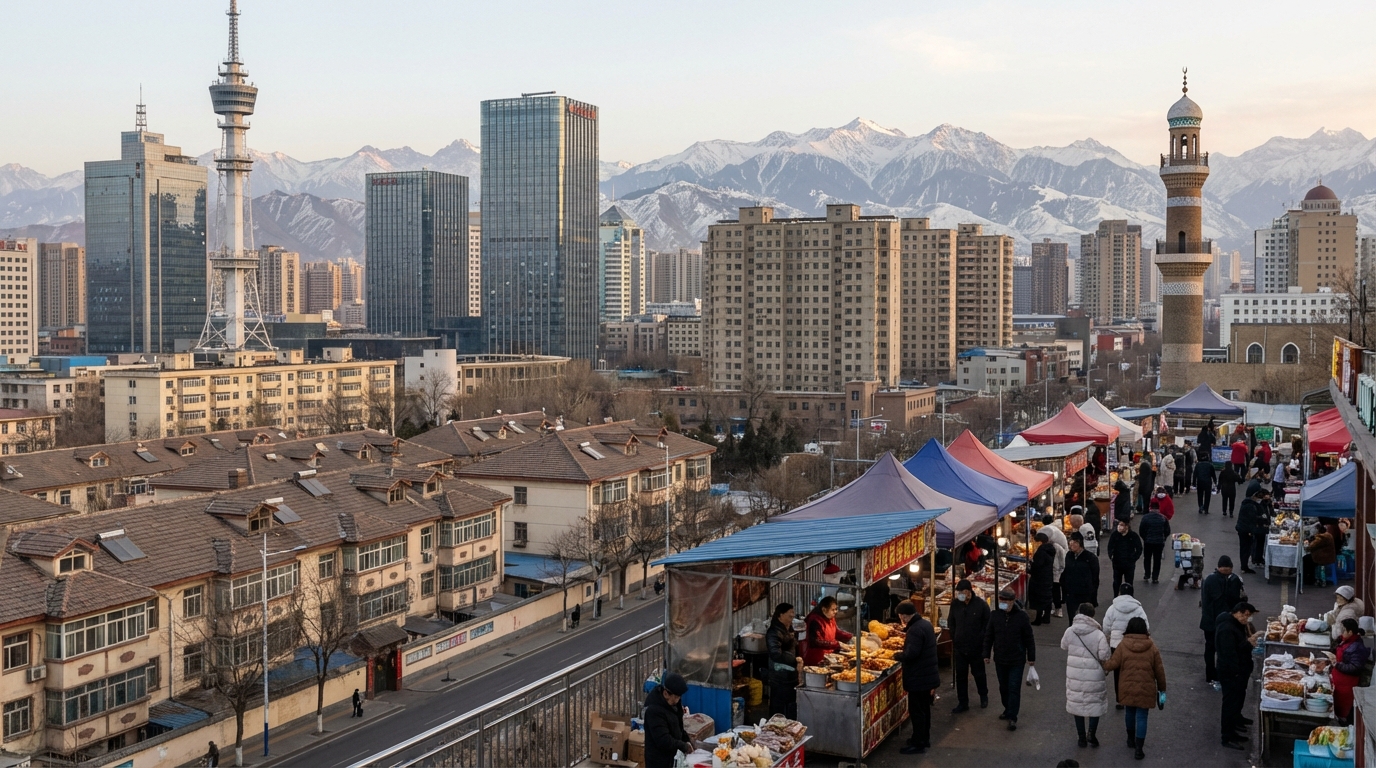
Perched at 800 meters elevation, the city experiences extreme temperature swings from -15°C in deep winter to 30°C in July. It sits in a narrow fertile strip irrigated by glacial meltwater, with the massive Bogda Peak providing a permanent white-capped backdrop to the urban sprawl.
History
In 1755, the Qianlong Emperor established a military outpost called Dihua, marking a pivotal moment in the city's formal integration into the Qing Empire. By 1763, its walls were expanded to accommodate surging Silk Road trade, eventually adopting the name Urumqi, which means 'beautiful pasture' in the Oirat Mongol language, reflecting its origin as a nomadic grazing ground.
Landmarks
- International Grand Bazaar: Opened in 2003, this 100,000-square-meter complex features an 80-meter sightseeing tower modeled after ancient minarets and air thick with the smell of roasting lamb.
- Red Hill (Hong Shan): A 910-meter peak composed of dark red sandstone, featuring a nine-story brick pagoda built in 1788 to symbolically prevent catastrophic floodwaters from the Urumqi River.
- Xinjiang Regional Museum: This facility houses the 3,800-year-old 'Beauty of Loulan' mummy, preserved by desert dryness with her eyelashes and woolen clothing remarkably intact since the Bronze Age.
- Urumqi Cultural Center: A modern architectural complex shaped like a snow lotus with six distinct petals, containing a grand theater that hosts local opera and symphonic performances.
- Beimen Catholic Church: Originally founded in the early 20th century and rebuilt in 2004, this Neo-Gothic structure offers a rare architectural contrast to the city's prevailing Islamic-influenced designs.
Cuisine
The local food culture revolves around the 400°C clay 'tonir' oven and the use of heavy iron cauldrons. Fat-tailed sheep mutton is the primary protein, seasoned heavily with black pepper and cumin seeds imported via the ancient mountain passes.
- Dapanji (Big Plate Chicken): Created in the 1980s, this dish combines spicy chicken and potatoes served over hand-pulled 'belt' noodles on a massive metal tray.
- Polu (Pilaf): A communal rice dish slow-cooked with mutton fat, yellow carrots, and raisins, traditionally prepared in large cast-iron pots for wedding celebrations.
- Nang: A sourdough flatbread stamped with geometric patterns; it is baked until extremely dry to ensure it remains edible during long desert journeys.
- Kvass: A fermented, honey-colored beverage with 1% alcohol made from rye bread, reflecting the city's historical 19th-century Russian trade influences.
- Salty Milk Tea: Brewed using compressed brick tea and fresh horse or sheep milk, seasoned with salt to replenish electrolytes lost in the arid climate.
Culture
The city's rhythm is dictated by the 12 Muqam musical suites and seasonal mountain migrations. Local life centers on 'Meshrep' gatherings where community disputes are settled through music, dance, and storytelling.
- Nowruz: Celebrated on March 21st to mark the spring equinox, families gather to share 'seven-dish soup' and celebrate the start of the agricultural year.
- Corban Festival: A major holiday involving livestock sacrifice and massive outdoor dances in the public squares to celebrate communal bonds and religious devotion.
- Silk Road Ice and Snow Festival: An annual winter event starting in December that features massive ice sculptures and nocturnal skiing under floodlights on the Tianshan slopes.
- Doppa: A four-cornered embroidered skullcap with floral or almond motifs, worn daily by men as a mark of regional identity and adulthood.
- Atlas Silk Dress: A garment made using a 2,000-year-old tie-dye technique, resulting in bright, jagged patterns of red and yellow worn during formal celebrations.
- Chapan: A heavy, quilted wool coat with extra-long sleeves, essential for enduring the -20°C winter winds that sweep down from the northern basin.
- Etles Scarf: A lightweight silk headcovering featuring high-contrast gradients, used by women to protect against the intense high-altitude sun and desert dust.
- Yulugh: Hand-stitched leather boots with soft soles and intricate needlework, designed for comfort during prayer and durability on rocky mountain paths.