Alappuzha
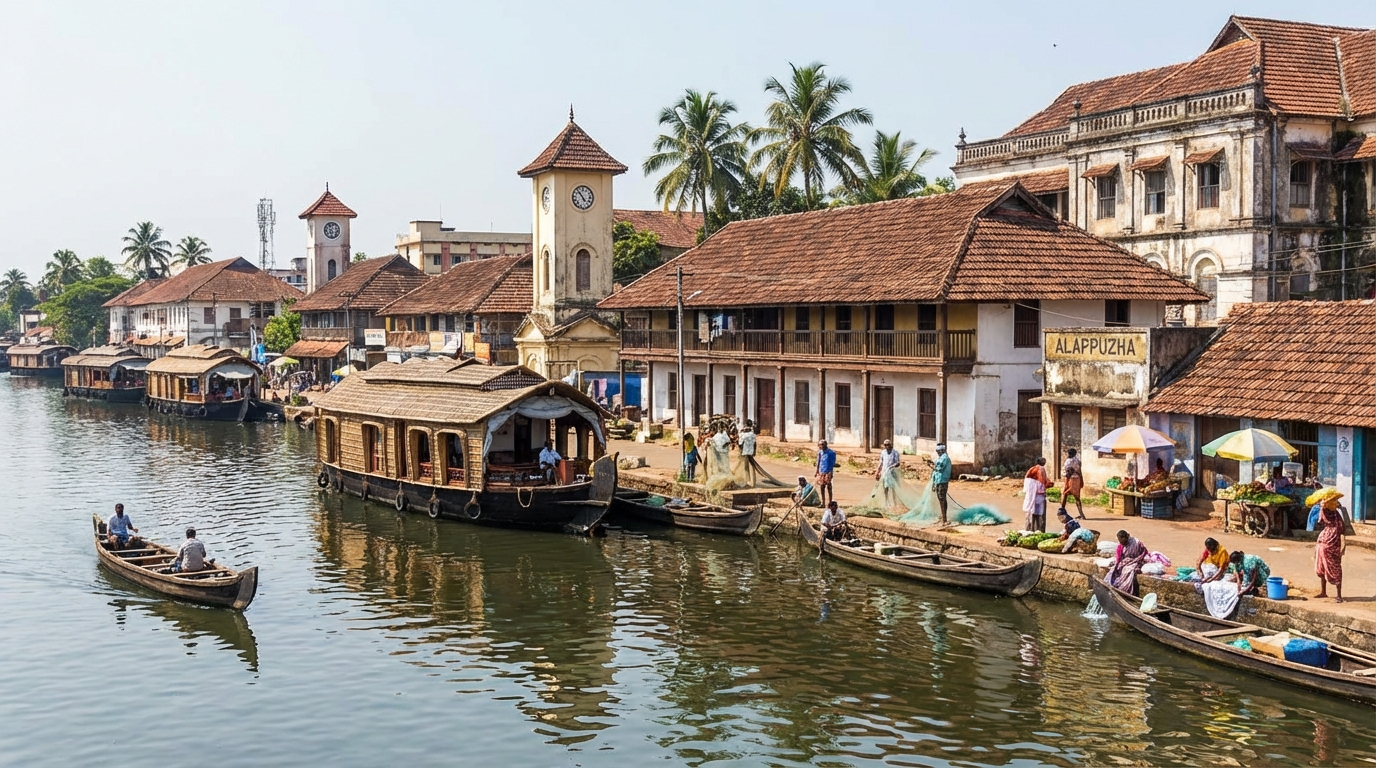
Alappuzha is a city in the Kerala region of India. Alappuzha is a coastal city on the Laccadive Sea where the water level of the canals sits higher than the surrounding below-sea-level paddy fields. The city is defined by its 1,500 km network of brackish lagoons and the rhythmic splash of 100-foot-long snake boats carved from Anjili wood.
Geography
Situated at sea level, the Kuttanad region includes land reclaimed from the water, sitting 0.6 to 2.2 meters below sea level. The 80% humidity keeps the air heavy with the scent of salt and damp earth as four major rivers drain into the Vembanad Lake.
History
In 1762, Raja Kesavadas, the Diwan of Travancore, transformed a swampy coastal strip into a planned port city. He constructed two parallel canals to transport goods from the hinterlands to the sea, inviting merchants from Gujarat to establish trade, which established the city as a commercial hub.
Landmarks
- Alappuzha Lighthouse: First lit in 1862, this 28-meter teak-beamed tower used a coconut oil lamp to guide ships hauling coir and spices across the Arabian Sea.
- Ambalappuzha Sri Krishna Temple: Built in 790 CE, the temple’s Chuttambalam walls echo with Mizhavu drums and the smell of sweet Ghee-rich milk porridge served daily at noon.
- The Ruins of the Old Pier: Remnants of a 137-year-old iron pier reach into the surf like skeletal fingers, marking the city's 19th-century importance as a global spice port.
- Revi Karunakaran Museum: A 2003 Greco-Roman building housing 3,000 pieces of Swarovski crystal and a 1948 Buick Super convertible belonging to a local coir tycoon.
- Global Coir Museum: Located at Kalavoor, it showcases 19th-century weaving looms and the evolution of 'golden yarn' from raw coconut husks into intricate floor tapestries.
Cuisine
The kitchen revolves around Karimeen fish and Kudampuli tamarind. Meals are served on 40cm banana leaves that wilt under the heat of parboiled red rice and coconut gravies cooked in clay Chattis.
- Karimeen Pollichathu: Pearl Spot fish marinated in 12 spices, wrapped in a heat-softened banana leaf, and pan-seared until the leaf char-seasons the flesh.
- Kuttanad Duck Roast: Ducks raised in submerged paddies are slow-cooked with peppercorns, vinegar, and coconut milk, a dish perfected by the local Christian community.
- Puttu and Kadala Curry: Cylindrical steamed rice cakes layered with grated coconut, served with a spicy black chickpea curry infused with roasted coconut shards.
- Kallu (Toddy): A mildly alcoholic sap tapped from coconut palms at 6:00 AM; it tastes yeasty and sweet when fresh, turning sour by midday.
- Sambharam: Spiced buttermilk churned with crushed bird’s eye chilies, ginger, and curry leaves, served chilled to counteract the 32°C midday heat.
Culture
Life follows the water's pace, with festivals featuring aquatic snake boat races. Locals wear unbleached cotton Mundus folded to knee-length while navigating the sodden embankments of the rice paddies.
- Nehru Trophy Boat Race: Held the second Saturday of August since 1952, featuring 100-oarsmen snake boats racing to the beat of rhythmic Vanchippattu songs.
- Mullakkal Chirappu: A 41-day festival ending in December where streets sell sandalwood fans and brass lamps under massive festive light installations.
- Alappuzha Beach Festival: A New Year celebration featuring sand art competitions and midnight fireworks that illuminate the old pier ruins and the Arabian Sea.
- Mundu: A 4-meter length of white cotton wrapped around the waist; tucked high for labor or worn long for formal occasions.
- Kasavu Saree: A cream-colored handloom silk featuring a 2-inch border of 24-carat gold-plated thread, worn by women during the Onam harvest festival.
- Chatta and Mundu: A white, V-necked blouse paired with a pleated sarong, historically worn by the Syrian Christian women in the Kuttanad region.
- Melmundu: A thin cotton towel draped over the shoulder by men, used to wipe sweat or as a respectful gesture when entering temples.
- Neriyathu: The upper garment of a two-piece set, tucked into the Mundu and draped over the shoulder, dating back to the 1800s.