Kerala
Kerala is a region of India. Kerala sits on India's tropical Malabar Coast, defined by a 590-kilometer shoreline and a labyrinth of 44 rivers. Its social indicators rival developed nations, shaped by a maritime legacy of global trade that accelerated after the arrival of Roman ships in the 1st century.
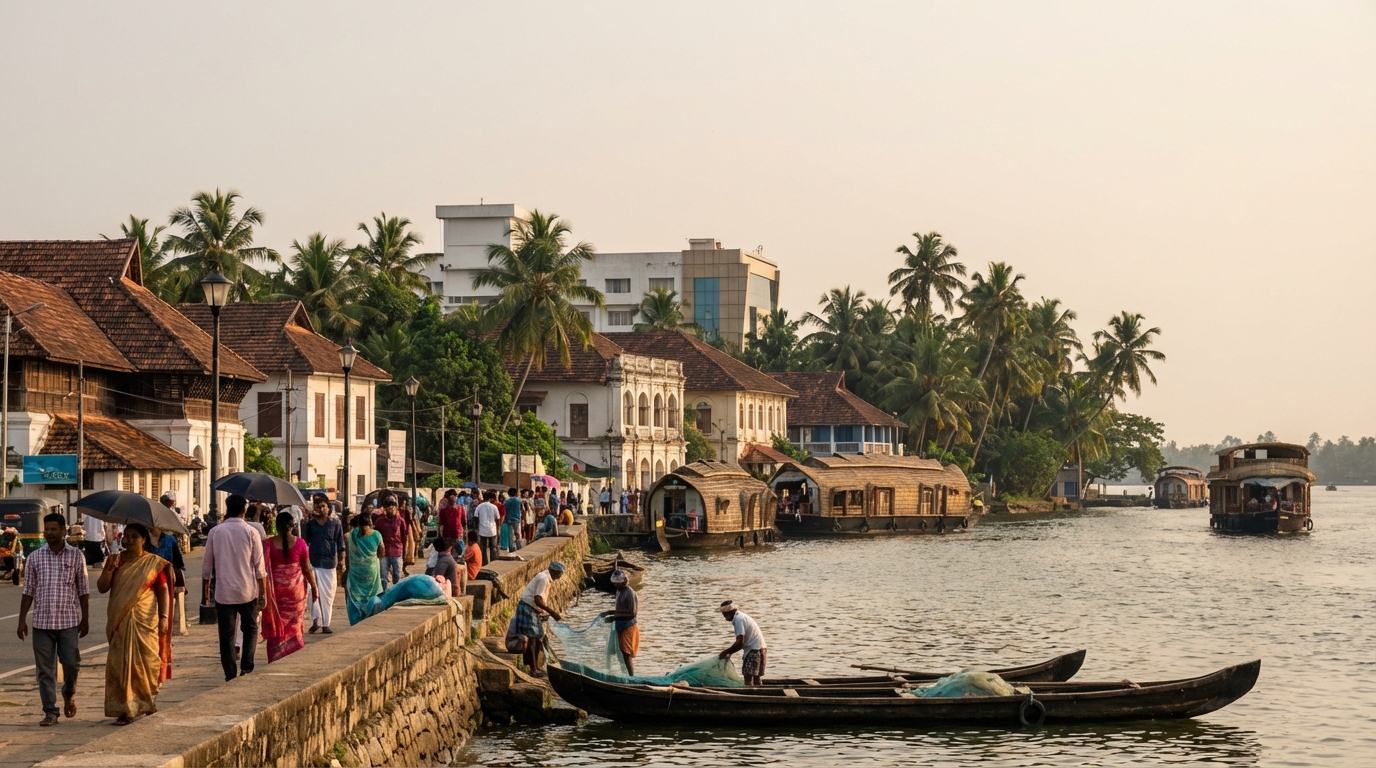
Geography
The state is a narrow strip where the 2,695-meter Anamudi peak drops to the Vembanad Lake, 2.2 meters below sea level. Saltwater barriers like the Thanneermukkam Bund prevent the Arabian Sea from flooding the Kuttanad rice paddies, creating a unique hydrological squeeze between the Western Ghats and the ocean.
History
On July 1, 1949, the merger of Travancore and Cochin under the leadership of V.P. Menon laid the foundation for modern Kerala. This administrative shift fused disparate princely states into a cohesive linguistic entity, prioritizing social welfare and education policies that had roots in the 1817 Rescript of the Rani of Travancore.
Landmarks
- Padmanabhaswamy Temple: Contains six subterranean vaults; Vault B remains unopened since the 16th century, sparking local legends regarding its mystical and ancient cobra-guarded protection.
- Muziris Heritage Site: Excavations at Pattanam revealed 2,000-year-old Roman amphorae shards, proving this spice hub traded directly with the Mediterranean during the era of antiquity.
- Bekal Fort: This 1650-dated seaside fortress features a unique observation tower reached via a broad ramp, designed specifically for heavy 17th-century bronze defensive cannons.
- Jatayu Earth's Center: Completed in 2017, this 200-foot-long bird sculpture sits atop a 1,000-foot hill, featuring an internal museum and a high-tech 6D cinema experience.
- Lulu Mall Kochi: Opened in 2013, locals gather here for its 2,500-seat food court and the ice rink, a sharp contrast to the humid tropical climate.
Cuisine
Kerala’s kitchen relies on 15-meter tall coconut palms and pungent Malabar black pepper. Fermentation is key, with rice batters bubbling overnight in clay pots, while the 'Uruli' bronze vessel ensures even heat for slow-cooked masalas.
- Karimeen Pollichathu: Pearl spot fish marinated in bird's eye chili, wrapped in charred banana leaves, and pan-seared to infuse a smoky, vegetal aroma.
- Puttu: Steamed cylinders of rice flour and grated coconut, cooked in bamboo tubes, often paired with spicy black chickpeas or ripe sugar bananas.
- Sadhya: A 24-dish vegetarian feast served on a plantain leaf, following a strict structural sequence ending with sweet, jaggery-infused 'Pradhaman' pudding.
- Sambharam: Chilled buttermilk spiked with crushed ginger, curry leaves, and green chilies, traditionally served to guests to combat the 32°C humidity.
- Kulukki Sarbath: A 'shaken' lemonade containing basil seeds and a split green chili, creating a texture that is simultaneously crunchy, sweet, and spicy.
Culture
The culture revolves around 'Kavu' sacred groves and 'Chenda' drumming. Language is Malayalam, a palindromic name for a tongue with 53 phonemes. During festivals, the landscape transforms with the scent of jasmine and the sight of gold-bordered cream silks.
- Onam: A 10-day harvest festival where households create 'Pookalam' flower carpets and compete in 100-foot long snake boat races on the Pamba River.
- Thrissur Pooram: Established in 1797, it features 30 decorated elephants and a 36-hour rhythmic ensemble called 'Ilanjithara Melam' involving 250 percussionists.
- Theyyam: A ritual dance where performers in massive red headdresses become 'living gods,' narrating ancestral tales through fire-walking and rhythmic chanting.
- Mundu: A 4-meter cotton lower garment for men, tucked at the waist and often folded up for ease of movement in humid weather.
- Kasavu Saree: Ceremonial cream silk saree with a gold-dipped thread border, traditionally worn during the Vishu New Year or wedding ceremonies.
- Set Mundu: A two-piece traditional attire for women that mimics a saree but offers better ventilation in the 85% humidity of the coast.
- Chatayum Mundum: Historically worn by Syrian Christian women, featuring a white blouse with a V-neck and a fan-like pleated cloth at the back.
- Pattu Pavada: A traditional silk skirt and blouse worn by young girls during naming ceremonies or temple visits before transitioning to adult attire.