Kozhikode
Kozhikode is a city in the Kerala region of India. Kozhikode is a historic port city on India's Malabar Coast, famously known as the gateway where the spice trade met the Western world. It sits at an elevation of only 1 meter, defined by the meeting of the Kallayi River and the Arabian Sea's salt spray.
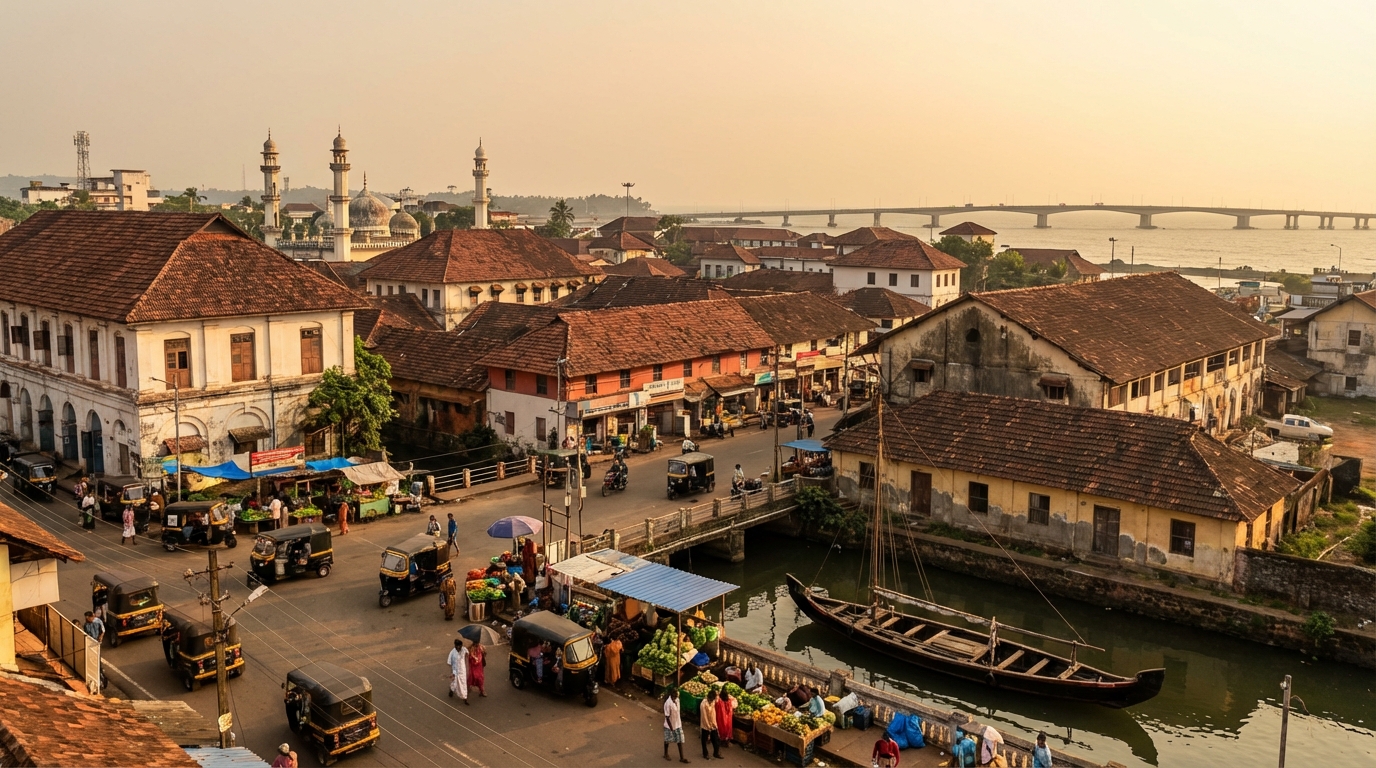
Geography
The terrain is defined by red laterite soil and a tropical monsoon climate that delivers 3,200mm of annual rainfall. Bordered by the Western Ghats to the east, the city is crisscrossed by ancient canals where timber from the highland forests once floated toward the coast.
History
In 1122, the last Chera Emperor, Cheraman Perumal, departed for Mecca, partitioning his kingdom. He gifted the Zamorin a small, swampy tract of land and his sword. From this 12th-century gesture, the Zamorin built a global trade empire that dominated the pepper market for the next five centuries.
Landmarks
- Mishkal Mosque: The 14th-century structure contains no minarets or domes, instead utilizing four tiers of heavy timber and slanted tiles to withstand monsoon winds.
- Tali Temple: The 14th-century temple walls feature intricate laterite carvings and host intellectual debates where scholars were once rewarded with bags of 10,000 gold coins.
- Kappad Beach: Aside from the 1498 landing monument, the beach features a 15th-century rock formation that provided a natural deep-water berth for ancient spice ships.
- SM Street: Locals call it Mittayi Theruvu; it originated in the 1800s when European traders requested specific sweets, leading to a street of ghee-soaked halwa.
- Sargaalaya Kerala Arts and Crafts Village: Artisans here use 12th-century techniques to turn waste coconut shells into polished black bowls that have the texture of obsidian but the weight of wood.
Cuisine
Kozhikode cuisine revolves around the 'Dum' cooking method and the use of Jeerakasala rice, a fragrant short-grain variety. Preparation often involves locally sourced black pepper and coconut oil extracted in traditional mills. The food reflects the 7th-century arrival of Arab traders, combining Middle Eastern slow-cooking with the intense heat of Malabari spices.
- Kozhikode Biryani: Prepared with Jeerakasala rice and marinated meat, the pot is sealed with dough and topped with glowing charcoal to lock in the aroma of cloves.
- Kozhikodan Halwa: Crafted from flour, coconut oil, and jaggery, this rubbery sweet is stirred in copper urulis for six hours until it achieves its signature translucent glow.
- Unnakkaya: Steamed Nendran bananas are mashed, filled with a mixture of coconut, sugar, and raisins, then deep-fried into spindle-shaped treats that crunch with every bite.
- Sulaimani: A spice-infused black tea brewed with cardamom and cinnamon, finished with a dash of lemon to cut through the richness of a heavy meat meal.
- Kulukki Sarbath: A shaken lemonade containing basil seeds and green chilies, providing a sharp, spicy contrast to the cold liquid, perfect for the 90% humidity afternoons.
Culture
The culture is a 900-year-old synthesis of Hindu and Mappila traditions, evident in the unique blend of Arabic-influenced Malayalam. Festivals often center around intellectual pursuits or the monsoon-fed rivers. Traditional attire emphasizes white cotton and gold borders, a nod to the coastal heat and the historical wealth brought by the ancient spice trade.
- Malabar River Festival: Every July, white-water kayakers from 20 countries navigate the swollen Chaliyar River, which reaches peak flow after the 3,000mm monsoon rains of June.
- Revathi Pattathanam: A 14th-century intellectual assembly at Tali Temple where Vedic scholars engage in rigorous logic debates to earn the prestigious title of Bhatta.
- Kozhikode Beach Festival: An annual January event where the 2-kilometer shoreline is transformed into a stage for Mappila Paattu folk songs and massive sand sculptures.
- Mundu: A 4-meter hand-woven cotton cloth with a gold border called 'kasavu', wrapped around the waist for ceremonial visits to the 14th-century Tali Temple.
- Kachi Mundu: A stitched dhoti featuring vibrant border patterns, historically worn by Mappila women and paired with a 'kuppayam' blouse during traditional family gatherings.
- Thattam: A lightweight, embroidered headscarf draped by local women, symbolizing the 700-year blending of Arab and Malabari cultural aesthetics in daily city life.
- Neriyathu: The upper piece of a two-part cream sari, draped diagonally across the torso, reflecting the attire seen in 10th-century Kerala stone carvings.
- Pathu: An ornate, heavy silk wedding wrap for men, often weighing over 2 kilograms due to the density of the silver zari thread used in its weaving.