Thiruvananthapuram
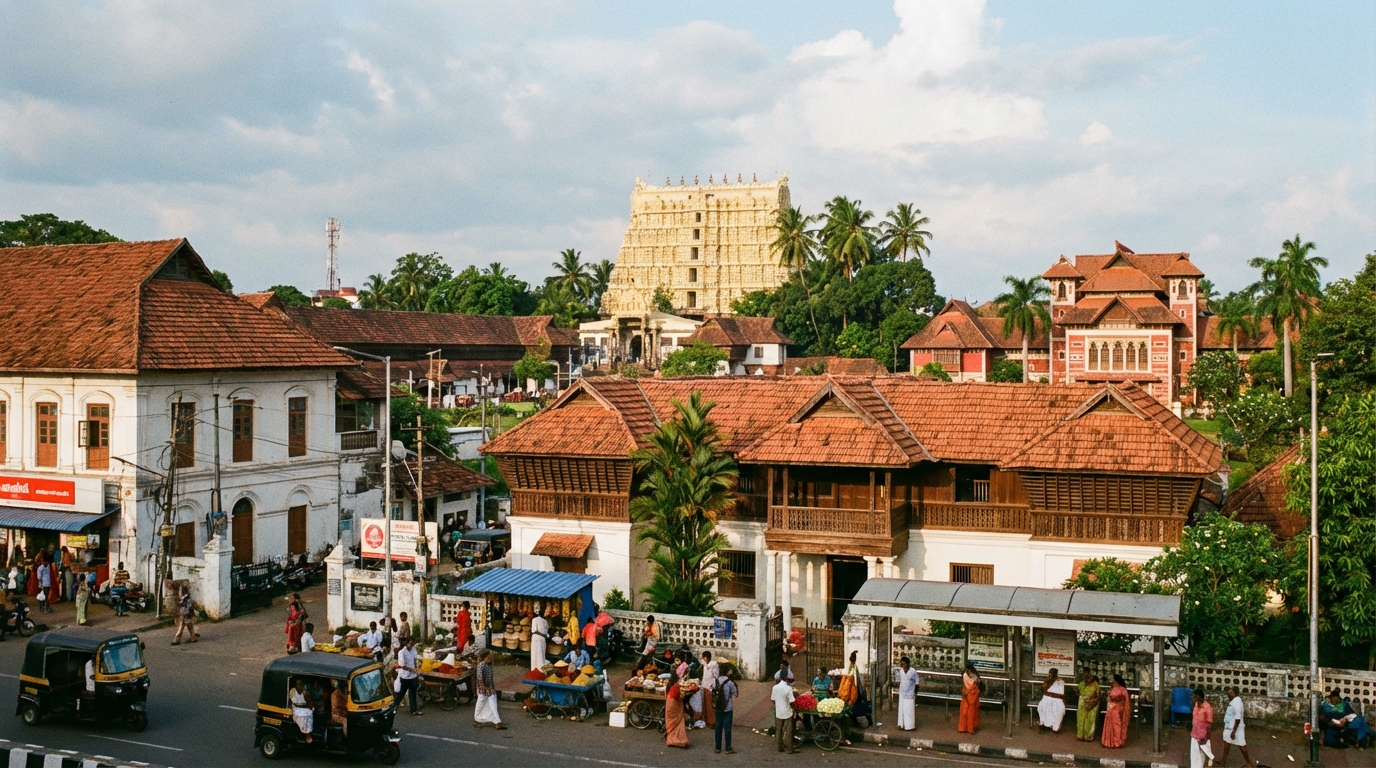
Thiruvananthapuram is a city in the Kerala region of India. Thiruvananthapuram sits at the southern tip of India, built across seven coastal hills where the Arabian Sea meets the Western Ghats. It functions as Kerala's administrative spine, balancing the silence of ancient granite temple walls with the metallic hum of India's first dedicated IT park.
Geography
Built across seven laterite hills reaching 75 meters, the city receives 1,800 mm of rain annually. The terrain is an undulating carpet of terracotta-red soil that contrasts with the 78 km of saline Arabian Sea coastline.
History
In 1750, Maharaja Marthanda Varma performed the 'Thrippadidanam', surrendering his entire kingdom to the deity Padmanabha. This transformed the city into a theocratic republic managed by the royal family as humble servants.
Landmarks
- Sree Padmanabhaswamy Temple: The temple houses the world's largest known treasure vaults and features 365 granite pillars, each carved with unique, intricate figures.
- Kuthira Malika Palace: Built in 1844, this teakwood palace features 122 carved horses under its roof eaves and smells of aged rosewood oils.
- Napier Museum: This 1880 Indo-Saracenic structure uses Gothic arches and striped red-white brickwork to naturally keep the interior five degrees cooler than outside.
- Terumo Penpol R&D Center: A modern landmark where locals celebrate the city's role as the global manufacturing hub for specialized medical-grade blood bags.
- Technopark Phase III: This 2014 expansion contains India's largest IT building by floor area, featuring massive twin towers that dominate the northern skyline.
Cuisine
The palate favors parboiled rice and dishes simmered in thick coconut milk. Black pepper provides heat, while unglazed clay pots are used for slow-roasting.
- Boli: A yellow, sweet lentil flatbread specifically crafted to be soft enough to melt into creamy milk payasam during festive feasts.
- Meen Mulakittathu: A spicy red fish curry using dried Cambodian mint for acidity, traditionally prepared in clay pots to retain moisture.
- Puttu: Steamed cylinders of rice flour and coconut layers, creating a crumbly texture that absorbs spicy black chickpea gravy.
- Sambharam: Chilled buttermilk infused with crushed bird’s eye chilies and ginger, served in steel tumblers to counter 90% humidity.
- Kulikki Sarbath: A shaken lemonade containing basil seeds and green chilies, named after the rhythmic clinking sound made during its preparation.
Culture
Life follows the Malayalam lunar calendar, prioritizing ritual serpent dances. Attire focuses on unbleached 'Kora' cotton, reflecting historical wealth in spices.
- Attukal Pongala: Millions of women gather to cook rice in earthen pots on city streets, setting world records for female-only religious congregations.
- Vettukad Perunnal: A 10-day Christian feast where thousands participate in candle-lit processions through coastal neighborhoods to honor Christ the King.
- Soorya Festival: This 111-day marathon of dance and music is one of the world's longest-running private arts festivals, held annually since 1977.
- Mundu: A 4-meter white cotton lower garment for men, worn with a precise double-fold to show the woven border.
- Kasavu Saree: A cream-colored handloom garment featuring a real gold-thread border, worn exclusively during the Onam harvest season.
- Mundu Neriyathu: An ancient two-piece wrap predating the saree, representing traditional modesty through its diagonal upper cloth and lower sarong.
- Melmundu: A thin white towel draped over the shoulder, used as a mark of respect when entering sacred granite temple premises.
- Pattu Pavada: A silk skirt and blouse worn by young girls, typically featuring vibrant contrasting colors and traditional gold brocade work.