Thrissur
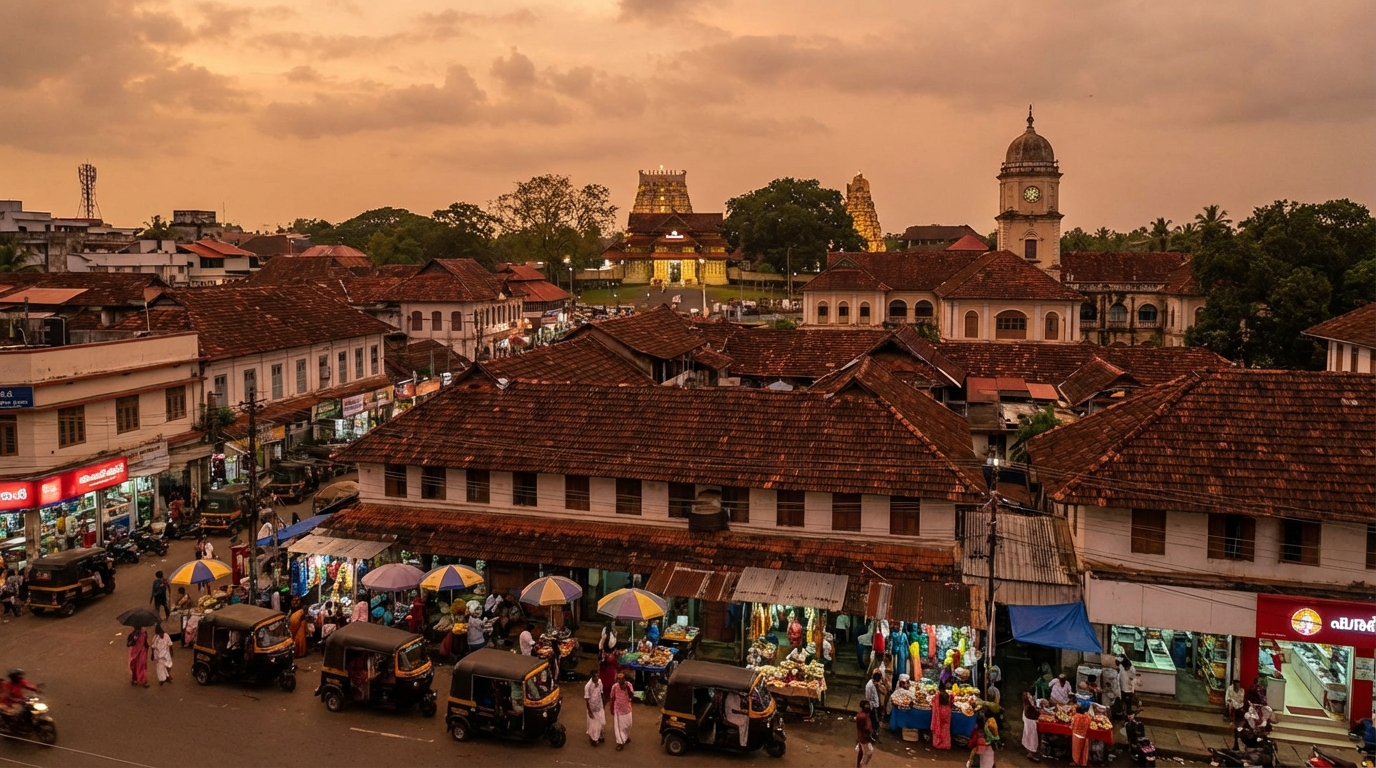
Thrissur is a city in the Kerala region of India. Thrissur sits at the geographic heart of Kerala, built in a precise circle around the 65-acre Thekkinkadu Maidan. This city is defined by its massive temple complexes and a culture that synchronizes its pulse to the beat of traditional percussion and the presence of elephants.
Geography
Thrissur experiences a monsoon that drops nearly 3,000 mm of rain annually. It is defined by the Kole Wetlands, a unique 13,632-hectare ecosystem lying below sea level, where farmers cultivate rice in fields drained by massive motor pumps during the dry months. The city's elevation is just 2.83 meters, making the heat humid and heavy.
History
In 1795, Sakthan Thampuran transformed the city by clearing the dense teak forests surrounding the Vadakkunnathan Temple. He defied the local Brahmin orthodoxy to create the Thekkinkadu Maidan, establishing the 65-acre open space that remains the city's heart and the stage for its most famous celebrations involving hundreds of percussionists.
Landmarks
- Vadakkunnathan Temple: In the central sanctum, an 11-foot-high mound of ritual ghee covers the lingam; despite the tropical heat, the ghee never melts or spoils.
- Bible Tower: At 260 feet, this red-and-white structure offers a panoramic view where the city's circular layout and the surrounding green canopy become visible.
- Sakthan Thampuran Palace: The two-story structure features 1.5-meter-thick laterite walls and a floor made of a polished mixture of egg whites, lime, and coconut water.
- Punnathur Kotta: Once a palace, this sanctuary now houses over 60 elephants; the air here is thick with the scent of raw turmeric used for their baths.
- Vaidyaratnam Ayurveda Museum: This facility in Ollur displays a 3D gallery of Vedic surgery and dioramas illustrating the evolution of traditional Kerala medicine through the ages.
Cuisine
Thrissur cuisine relies on parboiled matta rice and the distinct aroma of roasted coconut paste. The local palate favors puzhukku, a thick mash of tubers like yam and colocasia seasoned with bird’s eye chilies and hand-pressed coconut oil. Preparation often involves traditional bell-metal vessels called urulis, which distribute heat evenly.
- Thrissur Halwa: A chewy, translucent block made of flour and jaggery; it is stirred in copper vats for six hours until it achieves a leather-like consistency.
- Vellayappam: These fermented rice crepes are distinctive for their cake-like centers and are traditionally purchased from the centuries-old Appangadi market street near the temple.
- Meen Peera: Small silver anchovies are steamed with freshly grated coconut, ginger, and sour pot-tamarind until the mixture becomes dry, intensely tangy, and aromatic.
- Sambharam: This spiced buttermilk is hand-churned and infused with bird's eye chilies and crushed ginger, serving as the essential cooling agent during the humid summers.
- Jeeraka Vellam: Water is boiled with roasted cumin seeds until it turns a signature gold color; it is served piping hot even on the hottest days.
Culture
Life revolves around the Pooram cycle and temple rhythms. Men often wear the Mundu with a gold Kasavu border for ceremonies. The local Malayalam dialect is noted for its fast-paced, rhythmic intonation, often punctuated by specific colloquialisms and a distinct sing-song cadence that identifies a Thrissurite instantly across the state.
- Thrissur Pooram: Every April, thirty elephants face each other while 250 percussionists play the Ilanjithara Melam, a rhythmic ensemble that lasts four continuous hours.
- Pulikkali: On the fourth day of Onam, hundreds of men spend six hours having tiger stripes painted on their bodies before dancing to wild drumbeats.
- Aanayoottu: During this July ritual, thousands gather to watch fifty unadorned elephants eat medicinal rice balls and fruit inside the Vadakkunnathan Temple's stone walls.
- Kasavu Mundu: A five-meter length of fine cotton with a 2-inch wide gold-thread border, traditionally worn by men during temple entries and weddings.
- Set Mundu: This two-piece attire for women mimics a saree's appearance but is composed of separate lower and upper cloths for easier movement in heat.
- Pattu Pavada: A vibrant silk skirt paired with a matching blouse, often adorned with traditional mango motifs, worn by girls for their first temple visits.
- Thorthu: A thin, waffle-weave cotton towel used as a headwrap or waist-tie by local laborers to quickly absorb sweat in the 90% humidity.
- Neriyathu: The pleated upper portion of a traditional ensemble, draped precisely over the left shoulder to signify formality during religious ceremonies or local gatherings.