Chennai
Chennai is a city in the Tamil Nadu region of India. Chennai, the capital of Tamil Nadu, stretches along the Coromandel Coast and serves as the primary gateway to South India. It is defined by its humid sea air, the sound of rhythmic Carnatic music, and its global identity as a major automotive manufacturing center.
Geography
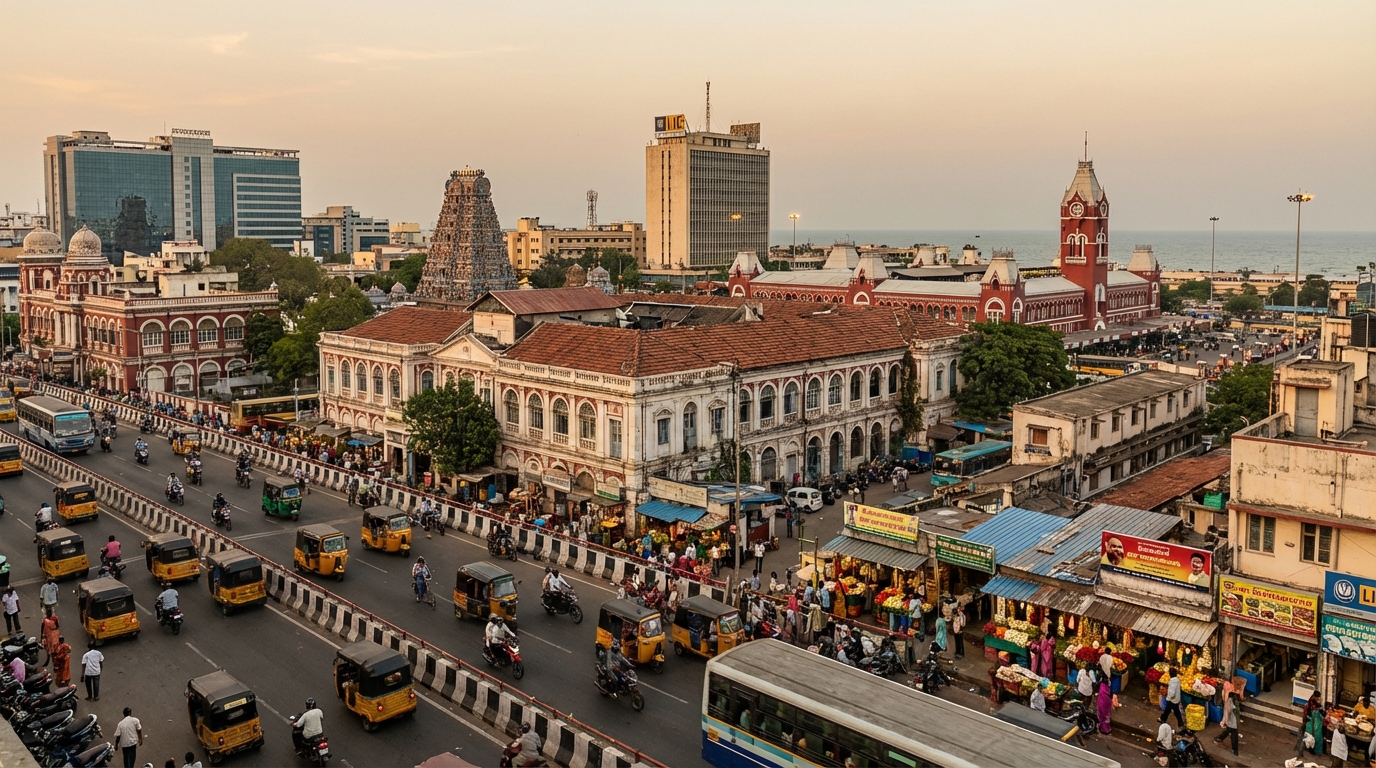
Chennai sits on a coastal plain with an average elevation of only 6 meters. The city is defined by the Cooum and Adyar rivers and the 13-kilometer Marina Beach. Its tropical climate maintains temperatures above 20 degrees Celsius year-round, influenced by the northeast monsoon which provides the bulk of its annual rainfall.
History
On August 22, 1639, Francis Day and Andrew Cogan of the British East India Company secured a land grant from the Nayak rulers on a gold plate. This 5-kilometer strip of sand became the site for Fort St. George, fundamentally shifting the region's focus from inland agrarian power to maritime trade and modern governance.
Landmarks
- Kapaleeshwarar Temple: This 7th-century Dravidian structure features a 37-meter gopuram adorned with 1,500 stucco figures that are ritually repainted in vivid colors every 12 years.
- Marina Beach: Measuring 13 kilometers, this coastline features a promenade where the sand is so fine it feels like powder underfoot during the evening sea breeze.
- Ripon Building: Completed in 1913, this Indo-Saracenic landmark is finished with a white lime wash that reflects the intense 40-degree heat of the Chennai summer sun.
- Theosophical Society Banyan Tree: This 450-year-old tree spans 40,000 square feet with its aerial roots, creating a natural cathedral of wood and leaves that locals use for meditation.
- Semmozhi Poonga: Opened in 2010 on a former restaurant site, this 20-acre botanical garden houses 500 species of flora, providing a cool microclimate in the city.
Cuisine
The cuisine relies on rice and lentils fermented for twelve hours to create a slight tang. Seasoning involves black mustard seeds, dried red chilies, and fresh curry leaves flash-fried in hot gingelly oil to release aromatic oils.
- Idli: These steam-cooked cakes must have a 'spring-back' texture when pressed. They are served with four distinct chutneys and hot lentil-based sambar for breakfast.
- Chicken 65: Invented in 1965 at the Buhari Hotel, this spicy deep-fried dish uses a secret marination process that results in a distinct, bright red crust.
- Sundal: Boiled chickpeas tempered with coconut and mustard seeds, traditionally sold by vendors in newspaper cones along the shoreline as the sun sets over water.
- Filter Kaapi: Brewed in brass filters, this coffee is frothed by pouring it between a 'dabara' and tumbler from a height to create thick foam.
- Jigarthanda: This chilled drink contains almond resin and sarsaparilla syrup, providing a unique jelly-like texture and natural cooling properties highly valued during the humid months.
Culture
Culture is centered on 'Margazhi,' a month-long celebration of classical arts starting in December. Residents perform sunrise rituals by drawing 'kolams'—intricate geometric patterns made of rice powder—on their doorsteps to welcome prosperity into the household.
- Pongal: A four-day January harvest festival where rice is boiled in clay pots until it overflows, symbolizing abundance while people shout 'Pongalo Pongal' together.
- Chennai Sangamam: An open-air January festival where 2,000 folk artists perform rural traditions like Karagattam in public parks to revive ancient Tamil cultural practices for city-dwellers.
- Arubathimoovar Festival: Part of the Panguni Uthiram, 63 bronze idols are paraded through Mylapore's narrow streets on massive wooden chariots pulled by thousands of chanting devotees.
- Kanchipuram Silk Saree: Woven with mulberry silk and gold-dipped silver thread, these sarees can weigh 2 kilograms and feature patterns inspired by the carvings of ancient temples.
- Veshti: A 4-meter white cotton cloth wrapped around the waist; the 'double veshti' is folded upward for ease of movement during humid afternoon walks.
- Pavadai Thavani: A three-piece half-saree worn by teenage girls, consisting of a pleated skirt, a blouse, and a draped fabric across the shoulder for formal occasions.
- Angavastram: A formal silk stole worn over the shoulder by men, often featuring a golden 'zari' border that matches the design of their ceremonial veshti.
- Madras Check Shirt: Originally a handmade fabric from the 12th century, the authentic vegetable dyes create a soft, weathered look that has become a global fashion staple.