Coimbatore
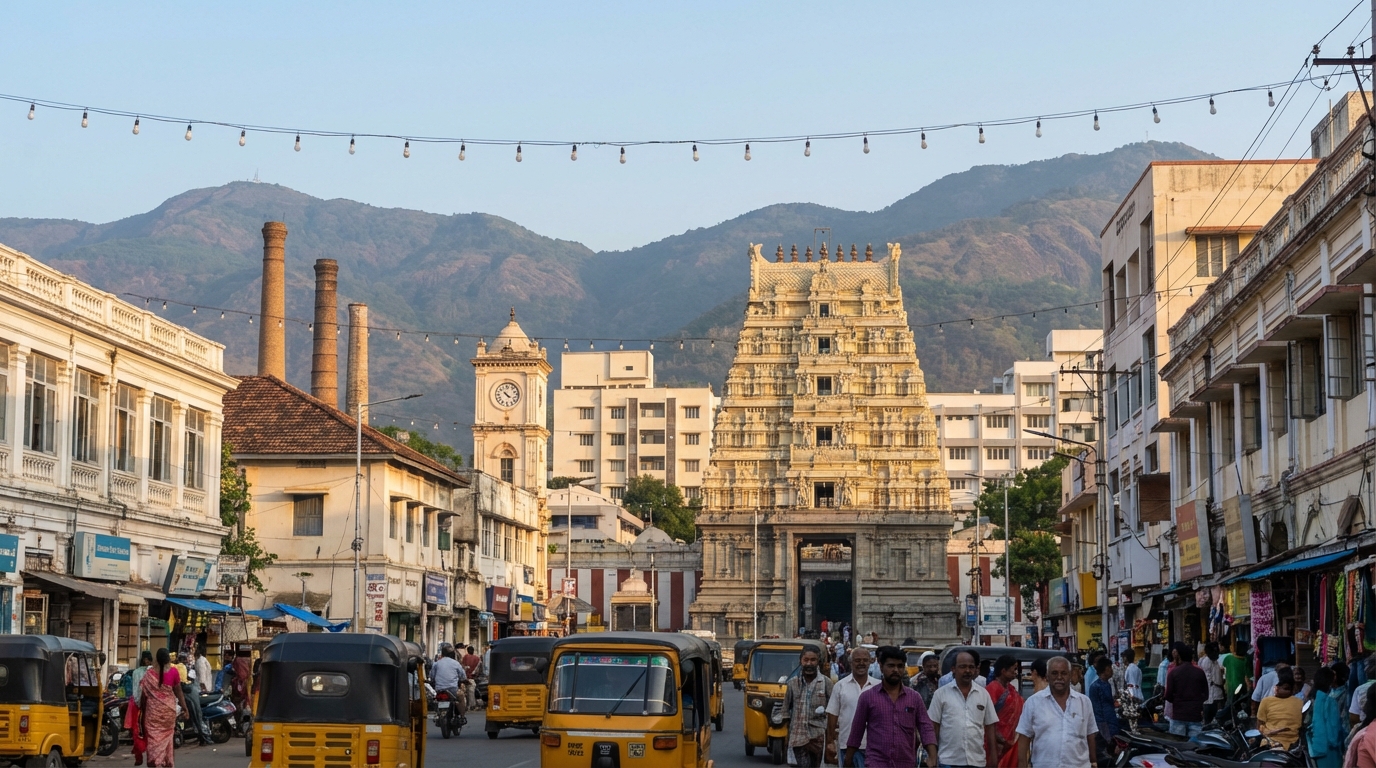
Coimbatore is a city in the Tamil Nadu region of India. Coimbatore sits at the 411-meter elevation base of the Nilgiri Hills in Tamil Nadu, acting as a gateway to the Western Ghats. It is globally recognized for its massive pump manufacturing industry and the sweetness of the Siruvani water flowing through its taps.
Geography
The city lies on a plateau framed by the 30-kilometer-wide Palghat Gap. This unique mountain break funnels cool winds from the Arabian Sea, maintaining temperatures between 18°C and 35°C year-round and preventing the stagnant heat of the surrounding lowlands.
History
In 1888, Robert Stanes established the Stanes Mill, marking the city's pivot from an agrarian outpost to an industrial power. Utilizing the local 'regur' black cotton soil, this single mill sparked a textile revolution that eventually fueled over 900 textile units in the region.
Landmarks
- Marudhamalai Temple: Built in 1200, its medicinal herbs growing on the slopes give the morning air a distinct camphor-like scent during the 6:00 AM rituals.
- Siruvani Waterfalls: Located 35km away, the water is scientifically noted for its high mineral content and is often cited by locals as the world's second tastiest.
- Adiyogi Shiva Statue: A 112-foot steel structure representing the 112 ways to reach self-transformation, weighing exactly 500 tonnes of steel near the Velliangiri Foothills.
- Gass Forest Museum: Established in 1906, it houses a rare 3D map of the region's topography carved entirely from local wood by British curator Horace Gass.
- VOC Park Rocket: This scale model of an SLV rocket commemorates India's space achievements, sitting within a park named after freedom fighter V.O. Chidambaram Pillai.
Cuisine
Kongunadu cuisine relies on coconut, copra, and groundnuts rather than heavy oils. It features unique spice blends like 'Kollu' horse gram powders prepared on stone grinders.
- Arisi Paruppu Sadam: Created for 19th-century farm laborers, this rice and lentil mix uses specific Guntur chilies and hand-pounded garlic for a gritty, earthy flavor.
- Pallipalayam Chicken: This dish uses no oil or water; the meat cooks in its own fat with copious amounts of dry red chilies and coconut slivers.
- Kalahasti Temple Idli: Wrapped in Mantharai leaves, these steamed rice cakes absorb a woody aroma and a faint green tint from the leaf veins during steaming.
- Pathaneer: A cool, translucent sap extracted from Palmyra palm trees before sunrise, often served in a folded palm leaf to preserve its freshness.
- Sukku Kaapi: A spicy infusion of dried ginger and black pepper, sweetened with palm jaggery, traditionally consumed at 4 PM to combat monsoon dampness.
Culture
Life revolves around the polite Kongu Tamil dialect and a deep textile heritage. Residents often blend traditional values with industrial innovation in daily life.
- Koniamman Temple Festival: Each March, a giant wooden chariot is pulled through the streets, honoring the city's guardian deity with traditional Thappattam drum beats.
- Pookuzhi Fire Walk: Celebrated in April, devotees walk across a 3-meter bed of glowing embers to demonstrate faith and seek blessings for the harvest.
- Coimbatore Vizha: A week-long January celebration where the city highlights its engineering prowess through exhibitions and open-street cultural performances for all residents.
- Kovai Kora Cotton Saree: A GI-tagged garment blending silk and cotton, recognized by its cross-weave patterns and high durability against local hard water minerals.
- Veshti with Angavastram: Men wear this white unstitched cloth with a gold Zari border for temple visits, draped to allow airflow in 30°C weather.
- Pattu Pavadai: Young girls wear these silk skirts with contrasting borders during the Margazhi season, featuring traditional mango or peacock motifs.
- Madisar: A 9-yard saree draped in a specific Brahmin style, typically worn by elder women during significant family milestone celebrations.
- Khadi Kurta: Often worn by local entrepreneurs, these hand-spun cotton shirts signify a connection to the Gandhian industrial ethics of the 1940s.