Ooty
Ooty is a city in the Tamil Nadu region of India. Perched 2,240 meters above sea level in the Nilgiri Hills, Ooty is defined by the sharp scent of eucalyptus and the rack-and-pinion rhythm of its 1908 mountain railway. This former summer capital remains a cool 15°C sanctuary where terraced tea plantations meet the ancient grazing lands of the Toda people.
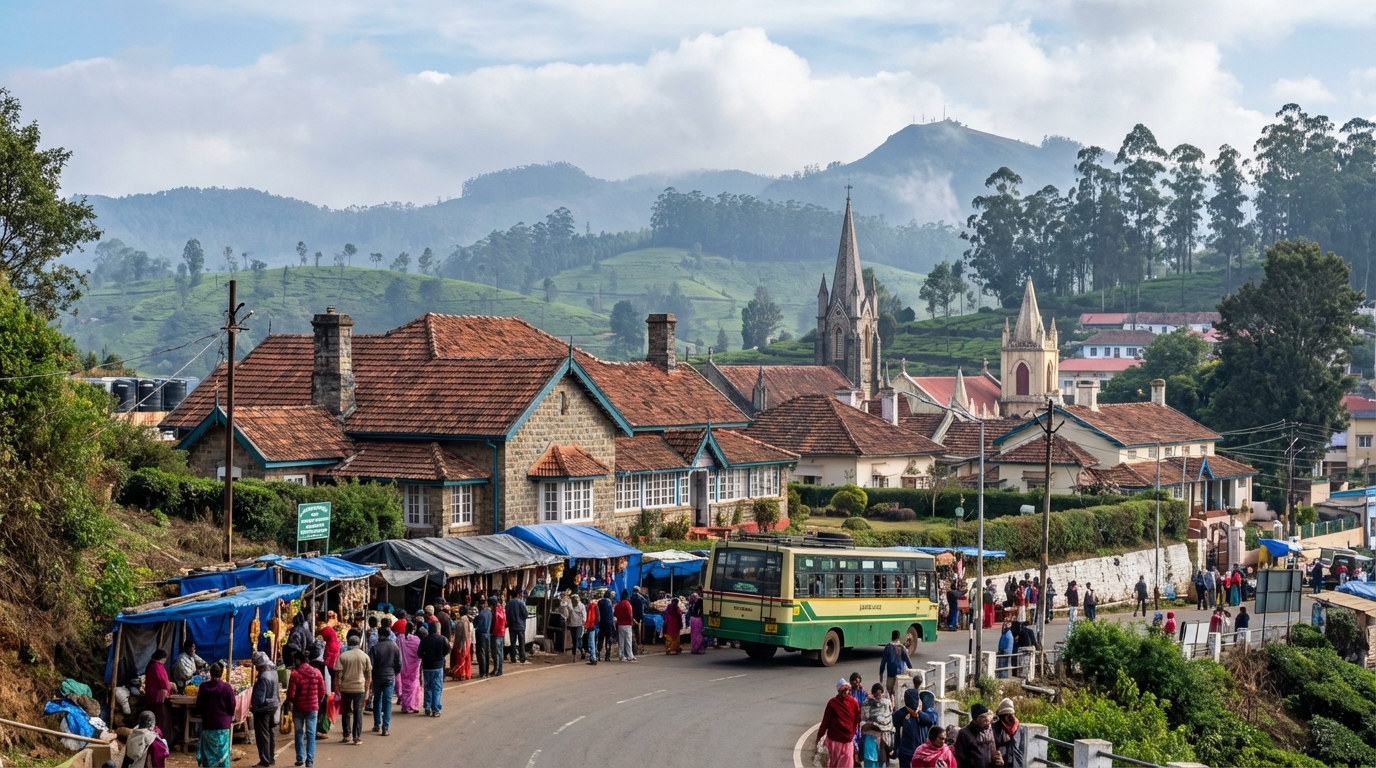
Geography
The landscape features a unique 'Kumbhal' clay soil that supports massive eucalyptus groves introduced in the 1800s. It experiences a distinct frost season from November to February, where temperatures hit -2°C. The town is bordered by the Mudumalai sanctuary and the deep Ketti Valley, a region defined by steep, terraced topography and a 2,637-meter peak.
History
In May 1819, John Sullivan reached the plateau after a six-day climb through the Dimhatti pass. Captivated by the 12°C air, he purchased land from the Toda people for one rupee per acre. By 1822, he completed 'Stone House,' the first permanent bungalow, transforming a tribal buffalo-herding region into a colonial administrative hub.
Landmarks
- Nilgiri Mountain Railway: This 1908 UNESCO site uses an Abt rack system to climb gradients of 1 in 12, leaving a trail of coal-scented mist behind.
- Government Botanical Garden: Established in 1848, it features a 20-million-year-old fossilized tree trunk that remains cold to the touch even in the direct midday mountain sun.
- Doddabetta Peak: Standing at 2,637 meters, it houses a telescope house where visitors can spot the Mysore plains through the thin, high-altitude air.
- Ooty Chocolate Museum: This local favorite details 100 years of mountain cocoa production, offering truffles made with 70% dark cocoa and fresh local Nilgiri honey.
- Thread Garden: This unique site displays an ecosystem of flowers and plants created without needles, using only embroidery thread and glue over twelve years.
Cuisine
The food is a blend of Badaga agricultural staples and indigenous dairy. Preparation relies on 'madake' clay pots for slow-cooking. They utilize 'Hattu' (steamed grain flour) and 'Koi Udaka' (chicken curry), alongside local 'Varkey' biscuits that depend on the high-altitude air for their specific dough fermentation and flaky texture.
- Ooty Varkey: A flaky biscuit made of mada and sugar, fermented for 12 hours and baked in wood-fired ovens since the colonial era.
- Avarai Udaka: A traditional Badaga curry using field beans and bird's eye chilies, slow-cooked to create an earthy, smoky flavor unique to the Nilgiris.
- Buffalo Milk Fudge: A dense, creamy sweet made from high-fat Toda buffalo milk, simmered for hours until it reaches a thick, caramel-like consistency.
- Nilgiri Frost Tea: Harvested during the January freeze, these leaves produce a pale gold liquor with floral notes and a sharp, crisp, winter finish.
- Badaga Ganji: A nutritious, warm beverage made of parboiled rice and fresh buttermilk, consumed by local farmers before they begin the 5 AM harvest.
Culture
Life revolves around the 'Hethai Amman' deity and the Toda buffalo cult. Men often wear 'thundu' wraps, while women favor the 'pattu' head-cloth. The Toda language, with its unique trills, is spoken by fewer than 1,100 people. Festivals are timed with the agricultural calendar, specifically the bean harvest and the winter solstice.
- Hethai Amman Festival: Every January, Badagas dress in white and carry sacred 'Sengole' staffs to the Hethai temple in a massive, ancient ancestral procession.
- Modhwairth: A Toda ritual where young men must lift a 50kg greased spherical stone to their shoulder to prove they are ready for marriage.
- Ooty Flower Show: Held annually since 1896 in May, this event showcases 150 rose varieties and sculptures made from 100,000 individual carnations and lilies.
- Pootkhuly: A hand-embroidered Toda shawl with red and black geometric patterns, symbolizing the hills and the horns of sacred mountain buffaloes.
- Badaga Thundu: A thick white cotton wrap worn by men during ceremonies, representing purity and the wearer's status within the Nilgiri community hierarchy.
- Pattu: A white head-cloth for women, tied with a specific knot at the back to protect against high-altitude UV rays while harvesting.
- Kadu: Massive silver bangles, often weighing over 200 grams, passed down as heirlooms to Toda women upon marriage to signify family wealth.
- Toda Waistcoat: A modern formal vest featuring traditional red and black embroidery, worn by men at weddings to blend heritage with contemporary style.